Transportation Management Systems
An Inside Look At What Impact Hemut Is Having On The Industry
AI agents are changing dashboards, and the companies still selling alerts are about to find out what obsolescence feels like.

Two percent. That is the share of supply chain alerts that actually result in action. Not two percent of the unimportant ones, two percent of all of them. The other 98 percent light up a dashboard, get triaged into a spreadsheet, and die in someone's inbox. The freight industry spent the last decade building visibility platforms that show you exactly what is going wrong. It forgot to build the part that fixes it.
That era is ending. A new generation of AI-native supply chain platforms is shifting the value proposition from "see the problem" to "resolve the problem", autonomously, in seconds, without waiting for a human to open a ticket. Purpose-built AI agents are now handling carrier check calls, pulling proof of delivery, initiating claims, confirming appointments, and resolving exceptions only a massive operations team could match manually. Early production deployments are posting hard numbers: 4.1% reductions in freight costs, 75% faster sourcing cycles, and intervention times on cargo theft cut from 40 minutes to 12.
Why "AI-Enhanced" Is Not the Same as AI-Native
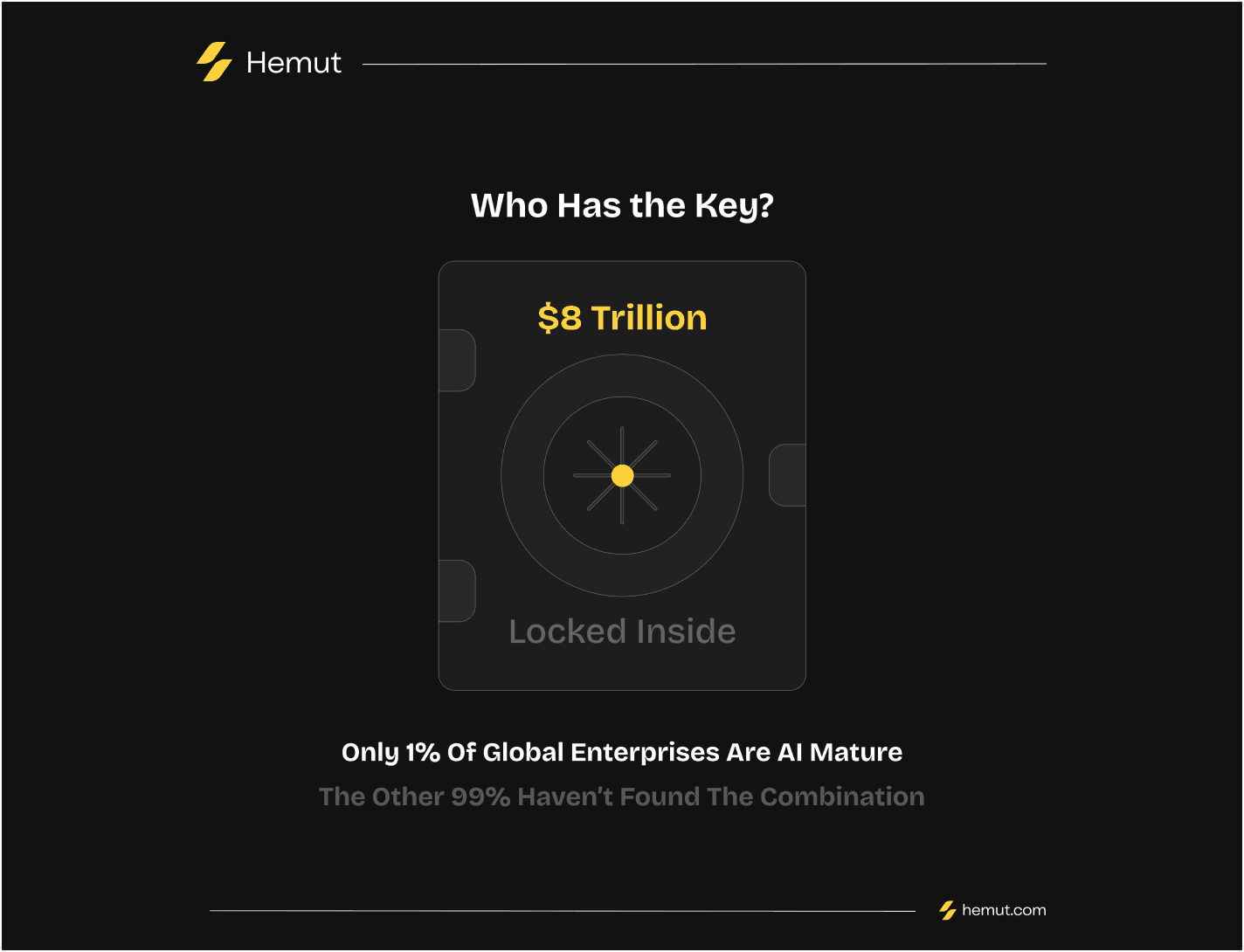
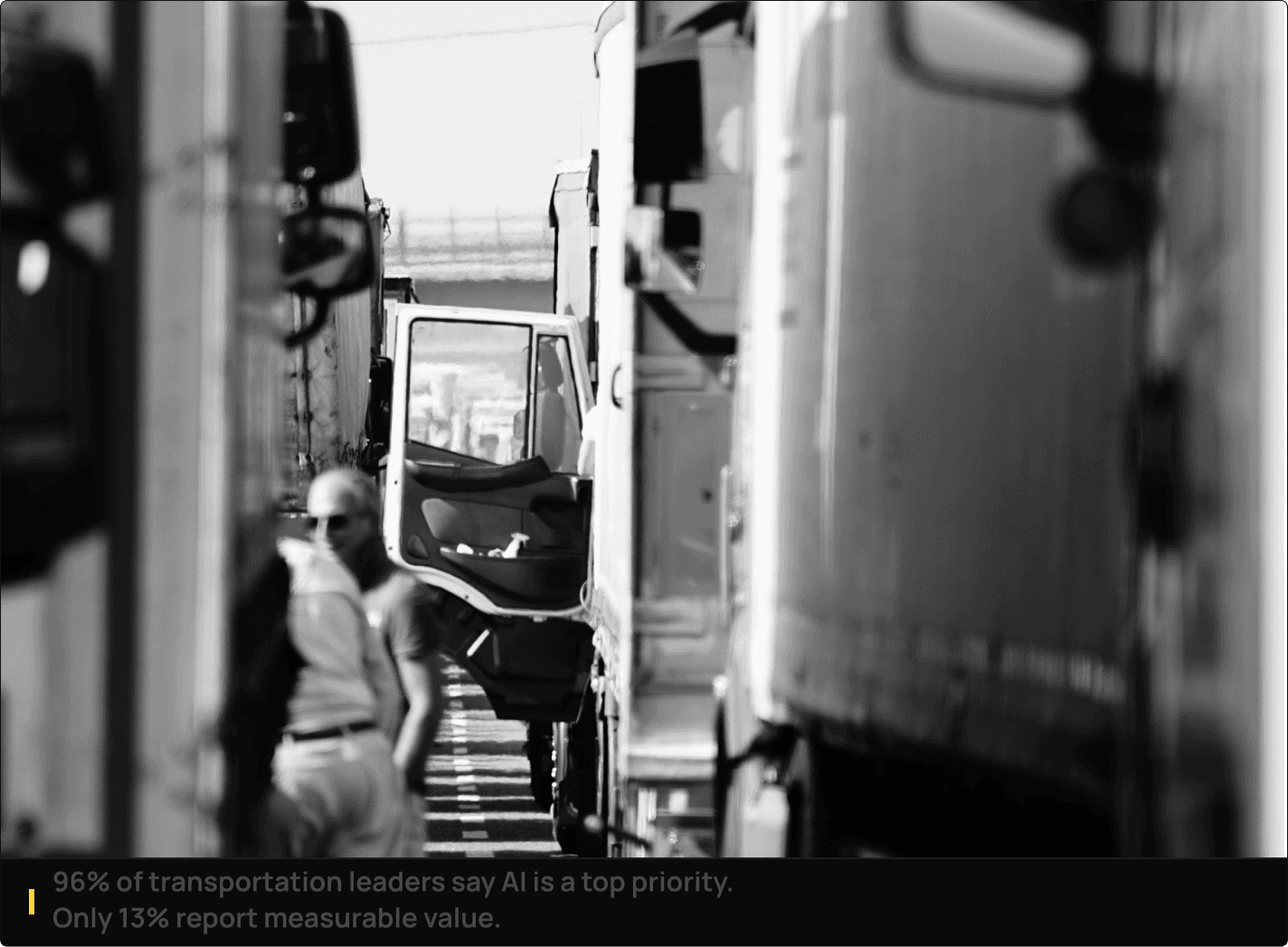
The supply chain software market is crowded with vendors claiming AI capabilities. Most of them bolted a machine learning layer onto a platform that was designed before the technology existed. The data is clear: it does not work. Ninety-six percent of transportation leaders say AI investment is a top priority, yet only 13 percent of logistics professionals report measurable value from their AI deployments. McKinsey estimates the total enterprise AI opportunity at $8 trillion annually, but only one percent of global enterprises consider their AI mature.
AI that is retrofitted onto legacy systems inherits every limitation of the original design: rigid data models, batch-processing assumptions, and workflows that were built around human decision-making speed. AI-native platforms are different. They are designed from the ground up to process millions of shipments daily, ingest billions of operational events, and give autonomous agents the real-time context they need to act with precision.
The distinction matters because context is the single biggest predictor of AI success in supply chain. More than 80 percent of AI implementations fail because of insufficient context, not insufficient computing or insufficient ambition. Context, in other words, is not a feature you bolt on later — it is the foundation every autonomous decision depends on.
The Metrics That Prove Agents Boost Dashboards
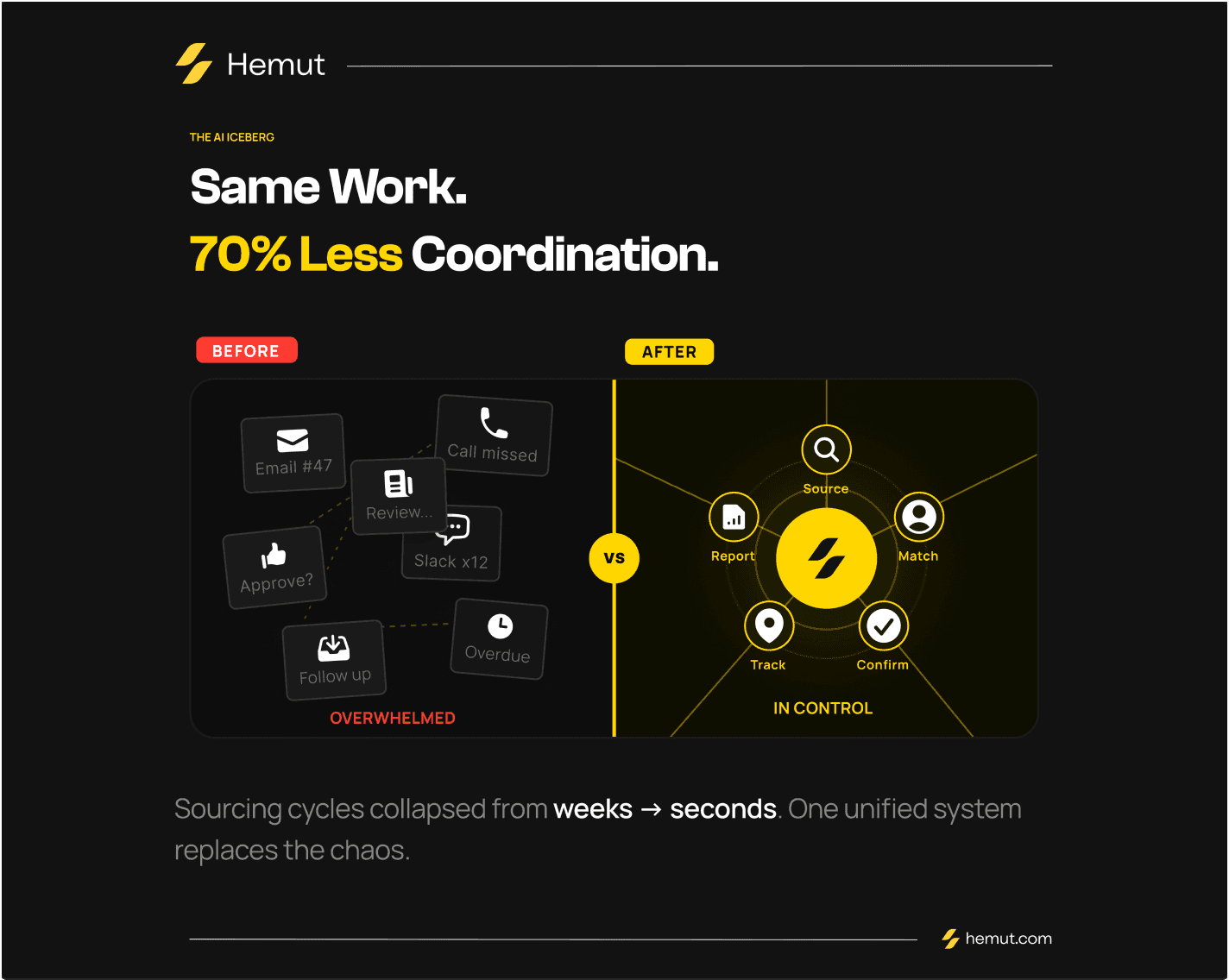
The case for AI agents over traditional visibility tools is no longer theoretical. In live freight operations, AI-powered procurement agents are now running continuous carrier negotiations simultaneously, replacing the legacy model of periodic bid cycles and manual spreadsheet work. The result is a 70 percent reduction in manual coordination and sourcing cycles that collapsed from weeks to seconds.
Cargo theft, up 60 percent year-over-year, is another area where agents are outperforming humans. By collecting signals like door-open events, GPS spoofing patterns, and route deviations in real time, security-focused agents are detecting and deescalating threats in 12 minutes instead of 40.
One major global logistics provider reported that AI-driven intervention now catches shipment issues before they become losses. In yard management, autonomous scheduling agents are projecting 17 percent less detention time and 8 percent better utilization. There’s meaningful significant savings when you consider that hidden costs between truck arrival and "in stock" status. These are among the least measured and most expensive inefficiencies in the supply chain.
And the stakes keep climbing. In automotive manufacturing, production line downtime costs $27,000 per minute. Inventory risk agents launching this summer will give manufacturers visibility into stockout risk while there is still time to act, not after the line has already stopped.
Your Biggest Bottleneck Is Not Technology.
It's The Process.
Here is the uncomfortable truth the data reveals. The hardest part of deploying AI in the supply chain is not the AI itself. It is the organizational machinery surrounding it. One Group VP of Supply Chain at a major global retail brand put it plainly at an industry event this spring: the bottleneck is no longer technology. It's the process and people. Her company treats seasonal apparel as a perishable product, every hour of supply chain delay
erodes margin on goods with a narrow selling window. The technology was delivered. Changing how teams used it was the real transformation.
This is the pattern playing out across the industry. Companies deploy AI agents that can resolve exceptions in seconds, but the approval chains, sign-off requirements, and "let me see" cultures around those agents still operate at human speed. The technology is no longer the constraint. Each person that now works with the new TMS or dashboard, must adapt to it's new system to see the results that it promises. The companies that win will be the ones willing to redesign those workflows, not just adopt new tools.
What This Means for Your Supply Chain Strategy
If your supply chain technology stack was built before 2020, you are likely running on a TMS that was designed for stable carrier relationships, predictable freight cycles, and annual procurement models. None of those conditions exist anymore. The leading platforms in this space are now modular and AI-native, letting you start where value is highest and scale without a multi-year migration. They orchestrate specialized agents from multiple AI providers under unified governance rather than locking you into a single vendor's model. And they are built on proprietary data graphs processing petabytes of operational context monthly, the kind of foundation that turns agents from clever demos into production-grade decision-makers.
The industry's two percent signal-to-action ratio is not a technology failure. It is a design failure. The platforms that defined the visibility era gave you the data but left execution to overworked humans toggling between tabs. The autonomous execution era flips that model: AI handles the high-volume grind, and your team governs the dials. The $8 trillion AI opportunity McKinsey identified is not going to be captured by companies with just better dashboards. It's going to be captured by companies whose systems who adapt to these new dashboard workflows.
Bottom Line
Be ahead of the curve of AI native dashboards. Save 12 hours a week per dispatcher, and see a 52% reduction is software spend when switching to Hemut. Use the full potential of these tools now by Booking A Call

Two percent. That is the share of supply chain alerts that actually result in action. Not two percent of the unimportant ones, two percent of all of them. The other 98 percent light up a dashboard, get triaged into a spreadsheet, and die in someone's inbox. The freight industry spent the last decade building visibility platforms that show you exactly what is going wrong. It forgot to build the part that fixes it.
That era is ending. A new generation of AI-native supply chain platforms is shifting the value proposition from "see the problem" to "resolve the problem", autonomously, in seconds, without waiting for a human to open a ticket. Purpose-built AI agents are now handling carrier check calls, pulling proof of delivery, initiating claims, confirming appointments, and resolving exceptions only a massive operations team could match manually. Early production deployments are posting hard numbers: 4.1% reductions in freight costs, 75% faster sourcing cycles, and intervention times on cargo theft cut from 40 minutes to 12.
Why "AI-Enhanced" Is Not the Same as AI-Native
The supply chain software market is crowded with vendors claiming AI capabilities. Most of them bolted a machine learning layer onto a platform that was designed before the technology existed. The data is clear: it does not work. Ninety-six percent of transportation leaders say AI investment is a top priority, yet only 13 percent of logistics professionals report measurable value from their AI deployments. McKinsey estimates the total enterprise AI opportunity at $8 trillion annually, but only one percent of global enterprises consider their AI mature.
AI that is retrofitted onto legacy systems inherits every limitation of the original design: rigid data models, batch-processing assumptions, and workflows that were built around human decision-making speed. AI-native platforms are different. They are designed from the ground up to process millions of shipments daily, ingest billions of operational events, and give autonomous agents the real-time context they need to act with precision.
The distinction matters because context is the single biggest predictor of AI success in supply chain. More than 80 percent of AI implementations fail because of insufficient context, not insufficient computing or insufficient ambition. Context, in other words, is not a feature you bolt on later — it is the foundation every autonomous decision depends on.
The Metrics That Prove Agents Boost Dashboards
The case for AI agents over traditional visibility tools is no longer theoretical. In live freight operations, AI-powered procurement agents are now running continuous carrier negotiations simultaneously, replacing the legacy model of periodic bid cycles and manual spreadsheet work. The result is a 70 percent reduction in manual coordination and sourcing cycles that collapsed from weeks to seconds.
Cargo theft, up 60 percent year-over-year, is another area where agents are outperforming humans. By collecting signals like door-open events, GPS spoofing patterns, and route deviations in real time, security-focused agents are detecting and deescalating threats in 12 minutes instead of 40.
One major global logistics provider reported that AI-driven intervention now catches shipment issues before they become losses. In yard management, autonomous scheduling agents are projecting 17 percent less detention time and 8 percent better utilization. There’s meaningful significant savings when you consider that hidden costs between truck arrival and "in stock" status. These are among the least measured and most expensive inefficiencies in the supply chain.
And the stakes keep climbing. In automotive manufacturing, production line downtime costs $27,000 per minute. Inventory risk agents launching this summer will give manufacturers visibility into stockout risk while there is still time to act, not after the line has already stopped.
Your Biggest Bottleneck Is Not Technology.
It's The Process.
Here is the uncomfortable truth the data reveals. The hardest part of deploying AI in the supply chain is not the AI itself. It is the organizational machinery surrounding it. One Group VP of Supply Chain at a major global retail brand put it plainly at an industry event this spring: the bottleneck is no longer technology. It's the process and people. Her company treats seasonal apparel as a perishable product, every hour of supply chain delay
erodes margin on goods with a narrow selling window. The technology was delivered. Changing how teams used it was the real transformation.
This is the pattern playing out across the industry. Companies deploy AI agents that can resolve exceptions in seconds, but the approval chains, sign-off requirements, and "let me see" cultures around those agents still operate at human speed. The technology is no longer the constraint. Each person that now works with the new TMS or dashboard, must adapt to it's new system to see the results that it promises. The companies that win will be the ones willing to redesign those workflows, not just adopt new tools.
What This Means for Your Supply Chain Strategy
If your supply chain technology stack was built before 2020, you are likely running on a TMS that was designed for stable carrier relationships, predictable freight cycles, and annual procurement models. None of those conditions exist anymore. The leading platforms in this space are now modular and AI-native, letting you start where value is highest and scale without a multi-year migration. They orchestrate specialized agents from multiple AI providers under unified governance rather than locking you into a single vendor's model. And they are built on proprietary data graphs processing petabytes of operational context monthly, the kind of foundation that turns agents from clever demos into production-grade decision-makers.
The industry's two percent signal-to-action ratio is not a technology failure. It is a design failure. The platforms that defined the visibility era gave you the data but left execution to overworked humans toggling between tabs. The autonomous execution era flips that model: AI handles the high-volume grind, and your team governs the dials. The $8 trillion AI opportunity McKinsey identified is not going to be captured by companies with just better dashboards. It's going to be captured by companies whose systems who adapt to these new dashboard workflows.
Bottom Line
Be ahead of the curve of AI native dashboards. Save 12 hours a week per dispatcher, and see a 52% reduction is software spend when switching to Hemut. Use the full potential of these tools now by Booking A Call
Two percent. That is the share of supply chain alerts that actually result in action. Not two percent of the unimportant ones, two percent of all of them. The other 98 percent light up a dashboard, get triaged into a spreadsheet, and die in someone's inbox. The freight industry spent the last decade building visibility platforms that show you exactly what is going wrong. It forgot to build the part that fixes it.
That era is ending. A new generation of AI-native supply chain platforms is shifting the value proposition from "see the problem" to "resolve the problem", autonomously, in seconds, without waiting for a human to open a ticket. Purpose-built AI agents are now handling carrier check calls, pulling proof of delivery, initiating claims, confirming appointments, and resolving exceptions only a massive operations team could match manually. Early production deployments are posting hard numbers: 4.1% reductions in freight costs, 75% faster sourcing cycles, and intervention times on cargo theft cut from 40 minutes to 12.
Why "AI-Enhanced" Is Not the Same as AI-Native
The supply chain software market is crowded with vendors claiming AI capabilities. Most of them bolted a machine learning layer onto a platform that was designed before the technology existed. The data is clear: it does not work. Ninety-six percent of transportation leaders say AI investment is a top priority, yet only 13 percent of logistics professionals report measurable value from their AI deployments. McKinsey estimates the total enterprise AI opportunity at $8 trillion annually, but only one percent of global enterprises consider their AI mature.
AI that is retrofitted onto legacy systems inherits every limitation of the original design: rigid data models, batch-processing assumptions, and workflows that were built around human decision-making speed. AI-native platforms are different. They are designed from the ground up to process millions of shipments daily, ingest billions of operational events, and give autonomous agents the real-time context they need to act with precision.
The distinction matters because context is the single biggest predictor of AI success in supply chain. More than 80 percent of AI implementations fail because of insufficient context, not insufficient computing or insufficient ambition. Context, in other words, is not a feature you bolt on later — it is the foundation every autonomous decision depends on.
The Metrics That Prove Agents Boost Dashboards
The case for AI agents over traditional visibility tools is no longer theoretical. In live freight operations, AI-powered procurement agents are now running continuous carrier negotiations simultaneously, replacing the legacy model of periodic bid cycles and manual spreadsheet work. The result is a 70 percent reduction in manual coordination and sourcing cycles that collapsed from weeks to seconds.
Cargo theft, up 60 percent year-over-year, is another area where agents are outperforming humans. By collecting signals like door-open events, GPS spoofing patterns, and route deviations in real time, security-focused agents are detecting and deescalating threats in 12 minutes instead of 40.
One major global logistics provider reported that AI-driven intervention now catches shipment issues before they become losses. In yard management, autonomous scheduling agents are projecting 17 percent less detention time and 8 percent better utilization. There’s meaningful significant savings when you consider that hidden costs between truck arrival and "in stock" status. These are among the least measured and most expensive inefficiencies in the supply chain.
And the stakes keep climbing. In automotive manufacturing, production line downtime costs $27,000 per minute. Inventory risk agents launching this summer will give manufacturers visibility into stockout risk while there is still time to act, not after the line has already stopped.
Your Biggest Bottleneck Is Not Technology.
It's The Process.
Here is the uncomfortable truth the data reveals. The hardest part of deploying AI in the supply chain is not the AI itself. It is the organizational machinery surrounding it. One Group VP of Supply Chain at a major global retail brand put it plainly at an industry event this spring: the bottleneck is no longer technology. It's the process and people. Her company treats seasonal apparel as a perishable product, every hour of supply chain delay
erodes margin on goods with a narrow selling window. The technology was delivered. Changing how teams used it was the real transformation.
This is the pattern playing out across the industry. Companies deploy AI agents that can resolve exceptions in seconds, but the approval chains, sign-off requirements, and "let me see" cultures around those agents still operate at human speed. The technology is no longer the constraint. Each person that now works with the new TMS or dashboard, must adapt to it's new system to see the results that it promises. The companies that win will be the ones willing to redesign those workflows, not just adopt new tools.
What This Means for Your Supply Chain Strategy
If your supply chain technology stack was built before 2020, you are likely running on a TMS that was designed for stable carrier relationships, predictable freight cycles, and annual procurement models. None of those conditions exist anymore. The leading platforms in this space are now modular and AI-native, letting you start where value is highest and scale without a multi-year migration. They orchestrate specialized agents from multiple AI providers under unified governance rather than locking you into a single vendor's model. And they are built on proprietary data graphs processing petabytes of operational context monthly, the kind of foundation that turns agents from clever demos into production-grade decision-makers.
The industry's two percent signal-to-action ratio is not a technology failure. It is a design failure. The platforms that defined the visibility era gave you the data but left execution to overworked humans toggling between tabs. The autonomous execution era flips that model: AI handles the high-volume grind, and your team governs the dials. The $8 trillion AI opportunity McKinsey identified is not going to be captured by companies with just better dashboards. It's going to be captured by companies whose systems who adapt to these new dashboard workflows.
Bottom Line
Be ahead of the curve of AI native dashboards. Save 12 hours a week per dispatcher, and see a 52% reduction is software spend when switching to Hemut. Use the full potential of these tools now by Booking A Call
Transform your freight operations and leap ahead of the competition.
© Hemut co All Rights Reserved 2026
Transform your freight operations and leap ahead of the competition.
© Hemut co All Rights Reserved 2026
Transform your freight operations and leap ahead of the competition.
© Hemut co All Rights Reserved 2026