
Transportation Management Systems
AI Voice Agents in Trucking Logistics Operations: From Phone Calls to System Actions
AI voice agents connect trucking calls directly to your TMS, updating quotes, tracking, and appointments automatically. No manual entry. By Hemut

If you run dispatch, tracking, or customer service for a U.S. freight carrier or brokerage, this guide answers one question: where should AI voice agents actually live in your trucking operation, and what should they change in your system after every call?
Quick overview: Where AI voice fits in trucking today
Carriers started testing low-latency voice agents at scale around 2024–2025. By 2026, the conversation shifted from "can it talk?" to "does it update a load's status or ETA in the TMS?" AI voice agents automate routine communications to improve trucking logistics operations, and AI can automate dispatch tasks across fleets of any size.
Key takeaways:
AI voice agents deliver the most value at the communication edge-driver, shipper, broker, repair, and customer calls.
Voice is useful only when it updates the operating core (load boards, repair workflows, exception queues), not when it just creates transcripts.
Real time capture of delays, breakdowns, and accessorials lets dispatch and customer service act earlier.
In Hemut's model, AI voice is one layer in an AI-native TMS stack, not a standalone gadget.
This guide compares generic voice tools-like those used in call centers or AI voice generator platforms for content creation-to logistics-specific deployments integrated with a TMS.
What is an AI voice agent in a trucking operation?
An AI voice agent in freight is software that can answer or place phone calls, listen to human speech from drivers and partners, and update freight records in real time. Core components include:
Speech recognition (STT) that turns spoken audio into text, even in noisy truck cabs.
A reasoning engine that interprets context-for example, "held up at the receiver, probably two hours" maps to a new ETA and potential service risk.
Workflow logic that knows which field in the TMS to update: load status, repair order, detention counter.
Text to speech / AI voice generation that responds with natural conversations close to human speech, supporting natural turn taking so drivers don't feel like they're talking to a menu.
This differs from generic contact-center agents. Traditional platforms focus on customer support scripts. Trucking voice agents must manipulate concrete objects-load IDs, trailer numbers, appointment windows-and connect deeply with dispatch, accounting, and brokerage workflows. AI voice agents can log conversations directly into Transportation Management Systems, and AI voice technology enhances safety by enabling hands-free communication for drivers. Voice AI can assist with breakdown reporting and gather vehicle information automatically.
Example call: A driver phones at 3:15 AM about a blown tire in Kansas, mile marker 210. The agent verifies the person, load number, and ETA impact, then opens a repair ticket and flags the load as "at-risk" inside the TMS. This is then easily escalated to a human if needed. While personal AI assistant tools and online video editor voice features use similar TTS engines, trucking agents require low-latency, bi-directional interaction tied to live freight data.
Why carriers and brokers are deploying AI voice at the communication edge
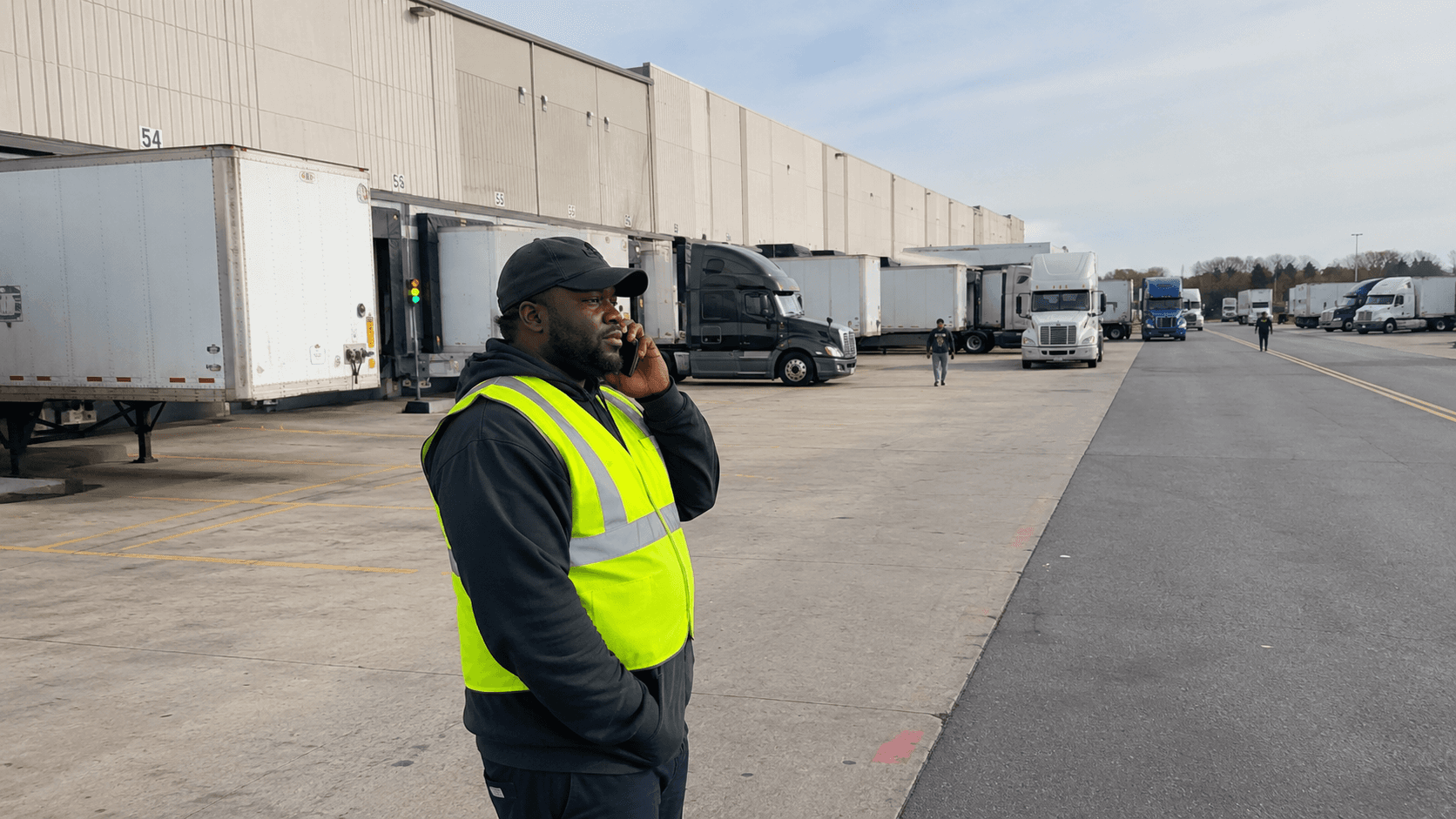
Teams aren't buying AI voice for the idea of novelty. They're fixing pain points where phone calls remain the dominant channel. AI voice agents reduce manual workload for dispatchers by automating administrative tasks, and voice AI reduces operational costs by automating rate negotiations and other tasks. Here are the concrete use cases:
Use case | What the agent does | Business outcome |
Driver ETA updates | Confirms load number, captures new ETA, writes to TMS | AI can improve customer service by delivering shipment updates automatically |
Check calls / night dispatch | Contacts drivers at intervals, logs location and status | AI agents manage real-time driver check-ins to streamline communication |
Appointment scheduling | Captures dock time changes from shippers/receivers | AI voice agents can facilitate appointment scheduling and delivery confirmations |
Breakdown triage | Gathers facts, opens repair order, flags impacted loads | Repair data flows to maintenance and settlement without re-entry |
Backhaul / reload offers | Outbound calls qualifying leads for carrier sales reps | AI voice agents can automate lead qualification calls |
AI voice agents can manage load inquiries 24/7 to enhance scalability, and voice AI systems offer multilingual support to improve communication with diverse driver populations. AI voice agents can handle 35% more answered calls than manual teams, and Synthflow AI agents saved over 4 million hours in manual calls across industries. Voice AI can provide proactive exception management by detecting risks before a person on the other end of the line even reports them. AI automates customer interactions in trucking logistics, and voice AI improves operational efficiency by automating repetitive conversations.
How to design trucking workflows where AI voice actually improves the TMS
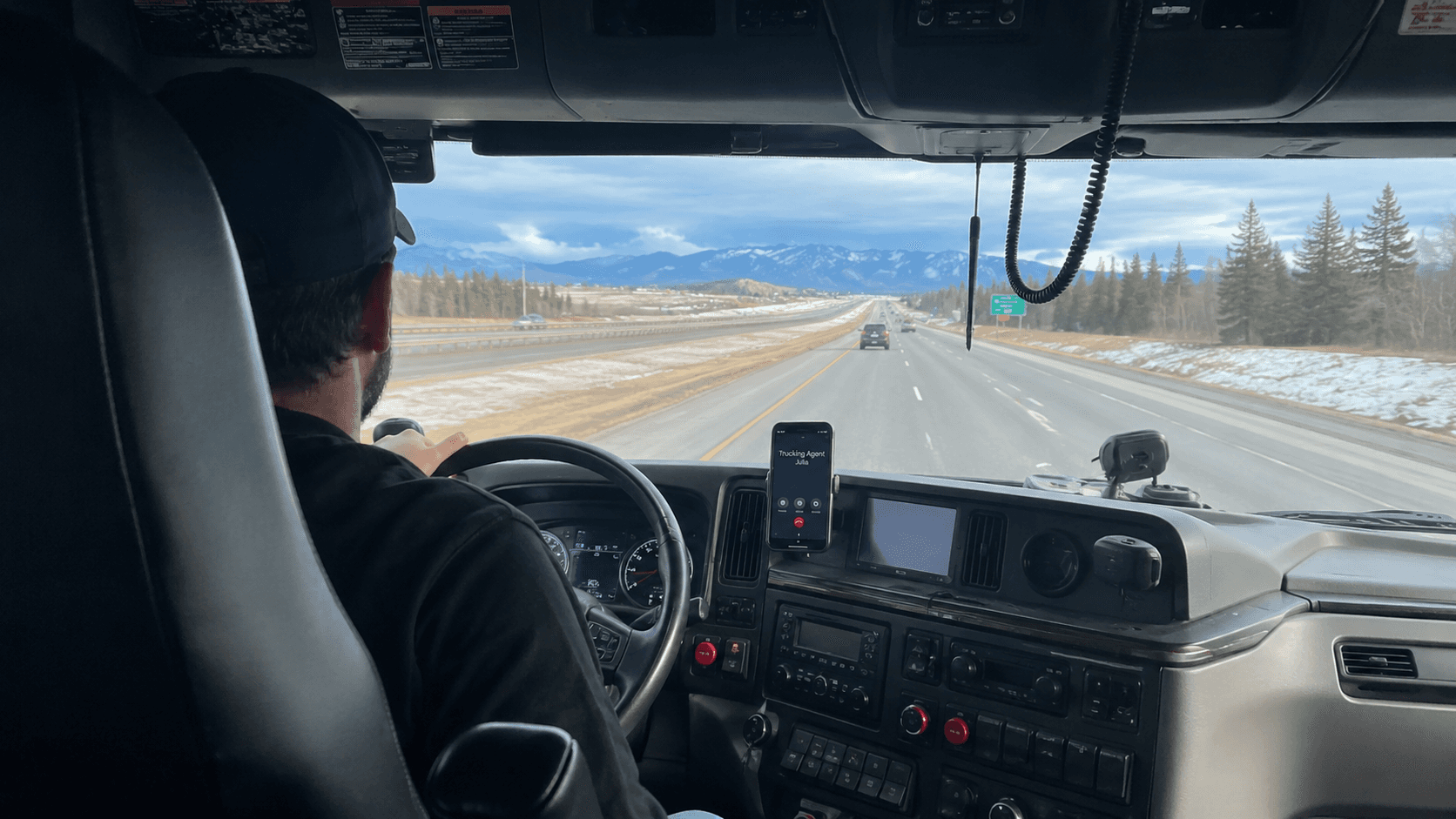
The design question is not "how natural does the sound of the AI voice match human emotion and tone?" It is: what record, board, or queue changes after the call? AI voice technology can automate routine customer inquiries to reduce call center workload, and AI voice agents can improve call response rates by over 35% when workflows are designed correctly.
Start from existing workflows. Map each frequent phone interaction to a TMS object-load, stop, equipment, driver, invoice, repair order, exception ticket. Then define what a successful call must create or change in the system.
Workflow examples:
ETA update: Agent confirms load number, asks for new ETA, writes it to the load record, pushes customer notification if the delta crosses a service threshold.
Breakdown: Agent captures tractor ID, mile marker, symptoms. Creates a repair event, attaches it to the active load, routes to maintenance, and pings a partner shop list.
Detention tracking: Agent verifies gate-in and gate-out times. Writes timestamps that accounting uses for accessorial billing-no manual data entry needed.
Broker-carrier confirmation: Agent calls the carrier, logs updated location and ETA, moves the shipment from "unconfirmed" to "en route – verified" on the brokerage board.
The voice agent should use APIs or direct connectors into the TMS modules your team already uses. Real time updates should appear on driver boards and load views, not in a separate app or browser dashboard. The speed that matters most is time from spoken update to system change, not just milliseconds of audio latency. Industry benchmarks suggest keeping conversational turn gaps under 1,400 ms for driver acceptance.
Evaluating AI voice platforms for logistics: questions Hemut recommends you ask
Here's a practical checklist for operations leaders evaluating vendors in 2026. Watch for the technical complexity behind each answer, and guard against vendor lock in by confirming you retain access to your data, prompts, and call recordings.
Dimension | Question to ask |
System-of-record integration | After each call, which fields in my TMS change automatically? Ask for before/after load record screenshots, not just deep analytics dashboards. |
Logistics-specific tooling | Can the agent validate PRO numbers, trailer IDs, and appointment times without brittle hard-coding? Look for pre built templates tuned for freight, not generic support flows. |
Real time triggers | How quickly does a late ETA or dwell-time threshold generate a task in my exception queue? |
Latency and voice quality | What is conversational latency under real network conditions? Retell AI offers sub-second latency for live phone calls. Test barge-in, interruptions, and noisy environments. |
Reliability | Synthflow AI has achieved 99.99% uptime for voice agents-AI voice agents can achieve 99.99% uptime for reliability. What's your SLA, and what happens if the stack fails mid-conversation? |
Scalability | Bland AI can handle up to one million concurrent calls. Can your platform handle holiday surges and 24/7 volume? Voice agents can handle up to 50% of call center volume at scale. |
Cost | How is pricing structured-per minute, per call, per seat? Compare against fully loaded cost of in house night dispatch. |
Configuration | Can ops leaders adjust prompts and routing logic, or do we need engineers? |
For background, PolyAI reports call containment rates above 80% in production, and AI voice agents can achieve call containment rates above 80% in well-designed deployments. SquadStack AI is trained on over 600 million sales call minutes, demonstrating the volume of data needed to train domain-specific speech models. Retell AI can qualify leads and book meetings around the clock, which maps to the trucking use case of qualifying leads and booking appointments for carrier sales teams.
Platforms like retell ai, Synthflow, and other platforms offer strong character in voice cloning and low-latency audio for product demos. But in trucking, the value isn't the voice layer itself-it's the full-stack integration into freight workflows. Don't guess at fit based on a demo. Run a pilot using sip trunks connected to your actual dispatch lines and measure what changes in your system, not just how the agent sounds to the person who picks up.
Start narrow: pick one use case like night check calls on a specific lane, define success around system metrics (on-time %, exception lead time, manual call volume), and listen to what your team tells you before you play at scale.
How Hemut embeds AI voice into an AI-native TMS stack
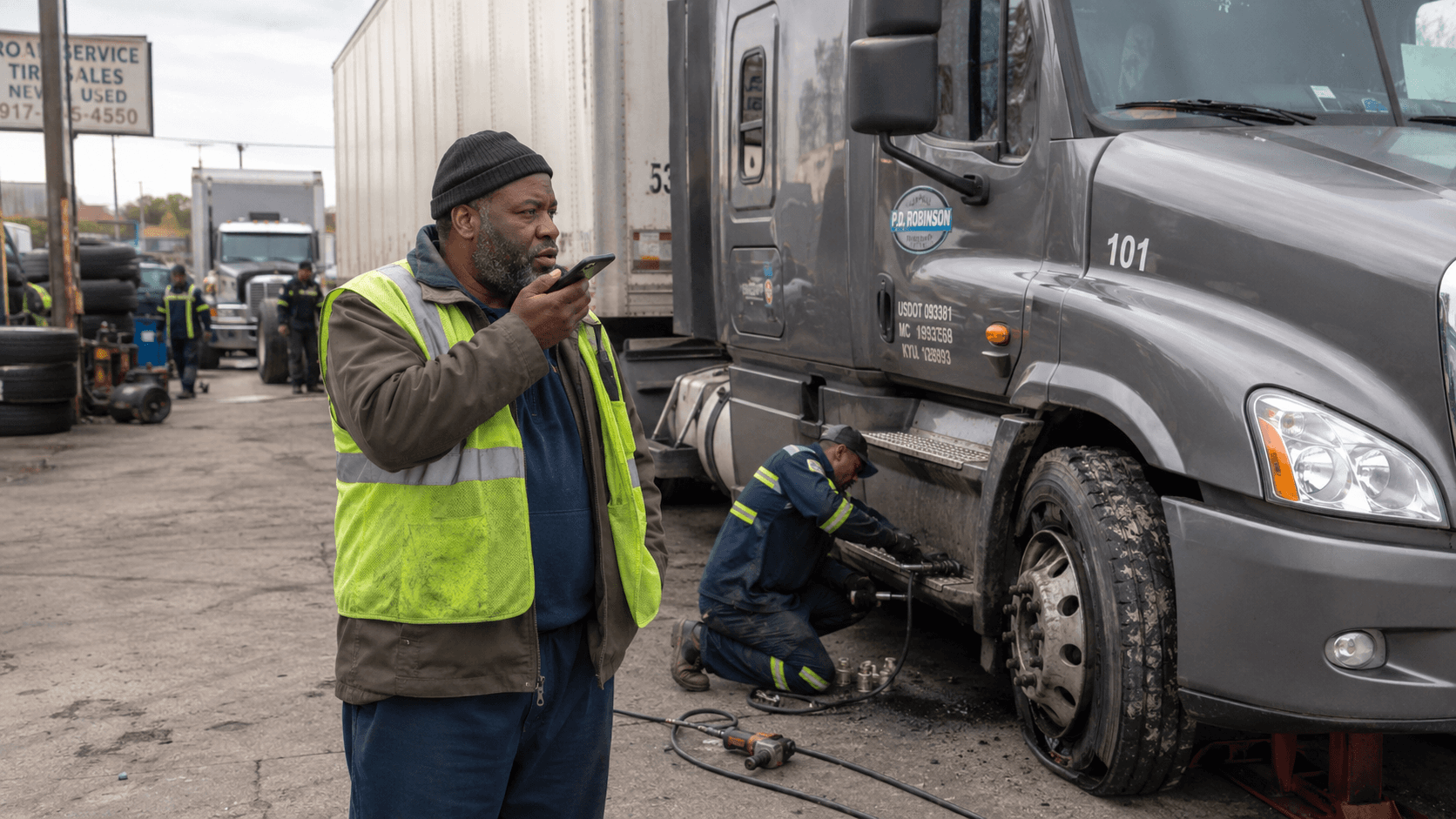
Hemut is a B2B SaaS and embedded operations partner for U.S. freight carriers and brokers who need an AI-native TMS-not another disconnected tool. The platform covers dispatch, load optimization, route planning, brokerage workflows, billing, and accounting automation. AI voice sits as the edge communication layer feeding this operating core so no one has to speak an update and then retype it somewhere else.
How Hemut deploys AI voice:
Long-haul check calls: AI voice contacts drivers at pre-agreed intervals, verifies status, updates driver and load boards automatically.
Customer update lines: Shippers call a dedicated number answered by an AI voice agent that retrieves load status from Hemut's TMS and can escalate to humans on defined triggers.
After-hours brokerage desk: AI voice triages off-hours calls from carriers-mechanical issues, location updates, fall-off risk-and queues urgent items for human follow ups at 06:00 AM local time.
Repair coordination: AI voice captures PO numbers, vendor locations, and repair completion times for maintenance and settlement records.
Hemut's commercial model is outcome-based: clients don't pay until agreed operational wins are measured-reduction in manual calls, fewer service failures, faster exception response. Full-stack customization means the AI voice layer is built against your exact dispatch, accounting, and broker workflows, not a generic sales script.
Next steps: Evaluate AI voice by asking which record, board, or workflow changes after each call. If the answer is "nothing changes automatically," you're adding another tool, not improving your operation. Talk to Hemut about mapping your current call flows into an AI-native operating system. We can prototype a targeted voice workflow-like appointment changes on a key lane-in weeks, then scale once impact is proven.
If you run dispatch, tracking, or customer service for a U.S. freight carrier or brokerage, this guide answers one question: where should AI voice agents actually live in your trucking operation, and what should they change in your system after every call?
Quick overview: Where AI voice fits in trucking today
Carriers started testing low-latency voice agents at scale around 2024–2025. By 2026, the conversation shifted from "can it talk?" to "does it update a load's status or ETA in the TMS?" AI voice agents automate routine communications to improve trucking logistics operations, and AI can automate dispatch tasks across fleets of any size.
Key takeaways:
AI voice agents deliver the most value at the communication edge-driver, shipper, broker, repair, and customer calls.
Voice is useful only when it updates the operating core (load boards, repair workflows, exception queues), not when it just creates transcripts.
Real time capture of delays, breakdowns, and accessorials lets dispatch and customer service act earlier.
In Hemut's model, AI voice is one layer in an AI-native TMS stack, not a standalone gadget.
This guide compares generic voice tools-like those used in call centers or AI voice generator platforms for content creation-to logistics-specific deployments integrated with a TMS.
What is an AI voice agent in a trucking operation?
An AI voice agent in freight is software that can answer or place phone calls, listen to human speech from drivers and partners, and update freight records in real time. Core components include:
Speech recognition (STT) that turns spoken audio into text, even in noisy truck cabs.
A reasoning engine that interprets context-for example, "held up at the receiver, probably two hours" maps to a new ETA and potential service risk.
Workflow logic that knows which field in the TMS to update: load status, repair order, detention counter.
Text to speech / AI voice generation that responds with natural conversations close to human speech, supporting natural turn taking so drivers don't feel like they're talking to a menu.
This differs from generic contact-center agents. Traditional platforms focus on customer support scripts. Trucking voice agents must manipulate concrete objects-load IDs, trailer numbers, appointment windows-and connect deeply with dispatch, accounting, and brokerage workflows. AI voice agents can log conversations directly into Transportation Management Systems, and AI voice technology enhances safety by enabling hands-free communication for drivers. Voice AI can assist with breakdown reporting and gather vehicle information automatically.
Example call: A driver phones at 3:15 AM about a blown tire in Kansas, mile marker 210. The agent verifies the person, load number, and ETA impact, then opens a repair ticket and flags the load as "at-risk" inside the TMS. This is then easily escalated to a human if needed. While personal AI assistant tools and online video editor voice features use similar TTS engines, trucking agents require low-latency, bi-directional interaction tied to live freight data.
Why carriers and brokers are deploying AI voice at the communication edge
Teams aren't buying AI voice for the idea of novelty. They're fixing pain points where phone calls remain the dominant channel. AI voice agents reduce manual workload for dispatchers by automating administrative tasks, and voice AI reduces operational costs by automating rate negotiations and other tasks. Here are the concrete use cases:
Use case | What the agent does | Business outcome |
Driver ETA updates | Confirms load number, captures new ETA, writes to TMS | AI can improve customer service by delivering shipment updates automatically |
Check calls / night dispatch | Contacts drivers at intervals, logs location and status | AI agents manage real-time driver check-ins to streamline communication |
Appointment scheduling | Captures dock time changes from shippers/receivers | AI voice agents can facilitate appointment scheduling and delivery confirmations |
Breakdown triage | Gathers facts, opens repair order, flags impacted loads | Repair data flows to maintenance and settlement without re-entry |
Backhaul / reload offers | Outbound calls qualifying leads for carrier sales reps | AI voice agents can automate lead qualification calls |
AI voice agents can manage load inquiries 24/7 to enhance scalability, and voice AI systems offer multilingual support to improve communication with diverse driver populations. AI voice agents can handle 35% more answered calls than manual teams, and Synthflow AI agents saved over 4 million hours in manual calls across industries. Voice AI can provide proactive exception management by detecting risks before a person on the other end of the line even reports them. AI automates customer interactions in trucking logistics, and voice AI improves operational efficiency by automating repetitive conversations.
How to design trucking workflows where AI voice actually improves the TMS
The design question is not "how natural does the sound of the AI voice match human emotion and tone?" It is: what record, board, or queue changes after the call? AI voice technology can automate routine customer inquiries to reduce call center workload, and AI voice agents can improve call response rates by over 35% when workflows are designed correctly.
Start from existing workflows. Map each frequent phone interaction to a TMS object-load, stop, equipment, driver, invoice, repair order, exception ticket. Then define what a successful call must create or change in the system.
Workflow examples:
ETA update: Agent confirms load number, asks for new ETA, writes it to the load record, pushes customer notification if the delta crosses a service threshold.
Breakdown: Agent captures tractor ID, mile marker, symptoms. Creates a repair event, attaches it to the active load, routes to maintenance, and pings a partner shop list.
Detention tracking: Agent verifies gate-in and gate-out times. Writes timestamps that accounting uses for accessorial billing-no manual data entry needed.
Broker-carrier confirmation: Agent calls the carrier, logs updated location and ETA, moves the shipment from "unconfirmed" to "en route – verified" on the brokerage board.
The voice agent should use APIs or direct connectors into the TMS modules your team already uses. Real time updates should appear on driver boards and load views, not in a separate app or browser dashboard. The speed that matters most is time from spoken update to system change, not just milliseconds of audio latency. Industry benchmarks suggest keeping conversational turn gaps under 1,400 ms for driver acceptance.
Evaluating AI voice platforms for logistics: questions Hemut recommends you ask
Here's a practical checklist for operations leaders evaluating vendors in 2026. Watch for the technical complexity behind each answer, and guard against vendor lock in by confirming you retain access to your data, prompts, and call recordings.
Dimension | Question to ask |
System-of-record integration | After each call, which fields in my TMS change automatically? Ask for before/after load record screenshots, not just deep analytics dashboards. |
Logistics-specific tooling | Can the agent validate PRO numbers, trailer IDs, and appointment times without brittle hard-coding? Look for pre built templates tuned for freight, not generic support flows. |
Real time triggers | How quickly does a late ETA or dwell-time threshold generate a task in my exception queue? |
Latency and voice quality | What is conversational latency under real network conditions? Retell AI offers sub-second latency for live phone calls. Test barge-in, interruptions, and noisy environments. |
Reliability | Synthflow AI has achieved 99.99% uptime for voice agents-AI voice agents can achieve 99.99% uptime for reliability. What's your SLA, and what happens if the stack fails mid-conversation? |
Scalability | Bland AI can handle up to one million concurrent calls. Can your platform handle holiday surges and 24/7 volume? Voice agents can handle up to 50% of call center volume at scale. |
Cost | How is pricing structured-per minute, per call, per seat? Compare against fully loaded cost of in house night dispatch. |
Configuration | Can ops leaders adjust prompts and routing logic, or do we need engineers? |
For background, PolyAI reports call containment rates above 80% in production, and AI voice agents can achieve call containment rates above 80% in well-designed deployments. SquadStack AI is trained on over 600 million sales call minutes, demonstrating the volume of data needed to train domain-specific speech models. Retell AI can qualify leads and book meetings around the clock, which maps to the trucking use case of qualifying leads and booking appointments for carrier sales teams.
Platforms like retell ai, Synthflow, and other platforms offer strong character in voice cloning and low-latency audio for product demos. But in trucking, the value isn't the voice layer itself-it's the full-stack integration into freight workflows. Don't guess at fit based on a demo. Run a pilot using sip trunks connected to your actual dispatch lines and measure what changes in your system, not just how the agent sounds to the person who picks up.
Start narrow: pick one use case like night check calls on a specific lane, define success around system metrics (on-time %, exception lead time, manual call volume), and listen to what your team tells you before you play at scale.
How Hemut embeds AI voice into an AI-native TMS stack
Hemut is a B2B SaaS and embedded operations partner for U.S. freight carriers and brokers who need an AI-native TMS-not another disconnected tool. The platform covers dispatch, load optimization, route planning, brokerage workflows, billing, and accounting automation. AI voice sits as the edge communication layer feeding this operating core so no one has to speak an update and then retype it somewhere else.
How Hemut deploys AI voice:
Long-haul check calls: AI voice contacts drivers at pre-agreed intervals, verifies status, updates driver and load boards automatically.
Customer update lines: Shippers call a dedicated number answered by an AI voice agent that retrieves load status from Hemut's TMS and can escalate to humans on defined triggers.
After-hours brokerage desk: AI voice triages off-hours calls from carriers-mechanical issues, location updates, fall-off risk-and queues urgent items for human follow ups at 06:00 AM local time.
Repair coordination: AI voice captures PO numbers, vendor locations, and repair completion times for maintenance and settlement records.
Hemut's commercial model is outcome-based: clients don't pay until agreed operational wins are measured-reduction in manual calls, fewer service failures, faster exception response. Full-stack customization means the AI voice layer is built against your exact dispatch, accounting, and broker workflows, not a generic sales script.
Next steps: Evaluate AI voice by asking which record, board, or workflow changes after each call. If the answer is "nothing changes automatically," you're adding another tool, not improving your operation. Talk to Hemut about mapping your current call flows into an AI-native operating system. We can prototype a targeted voice workflow-like appointment changes on a key lane-in weeks, then scale once impact is proven.
If you run dispatch, tracking, or customer service for a U.S. freight carrier or brokerage, this guide answers one question: where should AI voice agents actually live in your trucking operation, and what should they change in your system after every call?
Quick overview: Where AI voice fits in trucking today
Carriers started testing low-latency voice agents at scale around 2024–2025. By 2026, the conversation shifted from "can it talk?" to "does it update a load's status or ETA in the TMS?" AI voice agents automate routine communications to improve trucking logistics operations, and AI can automate dispatch tasks across fleets of any size.
Key takeaways:
AI voice agents deliver the most value at the communication edge-driver, shipper, broker, repair, and customer calls.
Voice is useful only when it updates the operating core (load boards, repair workflows, exception queues), not when it just creates transcripts.
Real time capture of delays, breakdowns, and accessorials lets dispatch and customer service act earlier.
In Hemut's model, AI voice is one layer in an AI-native TMS stack, not a standalone gadget.
This guide compares generic voice tools-like those used in call centers or AI voice generator platforms for content creation-to logistics-specific deployments integrated with a TMS.
What is an AI voice agent in a trucking operation?
An AI voice agent in freight is software that can answer or place phone calls, listen to human speech from drivers and partners, and update freight records in real time. Core components include:
Speech recognition (STT) that turns spoken audio into text, even in noisy truck cabs.
A reasoning engine that interprets context-for example, "held up at the receiver, probably two hours" maps to a new ETA and potential service risk.
Workflow logic that knows which field in the TMS to update: load status, repair order, detention counter.
Text to speech / AI voice generation that responds with natural conversations close to human speech, supporting natural turn taking so drivers don't feel like they're talking to a menu.
This differs from generic contact-center agents. Traditional platforms focus on customer support scripts. Trucking voice agents must manipulate concrete objects-load IDs, trailer numbers, appointment windows-and connect deeply with dispatch, accounting, and brokerage workflows. AI voice agents can log conversations directly into Transportation Management Systems, and AI voice technology enhances safety by enabling hands-free communication for drivers. Voice AI can assist with breakdown reporting and gather vehicle information automatically.
Example call: A driver phones at 3:15 AM about a blown tire in Kansas, mile marker 210. The agent verifies the person, load number, and ETA impact, then opens a repair ticket and flags the load as "at-risk" inside the TMS. This is then easily escalated to a human if needed. While personal AI assistant tools and online video editor voice features use similar TTS engines, trucking agents require low-latency, bi-directional interaction tied to live freight data.
Why carriers and brokers are deploying AI voice at the communication edge
Teams aren't buying AI voice for the idea of novelty. They're fixing pain points where phone calls remain the dominant channel. AI voice agents reduce manual workload for dispatchers by automating administrative tasks, and voice AI reduces operational costs by automating rate negotiations and other tasks. Here are the concrete use cases:
Use case | What the agent does | Business outcome |
Driver ETA updates | Confirms load number, captures new ETA, writes to TMS | AI can improve customer service by delivering shipment updates automatically |
Check calls / night dispatch | Contacts drivers at intervals, logs location and status | AI agents manage real-time driver check-ins to streamline communication |
Appointment scheduling | Captures dock time changes from shippers/receivers | AI voice agents can facilitate appointment scheduling and delivery confirmations |
Breakdown triage | Gathers facts, opens repair order, flags impacted loads | Repair data flows to maintenance and settlement without re-entry |
Backhaul / reload offers | Outbound calls qualifying leads for carrier sales reps | AI voice agents can automate lead qualification calls |
AI voice agents can manage load inquiries 24/7 to enhance scalability, and voice AI systems offer multilingual support to improve communication with diverse driver populations. AI voice agents can handle 35% more answered calls than manual teams, and Synthflow AI agents saved over 4 million hours in manual calls across industries. Voice AI can provide proactive exception management by detecting risks before a person on the other end of the line even reports them. AI automates customer interactions in trucking logistics, and voice AI improves operational efficiency by automating repetitive conversations.
How to design trucking workflows where AI voice actually improves the TMS
The design question is not "how natural does the sound of the AI voice match human emotion and tone?" It is: what record, board, or queue changes after the call? AI voice technology can automate routine customer inquiries to reduce call center workload, and AI voice agents can improve call response rates by over 35% when workflows are designed correctly.
Start from existing workflows. Map each frequent phone interaction to a TMS object-load, stop, equipment, driver, invoice, repair order, exception ticket. Then define what a successful call must create or change in the system.
Workflow examples:
ETA update: Agent confirms load number, asks for new ETA, writes it to the load record, pushes customer notification if the delta crosses a service threshold.
Breakdown: Agent captures tractor ID, mile marker, symptoms. Creates a repair event, attaches it to the active load, routes to maintenance, and pings a partner shop list.
Detention tracking: Agent verifies gate-in and gate-out times. Writes timestamps that accounting uses for accessorial billing-no manual data entry needed.
Broker-carrier confirmation: Agent calls the carrier, logs updated location and ETA, moves the shipment from "unconfirmed" to "en route – verified" on the brokerage board.
The voice agent should use APIs or direct connectors into the TMS modules your team already uses. Real time updates should appear on driver boards and load views, not in a separate app or browser dashboard. The speed that matters most is time from spoken update to system change, not just milliseconds of audio latency. Industry benchmarks suggest keeping conversational turn gaps under 1,400 ms for driver acceptance.
Evaluating AI voice platforms for logistics: questions Hemut recommends you ask
Here's a practical checklist for operations leaders evaluating vendors in 2026. Watch for the technical complexity behind each answer, and guard against vendor lock in by confirming you retain access to your data, prompts, and call recordings.
Dimension | Question to ask |
System-of-record integration | After each call, which fields in my TMS change automatically? Ask for before/after load record screenshots, not just deep analytics dashboards. |
Logistics-specific tooling | Can the agent validate PRO numbers, trailer IDs, and appointment times without brittle hard-coding? Look for pre built templates tuned for freight, not generic support flows. |
Real time triggers | How quickly does a late ETA or dwell-time threshold generate a task in my exception queue? |
Latency and voice quality | What is conversational latency under real network conditions? Retell AI offers sub-second latency for live phone calls. Test barge-in, interruptions, and noisy environments. |
Reliability | Synthflow AI has achieved 99.99% uptime for voice agents-AI voice agents can achieve 99.99% uptime for reliability. What's your SLA, and what happens if the stack fails mid-conversation? |
Scalability | Bland AI can handle up to one million concurrent calls. Can your platform handle holiday surges and 24/7 volume? Voice agents can handle up to 50% of call center volume at scale. |
Cost | How is pricing structured-per minute, per call, per seat? Compare against fully loaded cost of in house night dispatch. |
Configuration | Can ops leaders adjust prompts and routing logic, or do we need engineers? |
For background, PolyAI reports call containment rates above 80% in production, and AI voice agents can achieve call containment rates above 80% in well-designed deployments. SquadStack AI is trained on over 600 million sales call minutes, demonstrating the volume of data needed to train domain-specific speech models. Retell AI can qualify leads and book meetings around the clock, which maps to the trucking use case of qualifying leads and booking appointments for carrier sales teams.
Platforms like retell ai, Synthflow, and other platforms offer strong character in voice cloning and low-latency audio for product demos. But in trucking, the value isn't the voice layer itself-it's the full-stack integration into freight workflows. Don't guess at fit based on a demo. Run a pilot using sip trunks connected to your actual dispatch lines and measure what changes in your system, not just how the agent sounds to the person who picks up.
Start narrow: pick one use case like night check calls on a specific lane, define success around system metrics (on-time %, exception lead time, manual call volume), and listen to what your team tells you before you play at scale.
How Hemut embeds AI voice into an AI-native TMS stack
Hemut is a B2B SaaS and embedded operations partner for U.S. freight carriers and brokers who need an AI-native TMS-not another disconnected tool. The platform covers dispatch, load optimization, route planning, brokerage workflows, billing, and accounting automation. AI voice sits as the edge communication layer feeding this operating core so no one has to speak an update and then retype it somewhere else.
How Hemut deploys AI voice:
Long-haul check calls: AI voice contacts drivers at pre-agreed intervals, verifies status, updates driver and load boards automatically.
Customer update lines: Shippers call a dedicated number answered by an AI voice agent that retrieves load status from Hemut's TMS and can escalate to humans on defined triggers.
After-hours brokerage desk: AI voice triages off-hours calls from carriers-mechanical issues, location updates, fall-off risk-and queues urgent items for human follow ups at 06:00 AM local time.
Repair coordination: AI voice captures PO numbers, vendor locations, and repair completion times for maintenance and settlement records.
Hemut's commercial model is outcome-based: clients don't pay until agreed operational wins are measured-reduction in manual calls, fewer service failures, faster exception response. Full-stack customization means the AI voice layer is built against your exact dispatch, accounting, and broker workflows, not a generic sales script.
Next steps: Evaluate AI voice by asking which record, board, or workflow changes after each call. If the answer is "nothing changes automatically," you're adding another tool, not improving your operation. Talk to Hemut about mapping your current call flows into an AI-native operating system. We can prototype a targeted voice workflow-like appointment changes on a key lane-in weeks, then scale once impact is proven.
Transform your freight operations and leap ahead of the competition.
© Hemut co All Rights Reserved 2026
Transform your freight operations and leap ahead of the competition.
© Hemut co All Rights Reserved 2026
Transform your freight operations and leap ahead of the competition.
© Hemut co All Rights Reserved 2026