
Transportation Management Systems

AI Voice Agent Freight Workflows: What to Automate First, Next, and Later

A practical roadmap for AI voice agents in freight: start with status visibility, add load coordination, then automate exceptions. By Hemut.

Dong Yeop, Lee

12 Minutes

AI voice agents in freight should automate shipment tracking and status calls first, then load execution workflows, and only later structured exceptions like breakdowns or repair outreach. That layered approach keeps risk low while trust builds across logistics operations.

When we say "ai voice agent freight workflows," we mean real phone conversations handled by AI that update tracking boards, freight dispatch queues, and TMS records in real time. AI voice agents improve efficiency in freight workflows by automating communication tasks, and they operate continuously, managing high-volume communications without fatigue. Organizations can achieve a 15–20% reduction in logistics costs by adopting AI voice agents.

At Hemut, we build AI-native TMS software and embed our teams into carrier and broker operations, so these voice AI workflows connect directly to dispatch, billing, and customer portals. Here is the three-layer roadmap:

  • First: high-frequency, low-judgment status workflows (location, ETA, arrived, empty, callback needed)

  • Next: load execution workflows (carrier coordination, appointment scheduling, missing-doc follow-ups, rate negotiation)

  • Later: controlled exception workflows (breakdowns, delays, reschedules) with clear escalation rules and conditional logic

Modern voice AI platforms use advanced Large Language Models to facilitate communication across these layers, enabling contextual conversations that feel natural rather than scripted.

Start with Status Visibility: Tracking & Check-Call Voice Workflows

Tracking and check-calls are the lowest-risk first workflows because the question is usually simple and the answer maps to a single TMS field. AI voice agents provide real-time tracking updates by contacting drivers automatically, and they consolidate tracking into a single view for shippers. These calls rarely require human judgment.

Typical calls an AI voice agent handles on day one:

  • "What's the current location and ETA?" from freight brokers or shippers

  • "Has the driver arrived, departed, or been loaded?"

  • "Can you confirm pickup or verify this load is still on schedule?"

Each call maps to clear status fields: arrived, departed, loaded, empty, delayed, ETA timestamp, and callback needed. AI voice agents can improve shipment visibility by collecting updates and syncing with TMS, and they can confirm load status and optimize freight movement. AI voice agents ensure consistent execution by following standardized workflows, and voice agents can proactively follow up with carriers and provide instant updates.

AI voice agents can handle thousands of concurrent calls from carriers for load inquiries and can manage spikes in call volume without increasing staffing needs. They can handle up to 30% of calls for dispatch operations even in early deployment, and they perform automated driver check-ins and carrier rate negotiations around the clock. AI improves on-time performance by 25% in logistics scheduling, and it can automate load-to-truck matching and ETA updates as part of the same workflow.

AI agents can ensure compliance through real-time transcription and voice-to-text features using natural language processing, and AI maintains audit logs for compliance reviews in logistics. Every call becomes a structured event with audit trails, not just a transcript.

Measurable outcomes to track:

  • Percentage of status calls handled by voice AI (target above 80% after stabilization)

  • Reduction in "unknown" load status minutes on active shipments

  • Drop in inbound call volume to dispatchers

Hemut's TMS treats each check-call as a workflow step that updates dispatch coordination boards, customer portals, and accounting triggers simultaneously.

Next Layer: Load Execution & Carrier Coordination Voice Workflows

Once shipment tracking is reliable, AI voice agents integrate into load execution tasks that push freight from "planned" to "in progress" to "completed." AI can automate broker calls and outreach, and AI agents can handle over 30% of broker calls without human intervention. Automated systems improve load booking metrics significantly, and AI reduces manual handling time for broker communications.

Concrete workflows for this layer:

  • Carrier coordination: AI can automate load-to-truck matching processes. Automated load matching reduces manual call handling for dispatchers. AI can suggest re-routing when conditions change during load matching, and AI improves load booking metrics by speeding tender acceptance.

  • Load booking and confirmation: AI agents can book loads instantly and update TMS in real-time by pulling candidate loads from integrated load boards like DAT or Truckstop. AI voice agents can help prevent missed opportunities by providing 24/7 communication support, ensuring logistics companies never miss a tender.

  • Rate negotiation: AI can negotiate freight rates in real time and reduces manual rate negotiation time to seconds. Automated negotiations ensure optimal pricing based on parameters, and voice AI agents can negotiate rates within user-defined rules. AI can handle rate negotiations without human intervention when the minimum rate floor and ceiling are predefined.

  • Paperwork reminders: outbound calls chasing missing PODs, BOLs, and lumper receipts to reduce manual effort at billing time

AI voice agents reduce manual labor costs in freight workflows, and AI reduces logistics costs by approximately 15% across carrier coordination and load matching.
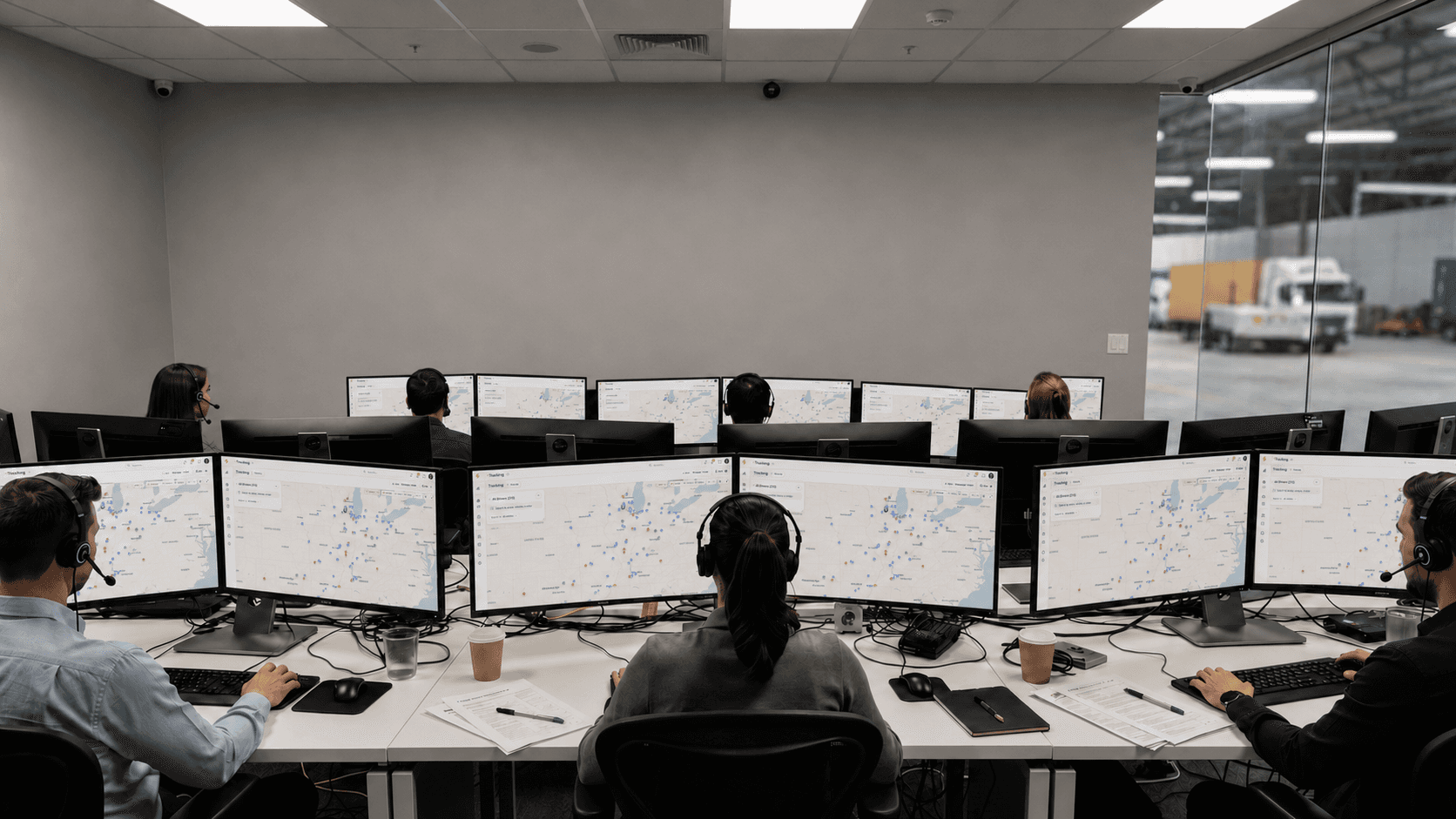
Example scenario: A Hemut customer brokerage posts a dry van load Atlanta–Chicago at $1,900. The voice AI agent calls a matched carrier, confirms the pickup window, trailer type, and rate within pre-set parameters. On confirmation, it updates the TMS, triggers a rate confirmation email, marks capacity as used, and secures loads without dispatcher involvement. This is dispatch automation in action, letting logistics teams handle more loads per day.

For unexpected questions about accessorials or multi-stop changes, the agent flags and routes the call to a human dispatcher. This keeps manual intervention limited to only the exceptions that need human expertise.

Metrics for logistics planners to watch:

  • Increase in loads covered per dispatcher per day

  • Drop in time-to-confirm delivery windows and appointments across multiple facilities

  • Reduction in missing paperwork at billing

Later: Structured Exception & Breakdown Voice Workflows

After status and execution workflows are stable, AI voice can carefully support exception handling for breakdowns, delays, and repair-shop coordination. AI reduces exception rates to below 5% in logistics scheduling when escalation rules are clearly defined.

Exception types in freight:

  • Truck breakdowns or tire blowouts requiring phone agents to coordinate roadside service

  • Major delays from weather, closures, or accidents

  • Missed appointments requiring same-day delivery scheduling with live call monitoring

AI-driven scheduling platforms achieve appointment confirmation rates exceeding 95%, and voice AI agents can handle multi-turn conversations for scheduling with a natural voice that doesn't force callers into rigid menus. AI can automate appointment confirmations and rescheduling instantly once the decision tree is clear.

How the AI voice agent handles a breakdown:

  • Collects driver identity, unit number, precise location via GPS or nearest exit

  • Asks structured questions about equipment condition, load sensitivity, and urgency

  • Checks an approved list of repair shops by region and operating hours

  • Creates a structured incident ticket in Hemut's TMS and routes to a human for approval

This aligns with NIST's AI Risk Management Framework, which emphasizes defined steps, logs, and human oversight for higher-risk AI workflows in supply chains. Gartner projects 60% of supply chain disruptions will be resolved automatically by 2031, but today, freight exceptions involving safety and cost still need a human in the loop.

AI improves on-time performance by 25% through automation even at this exception management layer, because structured incident data reaches dispatchers faster than phone tag. Role based access controls ensure that only authorized personnel approve spend decisions, while customer data and carrier data stay protected. The integration depth between voice AI and TMS determines whether these workflows succeed-shallow integrations that only log transcripts without updating shipment status fall short, whether in standard trucking or marine freight operations.

Example: On January 5, 2027, a refrigerated unit breaks down 40 miles outside Dallas. The AI voice agent collects reefer temperature, time since alarm, and the driver's assessment. It proposes the nearest 24/7 repair shop from a vetted list and routes the incident to the night dispatcher. After approval, AI calls the shipper to provide a realistic ETA and mitigation steps. Text to speech and generative AI capabilities ensure the call sounds professional and clear. Every step is logged, and missed calls are automatically retried.
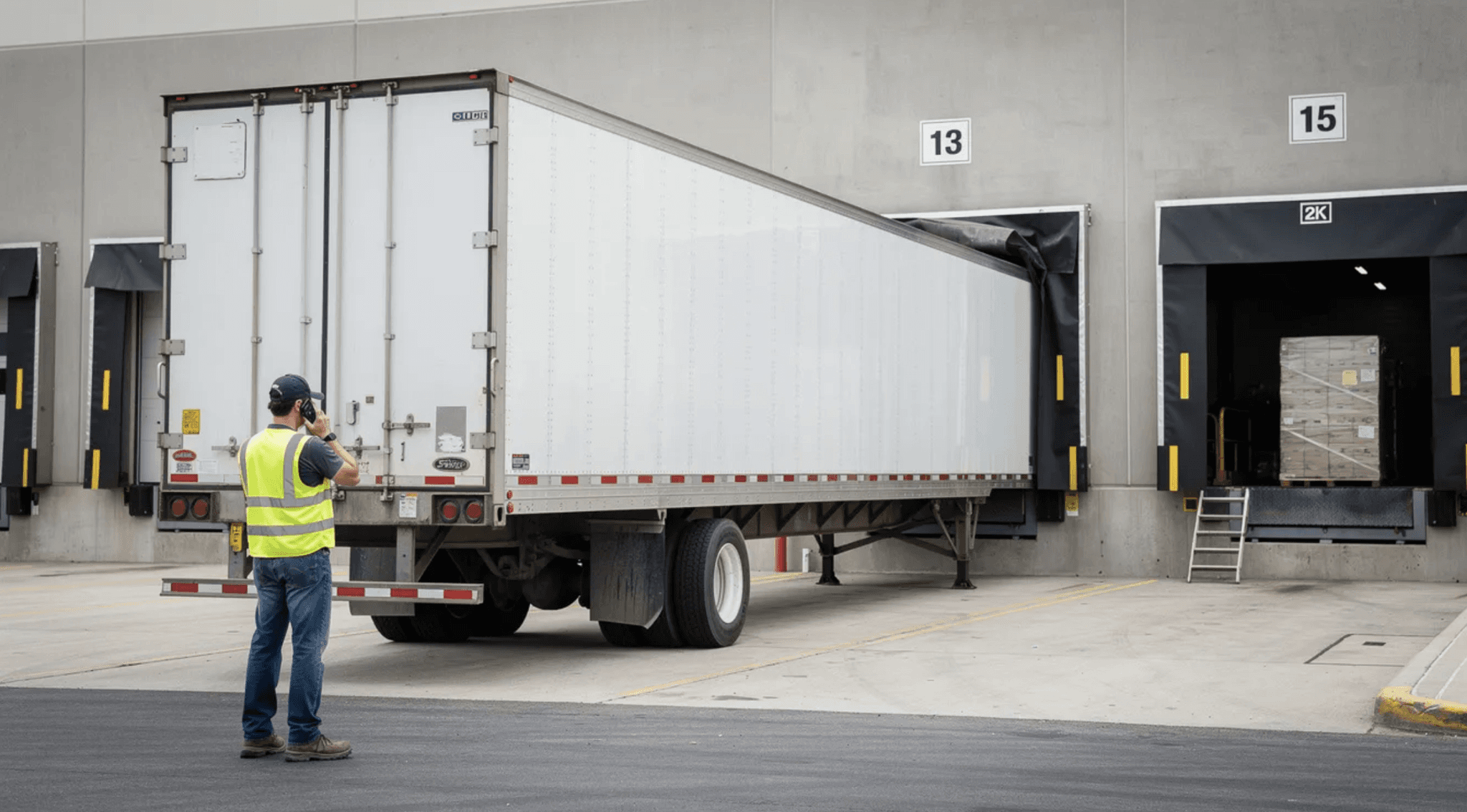
These exception workflows come later because they touch safety, claims, and customer satisfaction. They require mature integrations, trust in earlier workflows, and well-defined playbooks. Elastic scaling ensures that even during peak disruption events, the system handles call handling without degradation. Conversational AI and AI assistants at this tier are powerful, but logistics operators must treat them as decision-support tools, not autonomous decision-makers.

Designing, Deploying, and Scaling AI Voice Workflows with Hemut

Hemut is both an AI-native TMS and an embedded partner that helps carriers and freight brokers design, test, and refine AI voice agent freight workflows across dispatch, tracking, and brokerage operations. Deploying voice AI starts with choosing the right first workflow.

How to choose your first workflow:

  • List your repeat calls by department for one full week (dispatch, tracking, maintenance, accounting)

  • Pick the call type with the clearest status field in the TMS and the highest volume

  • Ensure the AI can update a specific field or trigger a clear next step-this is what separates digital transformation from noise

Hemut's integration approach:

  • Connect voice agents directly to Hemut's TMS for access to shipment details, driver coordination schedules, and routing plans

  • Integrate external load boards and telematics for real-time location, load details, and lane availability

  • Use secure APIs and audit trails so every AI call has a traceable record in logistics systems

Recommended rollout phases:

  • Pilot (30–60 days): a single lane or customer account focused on check-calls and shipment tracking, measuring call volume reduction and load status accuracy

  • Expansion: add carrier coordination, load confirmations, load matching, and appointment scheduling once KPIs are stable

  • Exception support: introduce structured breakdown and delay workflows with human approval steps and reduce manual work across the board

KPIs to monitor:

  • Manual call volume per dispatcher before vs. after deployment

  • On-time delivery rate and "unknown status" minutes on active loads

  • Loads covered per day and time to first response on new tenders

  • Exceptions escalated correctly vs. mishandled by the agent, keeping operational efficiency gains measurable

Hemut's team sits with operations, listening to real phone conversations, co-designing scripts, and tuning prompts specifically for each carrier or broker. This is how logistics runs when the software and services layer work together. Our pricing can be outcome-based-tied to more loads booked, reduced after-hours misses, or confirmed cost-per-load targets.

Export last month's call logs, group the top three call reasons, and choose the simplest status-update workflow as your first AI voice pilot with Hemut.

AI voice agents in freight should automate shipment tracking and status calls first, then load execution workflows, and only later structured exceptions like breakdowns or repair outreach. That layered approach keeps risk low while trust builds across logistics operations.

When we say "ai voice agent freight workflows," we mean real phone conversations handled by AI that update tracking boards, freight dispatch queues, and TMS records in real time. AI voice agents improve efficiency in freight workflows by automating communication tasks, and they operate continuously, managing high-volume communications without fatigue. Organizations can achieve a 15–20% reduction in logistics costs by adopting AI voice agents.

At Hemut, we build AI-native TMS software and embed our teams into carrier and broker operations, so these voice AI workflows connect directly to dispatch, billing, and customer portals. Here is the three-layer roadmap:

  • First: high-frequency, low-judgment status workflows (location, ETA, arrived, empty, callback needed)

  • Next: load execution workflows (carrier coordination, appointment scheduling, missing-doc follow-ups, rate negotiation)

  • Later: controlled exception workflows (breakdowns, delays, reschedules) with clear escalation rules and conditional logic

Modern voice AI platforms use advanced Large Language Models to facilitate communication across these layers, enabling contextual conversations that feel natural rather than scripted.

Start with Status Visibility: Tracking & Check-Call Voice Workflows

Tracking and check-calls are the lowest-risk first workflows because the question is usually simple and the answer maps to a single TMS field. AI voice agents provide real-time tracking updates by contacting drivers automatically, and they consolidate tracking into a single view for shippers. These calls rarely require human judgment.

Typical calls an AI voice agent handles on day one:

  • "What's the current location and ETA?" from freight brokers or shippers

  • "Has the driver arrived, departed, or been loaded?"

  • "Can you confirm pickup or verify this load is still on schedule?"

Each call maps to clear status fields: arrived, departed, loaded, empty, delayed, ETA timestamp, and callback needed. AI voice agents can improve shipment visibility by collecting updates and syncing with TMS, and they can confirm load status and optimize freight movement. AI voice agents ensure consistent execution by following standardized workflows, and voice agents can proactively follow up with carriers and provide instant updates.

AI voice agents can handle thousands of concurrent calls from carriers for load inquiries and can manage spikes in call volume without increasing staffing needs. They can handle up to 30% of calls for dispatch operations even in early deployment, and they perform automated driver check-ins and carrier rate negotiations around the clock. AI improves on-time performance by 25% in logistics scheduling, and it can automate load-to-truck matching and ETA updates as part of the same workflow.

AI agents can ensure compliance through real-time transcription and voice-to-text features using natural language processing, and AI maintains audit logs for compliance reviews in logistics. Every call becomes a structured event with audit trails, not just a transcript.

Measurable outcomes to track:

  • Percentage of status calls handled by voice AI (target above 80% after stabilization)

  • Reduction in "unknown" load status minutes on active shipments

  • Drop in inbound call volume to dispatchers

Hemut's TMS treats each check-call as a workflow step that updates dispatch coordination boards, customer portals, and accounting triggers simultaneously.

Next Layer: Load Execution & Carrier Coordination Voice Workflows

Once shipment tracking is reliable, AI voice agents integrate into load execution tasks that push freight from "planned" to "in progress" to "completed." AI can automate broker calls and outreach, and AI agents can handle over 30% of broker calls without human intervention. Automated systems improve load booking metrics significantly, and AI reduces manual handling time for broker communications.

Concrete workflows for this layer:

  • Carrier coordination: AI can automate load-to-truck matching processes. Automated load matching reduces manual call handling for dispatchers. AI can suggest re-routing when conditions change during load matching, and AI improves load booking metrics by speeding tender acceptance.

  • Load booking and confirmation: AI agents can book loads instantly and update TMS in real-time by pulling candidate loads from integrated load boards like DAT or Truckstop. AI voice agents can help prevent missed opportunities by providing 24/7 communication support, ensuring logistics companies never miss a tender.

  • Rate negotiation: AI can negotiate freight rates in real time and reduces manual rate negotiation time to seconds. Automated negotiations ensure optimal pricing based on parameters, and voice AI agents can negotiate rates within user-defined rules. AI can handle rate negotiations without human intervention when the minimum rate floor and ceiling are predefined.

  • Paperwork reminders: outbound calls chasing missing PODs, BOLs, and lumper receipts to reduce manual effort at billing time

AI voice agents reduce manual labor costs in freight workflows, and AI reduces logistics costs by approximately 15% across carrier coordination and load matching.

Example scenario: A Hemut customer brokerage posts a dry van load Atlanta–Chicago at $1,900. The voice AI agent calls a matched carrier, confirms the pickup window, trailer type, and rate within pre-set parameters. On confirmation, it updates the TMS, triggers a rate confirmation email, marks capacity as used, and secures loads without dispatcher involvement. This is dispatch automation in action, letting logistics teams handle more loads per day.

For unexpected questions about accessorials or multi-stop changes, the agent flags and routes the call to a human dispatcher. This keeps manual intervention limited to only the exceptions that need human expertise.

Metrics for logistics planners to watch:

  • Increase in loads covered per dispatcher per day

  • Drop in time-to-confirm delivery windows and appointments across multiple facilities

  • Reduction in missing paperwork at billing

Later: Structured Exception & Breakdown Voice Workflows

After status and execution workflows are stable, AI voice can carefully support exception handling for breakdowns, delays, and repair-shop coordination. AI reduces exception rates to below 5% in logistics scheduling when escalation rules are clearly defined.

Exception types in freight:

  • Truck breakdowns or tire blowouts requiring phone agents to coordinate roadside service

  • Major delays from weather, closures, or accidents

  • Missed appointments requiring same-day delivery scheduling with live call monitoring

AI-driven scheduling platforms achieve appointment confirmation rates exceeding 95%, and voice AI agents can handle multi-turn conversations for scheduling with a natural voice that doesn't force callers into rigid menus. AI can automate appointment confirmations and rescheduling instantly once the decision tree is clear.

How the AI voice agent handles a breakdown:

  • Collects driver identity, unit number, precise location via GPS or nearest exit

  • Asks structured questions about equipment condition, load sensitivity, and urgency

  • Checks an approved list of repair shops by region and operating hours

  • Creates a structured incident ticket in Hemut's TMS and routes to a human for approval

This aligns with NIST's AI Risk Management Framework, which emphasizes defined steps, logs, and human oversight for higher-risk AI workflows in supply chains. Gartner projects 60% of supply chain disruptions will be resolved automatically by 2031, but today, freight exceptions involving safety and cost still need a human in the loop.

AI improves on-time performance by 25% through automation even at this exception management layer, because structured incident data reaches dispatchers faster than phone tag. Role based access controls ensure that only authorized personnel approve spend decisions, while customer data and carrier data stay protected. The integration depth between voice AI and TMS determines whether these workflows succeed-shallow integrations that only log transcripts without updating shipment status fall short, whether in standard trucking or marine freight operations.

Example: On January 5, 2027, a refrigerated unit breaks down 40 miles outside Dallas. The AI voice agent collects reefer temperature, time since alarm, and the driver's assessment. It proposes the nearest 24/7 repair shop from a vetted list and routes the incident to the night dispatcher. After approval, AI calls the shipper to provide a realistic ETA and mitigation steps. Text to speech and generative AI capabilities ensure the call sounds professional and clear. Every step is logged, and missed calls are automatically retried.

These exception workflows come later because they touch safety, claims, and customer satisfaction. They require mature integrations, trust in earlier workflows, and well-defined playbooks. Elastic scaling ensures that even during peak disruption events, the system handles call handling without degradation. Conversational AI and AI assistants at this tier are powerful, but logistics operators must treat them as decision-support tools, not autonomous decision-makers.

Designing, Deploying, and Scaling AI Voice Workflows with Hemut

Hemut is both an AI-native TMS and an embedded partner that helps carriers and freight brokers design, test, and refine AI voice agent freight workflows across dispatch, tracking, and brokerage operations. Deploying voice AI starts with choosing the right first workflow.

How to choose your first workflow:

  • List your repeat calls by department for one full week (dispatch, tracking, maintenance, accounting)

  • Pick the call type with the clearest status field in the TMS and the highest volume

  • Ensure the AI can update a specific field or trigger a clear next step-this is what separates digital transformation from noise

Hemut's integration approach:

  • Connect voice agents directly to Hemut's TMS for access to shipment details, driver coordination schedules, and routing plans

  • Integrate external load boards and telematics for real-time location, load details, and lane availability

  • Use secure APIs and audit trails so every AI call has a traceable record in logistics systems

Recommended rollout phases:

  • Pilot (30–60 days): a single lane or customer account focused on check-calls and shipment tracking, measuring call volume reduction and load status accuracy

  • Expansion: add carrier coordination, load confirmations, load matching, and appointment scheduling once KPIs are stable

  • Exception support: introduce structured breakdown and delay workflows with human approval steps and reduce manual work across the board

KPIs to monitor:

  • Manual call volume per dispatcher before vs. after deployment

  • On-time delivery rate and "unknown status" minutes on active loads

  • Loads covered per day and time to first response on new tenders

  • Exceptions escalated correctly vs. mishandled by the agent, keeping operational efficiency gains measurable

Hemut's team sits with operations, listening to real phone conversations, co-designing scripts, and tuning prompts specifically for each carrier or broker. This is how logistics runs when the software and services layer work together. Our pricing can be outcome-based-tied to more loads booked, reduced after-hours misses, or confirmed cost-per-load targets.

Export last month's call logs, group the top three call reasons, and choose the simplest status-update workflow as your first AI voice pilot with Hemut.

AI voice agents in freight should automate shipment tracking and status calls first, then load execution workflows, and only later structured exceptions like breakdowns or repair outreach. That layered approach keeps risk low while trust builds across logistics operations.

When we say "ai voice agent freight workflows," we mean real phone conversations handled by AI that update tracking boards, freight dispatch queues, and TMS records in real time. AI voice agents improve efficiency in freight workflows by automating communication tasks, and they operate continuously, managing high-volume communications without fatigue. Organizations can achieve a 15–20% reduction in logistics costs by adopting AI voice agents.

At Hemut, we build AI-native TMS software and embed our teams into carrier and broker operations, so these voice AI workflows connect directly to dispatch, billing, and customer portals. Here is the three-layer roadmap:

  • First: high-frequency, low-judgment status workflows (location, ETA, arrived, empty, callback needed)

  • Next: load execution workflows (carrier coordination, appointment scheduling, missing-doc follow-ups, rate negotiation)

  • Later: controlled exception workflows (breakdowns, delays, reschedules) with clear escalation rules and conditional logic

Modern voice AI platforms use advanced Large Language Models to facilitate communication across these layers, enabling contextual conversations that feel natural rather than scripted.

Start with Status Visibility: Tracking & Check-Call Voice Workflows

Tracking and check-calls are the lowest-risk first workflows because the question is usually simple and the answer maps to a single TMS field. AI voice agents provide real-time tracking updates by contacting drivers automatically, and they consolidate tracking into a single view for shippers. These calls rarely require human judgment.

Typical calls an AI voice agent handles on day one:

  • "What's the current location and ETA?" from freight brokers or shippers

  • "Has the driver arrived, departed, or been loaded?"

  • "Can you confirm pickup or verify this load is still on schedule?"

Each call maps to clear status fields: arrived, departed, loaded, empty, delayed, ETA timestamp, and callback needed. AI voice agents can improve shipment visibility by collecting updates and syncing with TMS, and they can confirm load status and optimize freight movement. AI voice agents ensure consistent execution by following standardized workflows, and voice agents can proactively follow up with carriers and provide instant updates.

AI voice agents can handle thousands of concurrent calls from carriers for load inquiries and can manage spikes in call volume without increasing staffing needs. They can handle up to 30% of calls for dispatch operations even in early deployment, and they perform automated driver check-ins and carrier rate negotiations around the clock. AI improves on-time performance by 25% in logistics scheduling, and it can automate load-to-truck matching and ETA updates as part of the same workflow.

AI agents can ensure compliance through real-time transcription and voice-to-text features using natural language processing, and AI maintains audit logs for compliance reviews in logistics. Every call becomes a structured event with audit trails, not just a transcript.

Measurable outcomes to track:

  • Percentage of status calls handled by voice AI (target above 80% after stabilization)

  • Reduction in "unknown" load status minutes on active shipments

  • Drop in inbound call volume to dispatchers

Hemut's TMS treats each check-call as a workflow step that updates dispatch coordination boards, customer portals, and accounting triggers simultaneously.

Next Layer: Load Execution & Carrier Coordination Voice Workflows

Once shipment tracking is reliable, AI voice agents integrate into load execution tasks that push freight from "planned" to "in progress" to "completed." AI can automate broker calls and outreach, and AI agents can handle over 30% of broker calls without human intervention. Automated systems improve load booking metrics significantly, and AI reduces manual handling time for broker communications.

Concrete workflows for this layer:

  • Carrier coordination: AI can automate load-to-truck matching processes. Automated load matching reduces manual call handling for dispatchers. AI can suggest re-routing when conditions change during load matching, and AI improves load booking metrics by speeding tender acceptance.

  • Load booking and confirmation: AI agents can book loads instantly and update TMS in real-time by pulling candidate loads from integrated load boards like DAT or Truckstop. AI voice agents can help prevent missed opportunities by providing 24/7 communication support, ensuring logistics companies never miss a tender.

  • Rate negotiation: AI can negotiate freight rates in real time and reduces manual rate negotiation time to seconds. Automated negotiations ensure optimal pricing based on parameters, and voice AI agents can negotiate rates within user-defined rules. AI can handle rate negotiations without human intervention when the minimum rate floor and ceiling are predefined.

  • Paperwork reminders: outbound calls chasing missing PODs, BOLs, and lumper receipts to reduce manual effort at billing time

AI voice agents reduce manual labor costs in freight workflows, and AI reduces logistics costs by approximately 15% across carrier coordination and load matching.

Example scenario: A Hemut customer brokerage posts a dry van load Atlanta–Chicago at $1,900. The voice AI agent calls a matched carrier, confirms the pickup window, trailer type, and rate within pre-set parameters. On confirmation, it updates the TMS, triggers a rate confirmation email, marks capacity as used, and secures loads without dispatcher involvement. This is dispatch automation in action, letting logistics teams handle more loads per day.

For unexpected questions about accessorials or multi-stop changes, the agent flags and routes the call to a human dispatcher. This keeps manual intervention limited to only the exceptions that need human expertise.

Metrics for logistics planners to watch:

  • Increase in loads covered per dispatcher per day

  • Drop in time-to-confirm delivery windows and appointments across multiple facilities

  • Reduction in missing paperwork at billing

Later: Structured Exception & Breakdown Voice Workflows

After status and execution workflows are stable, AI voice can carefully support exception handling for breakdowns, delays, and repair-shop coordination. AI reduces exception rates to below 5% in logistics scheduling when escalation rules are clearly defined.

Exception types in freight:

  • Truck breakdowns or tire blowouts requiring phone agents to coordinate roadside service

  • Major delays from weather, closures, or accidents

  • Missed appointments requiring same-day delivery scheduling with live call monitoring

AI-driven scheduling platforms achieve appointment confirmation rates exceeding 95%, and voice AI agents can handle multi-turn conversations for scheduling with a natural voice that doesn't force callers into rigid menus. AI can automate appointment confirmations and rescheduling instantly once the decision tree is clear.

How the AI voice agent handles a breakdown:

  • Collects driver identity, unit number, precise location via GPS or nearest exit

  • Asks structured questions about equipment condition, load sensitivity, and urgency

  • Checks an approved list of repair shops by region and operating hours

  • Creates a structured incident ticket in Hemut's TMS and routes to a human for approval

This aligns with NIST's AI Risk Management Framework, which emphasizes defined steps, logs, and human oversight for higher-risk AI workflows in supply chains. Gartner projects 60% of supply chain disruptions will be resolved automatically by 2031, but today, freight exceptions involving safety and cost still need a human in the loop.

AI improves on-time performance by 25% through automation even at this exception management layer, because structured incident data reaches dispatchers faster than phone tag. Role based access controls ensure that only authorized personnel approve spend decisions, while customer data and carrier data stay protected. The integration depth between voice AI and TMS determines whether these workflows succeed-shallow integrations that only log transcripts without updating shipment status fall short, whether in standard trucking or marine freight operations.

Example: On January 5, 2027, a refrigerated unit breaks down 40 miles outside Dallas. The AI voice agent collects reefer temperature, time since alarm, and the driver's assessment. It proposes the nearest 24/7 repair shop from a vetted list and routes the incident to the night dispatcher. After approval, AI calls the shipper to provide a realistic ETA and mitigation steps. Text to speech and generative AI capabilities ensure the call sounds professional and clear. Every step is logged, and missed calls are automatically retried.

These exception workflows come later because they touch safety, claims, and customer satisfaction. They require mature integrations, trust in earlier workflows, and well-defined playbooks. Elastic scaling ensures that even during peak disruption events, the system handles call handling without degradation. Conversational AI and AI assistants at this tier are powerful, but logistics operators must treat them as decision-support tools, not autonomous decision-makers.

Designing, Deploying, and Scaling AI Voice Workflows with Hemut

Hemut is both an AI-native TMS and an embedded partner that helps carriers and freight brokers design, test, and refine AI voice agent freight workflows across dispatch, tracking, and brokerage operations. Deploying voice AI starts with choosing the right first workflow.

How to choose your first workflow:

  • List your repeat calls by department for one full week (dispatch, tracking, maintenance, accounting)

  • Pick the call type with the clearest status field in the TMS and the highest volume

  • Ensure the AI can update a specific field or trigger a clear next step-this is what separates digital transformation from noise

Hemut's integration approach:

  • Connect voice agents directly to Hemut's TMS for access to shipment details, driver coordination schedules, and routing plans

  • Integrate external load boards and telematics for real-time location, load details, and lane availability

  • Use secure APIs and audit trails so every AI call has a traceable record in logistics systems

Recommended rollout phases:

  • Pilot (30–60 days): a single lane or customer account focused on check-calls and shipment tracking, measuring call volume reduction and load status accuracy

  • Expansion: add carrier coordination, load confirmations, load matching, and appointment scheduling once KPIs are stable

  • Exception support: introduce structured breakdown and delay workflows with human approval steps and reduce manual work across the board

KPIs to monitor:

  • Manual call volume per dispatcher before vs. after deployment

  • On-time delivery rate and "unknown status" minutes on active loads

  • Loads covered per day and time to first response on new tenders

  • Exceptions escalated correctly vs. mishandled by the agent, keeping operational efficiency gains measurable

Hemut's team sits with operations, listening to real phone conversations, co-designing scripts, and tuning prompts specifically for each carrier or broker. This is how logistics runs when the software and services layer work together. Our pricing can be outcome-based-tied to more loads booked, reduced after-hours misses, or confirmed cost-per-load targets.

Export last month's call logs, group the top three call reasons, and choose the simplest status-update workflow as your first AI voice pilot with Hemut.

Transform your freight operations and leap ahead of the competition.

© Hemut co All Rights Reserved 2026

Transform your freight operations and leap ahead of the competition.

© Hemut co All Rights Reserved 2026

Transform your freight operations and leap ahead of the competition.

© Hemut co All Rights Reserved 2026