
Transportation Management Systems
Do Truckers Trust AI Voice Agents? What Makes Them Stay on the Line
Not all AI voice agents earn driver trust. See what keeps truckers on the line: clear scripts, fast answers, real human backup. By Hemut.

Truck drivers generally view AI voice agents with skepticism, and for good reason. Most calls that hit a driver's phone are interruptions. But the answer to "do truckers trust AI voice agents" is not a flat no; it depends entirely on execution.
When do truckers actually trust AI voice agents?
Truckers trust AI voice agents when the call is fast, accurate on freight details, and easy to escalate to a human. They are less likely to trust agents that pause too long, mishear load numbers, hide the purpose of the call, or trap them in a script with no way out.
Natural-sounding AI voices, those that can mimic the speech and tonality of humans, are widely preferred, no matter the industry. This natural-sounding voice, when paired with speed, accuracy, respect, and conciseness, is exactly what truck drivers are looking for in a call.
What destroys trust instantly? Long pauses, misheard PO or trailer numbers, generic salesy intros, and rigid scripts with no human backup. At Hemut, we build AI-native freight voice agents focused on precise freight context and clear handoff to dispatchers, and polished voices. Drivers are busy, and we respect that.
Consider the scale: Voice agents are calling people who may be driving, dispatching, fueling, or doing paperwork. The FMCSA reports that drivers spend an average of 50% of their non-driving time on paperwork and communication tasks, highlighting the critical need for hands-free, automated solutions like AI voice agents to reduce distractions and improve compliance.
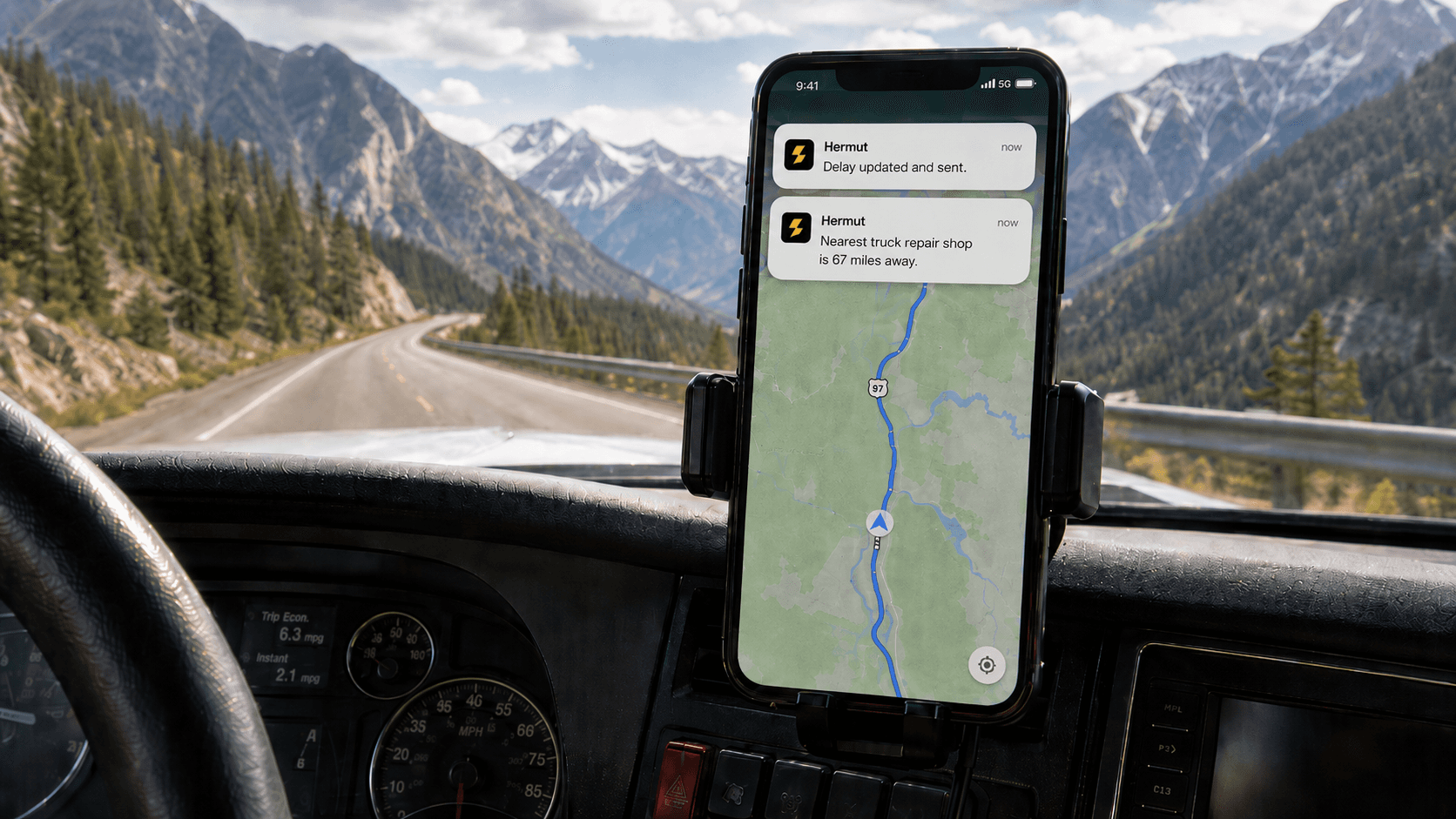
What a driver needs to hear in the first 5 seconds of an AI call
It's 2 p.m. in Amarillo. A driver is fueling up, checking their ELD, watching weather, and thinking about tomorrow's drop and hook. The phone rings. If the first sentence doesn't immediately tell them the purpose of the call, they hang up.
Drivers appreciate hands-free tools that allow them to interact safely while driving. Voice-native AI tools help drivers manage logistics without looking away from the road. Smooth, conversational AI interaction improves engagement with truck drivers-but only if the message is clear from the start.
Here is what the AI voice should say immediately:
Identify the company and role: "This is an automated dispatcher from [Carrier/Broker Name]."
Identify the load: "Load 54821, Dallas to Atlanta, delivery tomorrow at 08:00."
State the purpose in one line: "I just need a quick yes or no on your ETA."
This structure, emphasizing clarity, is what makes our voice agents so effective.
Good opening: "Hi, this is Hemut dispatch calling about load 54821, Dallas to Atlanta. Are you still on track for an 08:00 delivery tomorrow?"
Bad opening: "Hello! This is an important call from your logistics partner. We have something exciting to share with you today about your upcoming-"
The second version sounds like a robocall. The driver hangs up before the agent finishes the sentence.
Behaviors that make truckers distrust AI voice agents
Drivers are highly sensitive to micro-frictions. Silence, repetition, and incorrect freight details are immediate red flags. Many truck drivers are skeptical of AI systems used for monitoring their behavior, and that skepticism carries over to any AI that wastes their time. Drivers dislike AI systems that create extra work instead of reducing it.
Latency kills trust. When an AI voice pauses two to three seconds after a prompt, drivers assume the system is broken. Industry research on real time voice systems emphasizes streaming audio and low latency for exactly this reason. Dead air on a freight call feels like being ghosted.
Wrong data ends the call. Mishearing a pickup number, confusing a 7/15 delivery with 7/16, or mis-stating a trailer number-any of these is enough for a driver to hang up. Many drivers have low trust in AI-driven data regarding real-time freight availability, and one wrong date confirms that distrust. AI voice agents receive lower trust when they repeatedly ask the same questions, which feels robotic and pointless.
Rigid scripts frustrate. If a driver asks about detention or a lumper issue and the agent cannot adjust, patience evaporates. Proper context matters immensely.

Voice polish vs functional performance
Realistic AI demos often focus on emotional range, expressive tone, and mood. But freight calls are about speed, accuracy, and low friction-not cinematic performance. AI voice assistants are judged based on their ability to save time without distractions.
There are two competing priorities in this space:
Voice polish: natural AI voices with breathing sounds, emotion, and prosody-the kind you would hear in a content creation tool, professional voiceovers platform, or AI voiceover product. Some AI voice generators offer 500+ voice options, can create voiceovers in seconds, support over 100 languages, and produce studio-quality narration. AI voice agents can generate realistic voiceovers in over 50 languages. These capabilities matter for audiobooks, podcasts, youtube videos, social media content, and product demos.
Functional performance: entity capture, low latency, clear handling of noisy audio, and robust confirmation of critical details. Two-way interaction is preferred by truck drivers for better communication usability.
A 2024 study on calibrated humanness found that linguistic fillers like "um" and "uh" actually hurt clarity and trust. The biggest driver of trust was ease of communication-how clearly and quickly the interaction works-not the character of the voice itself.
In Hemut’s work with carriers, our realistic AI voices, combined with our accuracy, have led to positive reception among drivers, dispatchers, and receptionists.
How human backup and escalation paths build driver trust
Truckers trust AI more when they know a human is close by. Truck drivers prefer technology that assists instead of replaces human decision-making. Many drivers fear AI will disrupt their work. A human presence is considered necessary to manage daily logistics and exceptions in dispatch.
AI is trusted for safety tasks like monitoring driver fatigue and preventive maintenance. But these call types should almost always have human backup:
Breakdowns, accidents, and roadside emergencies
Temperature excursions and reefer alarms
Detention over two hours, unloading conflicts, or OS&D issues
Multi-stop appointment schedules with ambiguous customer instructions
How escalation should work in practice: the agent announces the option up front-"Say 'dispatcher' any time to talk to a person." The transfer is fast and carries context: load number, the last 30 seconds of transcript, and the driver's phone number. The driver should never have to repeat everything.
NIST's 2024 AI Risk Management Framework supports human-in-the-loop oversight for higher-risk interactions. This is not just a comfort feature-it is a design requirement for any serious freight operation.
At Hemut, AI voice is embedded directly into dispatch workflows so agents know when to stop and hand off, based on uncertainty thresholds or driver frustration cues like repeated corrections.
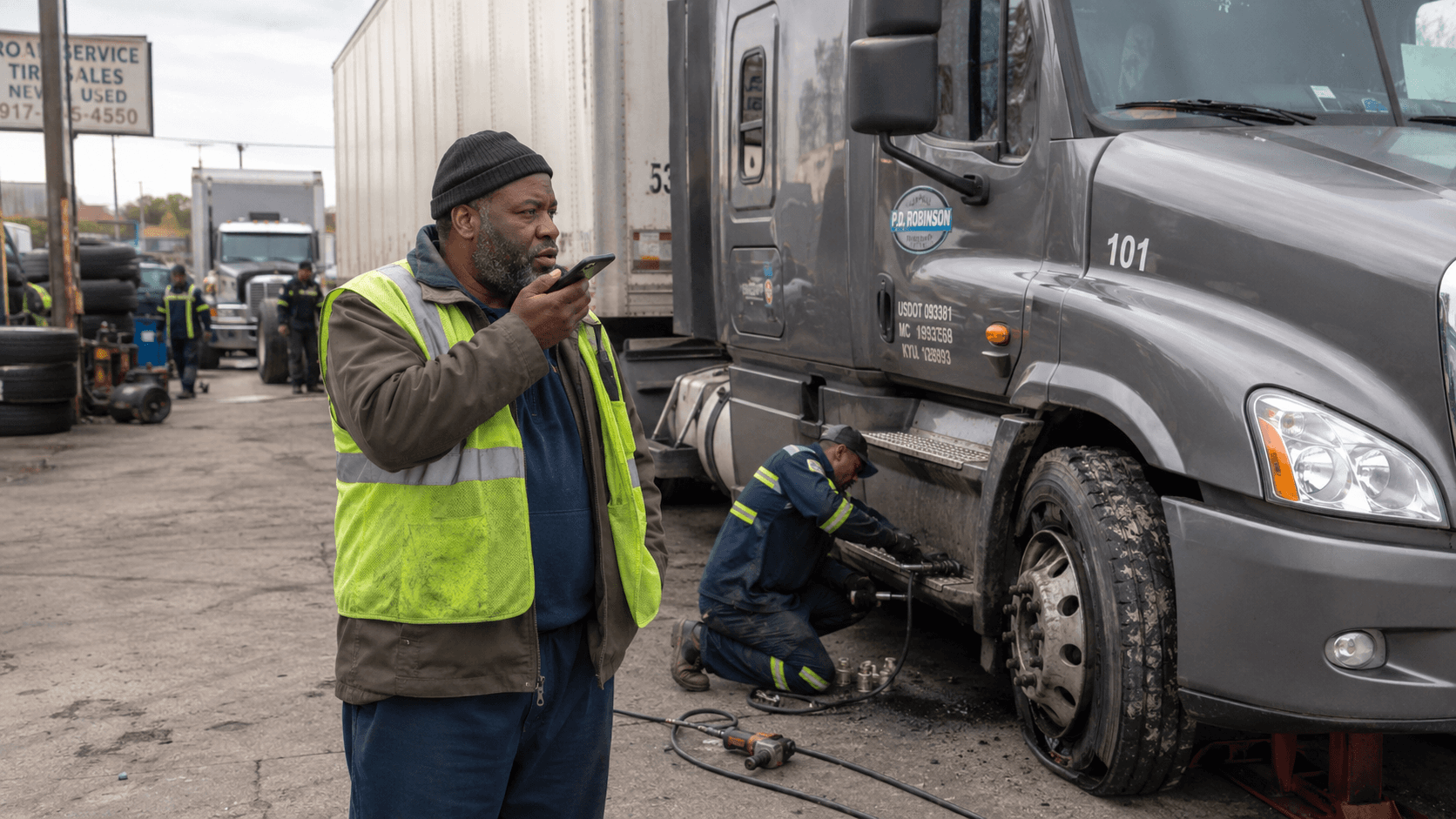
Design principles for AI voice agents in trucking
Hemut builds AI-native TMS and voice workflows for freight carriers and brokers, not generic call centers. AI automates dispatch processes in trucking operations and improves communication between carriers and brokers.
Here are the principles that guide our approach:
Freight-first context: The agent always starts from TMS data-current load, status, last check-call, appointments-instead of generic AI text prompts. You can access and edit every workflow from a single app.
Low-latency pipeline: Streaming audio so human speech interruptions are handled gracefully. Never leave two to three seconds of dead air. The pacing should match a real conversational dispatch call.
Narrow, explicit skills: Design agents around three to five workflows-check-calls, ETA updates, empty calls, appointment confirmations. Do not build a "do everything" assistant with a script that tries to sound like your own voice.
Clear consent and purpose: Identify the system as automated, name the carrier or broker, and speak the language the driver expects. AI voice agents can support over 15 languages. Voice cloning technology can create custom voices from a one-minute audio sample, giving each carrier a unique voice and consistent brand identity.
Human override: Anytime frustration, confusion, or repeated errors appear, escalate to a human dispatcher on the same call.
Unlike generic AI voice generator tools oriented toward marketing or video editor platforms, Hemut's stack integrates with dispatch, billing, and brokerage workflows so the AI never guesses on rates, detention, or accessorials.
Micro-case: A 15-truck reefer carrier uses Hemut to automate nightly "empty/ETA tomorrow" calls. AI voice agents can handle conversations end-to-end on routine workflows-agents manage 70 to 80 percent of calls, and dispatchers take only exceptions. The team watches completion rates weekly and the record shows consistent results.
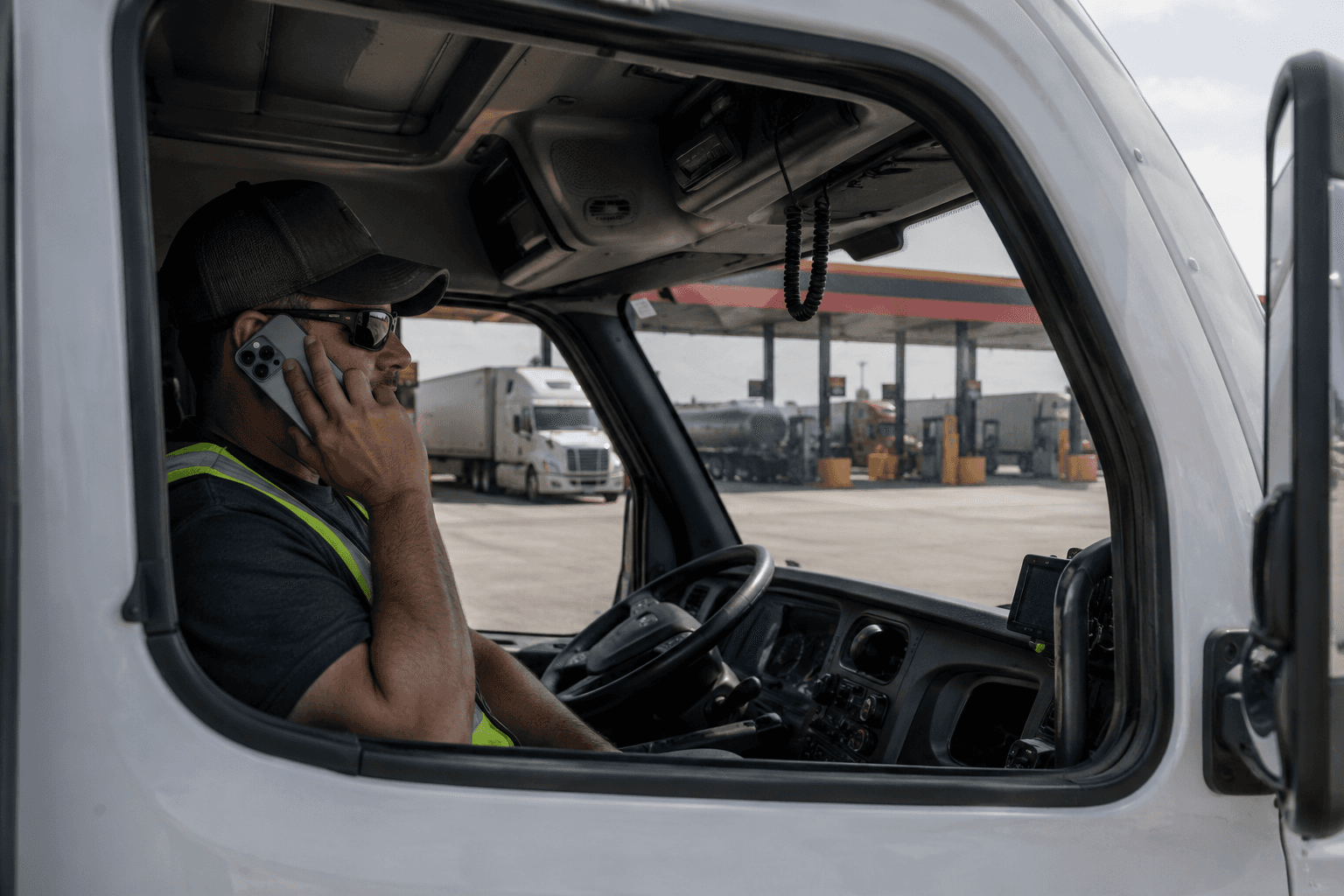
Where AI voice fits in a carrier or broker operation today
AI voice is not replacing dispatchers. It is handling repetitive, low-risk conversations so humans can focus on complex freight problems. AI assistance is more accepted for routine tasks rather than handling complex issues. AI struggles to manage unpredictable daily logistics such as last-minute route changes-and that is fine.
Here is where AI voice agents create real value today:
Outbound driver check-calls: pre-pick up, in-transit ETAs, post-delivery empty calls. AI voice agents automate inbound and outbound calls, and AI voice agents reduce missed calls and manual workload.
Appointment reminders: simple rescheduling where delivery windows are flexible.
Shipper and consignee status calls: dock-ready confirmations, paperwork status, gate instructions. No need to watch or hear a long message-just a quick confirmation.
Brokerage-side updates: tendered loads and rate confirmations with human escalation for negotiation.
AI optimizes load planning for trucking efficiency. AI enhances route planning to reduce delivery times. AI-driven tools can reduce operational costs by 20%, freeing up budget for the business to invest in driver retention and fleet growth.
High-risk scenarios-complex rate disputes, safety incidents, hazmat loads-should stay human-led. But trust grows over time. Once drivers hear the AI consistently get their lane, load number, and schedule right, they accept it as a time-saving tool, not a threat.
Design every carrier call so the driver understands the load, purpose, and human-transfer path within the first few seconds.
Key takeaways and next steps for AI voice in trucking
Drivers may trust AI voice when calls are brief, accurate, and clearly tied to a specific load.
Trust for AI voice models depends on context, low latency, and human backup.
The fastest way to lose driver trust is wrong freight information or forcing them through rigid scripts. Free them to speak naturally and get a fast answer.
AI voice is most valuable today on routine, high-volume workflows inside your TMS-not on messy edge cases that need a person.
The goal is not to fool drivers with a human-sounding bot. It is to finish necessary work without wasting their time.
Next step: Audit your current driver call flows. Redesign the first ten seconds and your escalation logic. Then evaluate where Hemut's embedded AI voice agents could safely take over routine calls-starting with one workflow, measuring completion rates, and expanding from there.
Truck drivers generally view AI voice agents with skepticism, and for good reason. Most calls that hit a driver's phone are interruptions. But the answer to "do truckers trust AI voice agents" is not a flat no; it depends entirely on execution.
When do truckers actually trust AI voice agents?
Truckers trust AI voice agents when the call is fast, accurate on freight details, and easy to escalate to a human. They are less likely to trust agents that pause too long, mishear load numbers, hide the purpose of the call, or trap them in a script with no way out.
Natural-sounding AI voices, those that can mimic the speech and tonality of humans, are widely preferred, no matter the industry. This natural-sounding voice, when paired with speed, accuracy, respect, and conciseness, is exactly what truck drivers are looking for in a call.
What destroys trust instantly? Long pauses, misheard PO or trailer numbers, generic salesy intros, and rigid scripts with no human backup. At Hemut, we build AI-native freight voice agents focused on precise freight context and clear handoff to dispatchers, and polished voices. Drivers are busy, and we respect that.
Consider the scale: Voice agents are calling people who may be driving, dispatching, fueling, or doing paperwork. The FMCSA reports that drivers spend an average of 50% of their non-driving time on paperwork and communication tasks, highlighting the critical need for hands-free, automated solutions like AI voice agents to reduce distractions and improve compliance.
What a driver needs to hear in the first 5 seconds of an AI call
It's 2 p.m. in Amarillo. A driver is fueling up, checking their ELD, watching weather, and thinking about tomorrow's drop and hook. The phone rings. If the first sentence doesn't immediately tell them the purpose of the call, they hang up.
Drivers appreciate hands-free tools that allow them to interact safely while driving. Voice-native AI tools help drivers manage logistics without looking away from the road. Smooth, conversational AI interaction improves engagement with truck drivers-but only if the message is clear from the start.
Here is what the AI voice should say immediately:
Identify the company and role: "This is an automated dispatcher from [Carrier/Broker Name]."
Identify the load: "Load 54821, Dallas to Atlanta, delivery tomorrow at 08:00."
State the purpose in one line: "I just need a quick yes or no on your ETA."
This structure, emphasizing clarity, is what makes our voice agents so effective.
Good opening: "Hi, this is Hemut dispatch calling about load 54821, Dallas to Atlanta. Are you still on track for an 08:00 delivery tomorrow?"
Bad opening: "Hello! This is an important call from your logistics partner. We have something exciting to share with you today about your upcoming-"
The second version sounds like a robocall. The driver hangs up before the agent finishes the sentence.
Behaviors that make truckers distrust AI voice agents
Drivers are highly sensitive to micro-frictions. Silence, repetition, and incorrect freight details are immediate red flags. Many truck drivers are skeptical of AI systems used for monitoring their behavior, and that skepticism carries over to any AI that wastes their time. Drivers dislike AI systems that create extra work instead of reducing it.
Latency kills trust. When an AI voice pauses two to three seconds after a prompt, drivers assume the system is broken. Industry research on real time voice systems emphasizes streaming audio and low latency for exactly this reason. Dead air on a freight call feels like being ghosted.
Wrong data ends the call. Mishearing a pickup number, confusing a 7/15 delivery with 7/16, or mis-stating a trailer number-any of these is enough for a driver to hang up. Many drivers have low trust in AI-driven data regarding real-time freight availability, and one wrong date confirms that distrust. AI voice agents receive lower trust when they repeatedly ask the same questions, which feels robotic and pointless.
Rigid scripts frustrate. If a driver asks about detention or a lumper issue and the agent cannot adjust, patience evaporates. Proper context matters immensely.
Voice polish vs functional performance
Realistic AI demos often focus on emotional range, expressive tone, and mood. But freight calls are about speed, accuracy, and low friction-not cinematic performance. AI voice assistants are judged based on their ability to save time without distractions.
There are two competing priorities in this space:
Voice polish: natural AI voices with breathing sounds, emotion, and prosody-the kind you would hear in a content creation tool, professional voiceovers platform, or AI voiceover product. Some AI voice generators offer 500+ voice options, can create voiceovers in seconds, support over 100 languages, and produce studio-quality narration. AI voice agents can generate realistic voiceovers in over 50 languages. These capabilities matter for audiobooks, podcasts, youtube videos, social media content, and product demos.
Functional performance: entity capture, low latency, clear handling of noisy audio, and robust confirmation of critical details. Two-way interaction is preferred by truck drivers for better communication usability.
A 2024 study on calibrated humanness found that linguistic fillers like "um" and "uh" actually hurt clarity and trust. The biggest driver of trust was ease of communication-how clearly and quickly the interaction works-not the character of the voice itself.
In Hemut’s work with carriers, our realistic AI voices, combined with our accuracy, have led to positive reception among drivers, dispatchers, and receptionists.
How human backup and escalation paths build driver trust
Truckers trust AI more when they know a human is close by. Truck drivers prefer technology that assists instead of replaces human decision-making. Many drivers fear AI will disrupt their work. A human presence is considered necessary to manage daily logistics and exceptions in dispatch.
AI is trusted for safety tasks like monitoring driver fatigue and preventive maintenance. But these call types should almost always have human backup:
Breakdowns, accidents, and roadside emergencies
Temperature excursions and reefer alarms
Detention over two hours, unloading conflicts, or OS&D issues
Multi-stop appointment schedules with ambiguous customer instructions
How escalation should work in practice: the agent announces the option up front-"Say 'dispatcher' any time to talk to a person." The transfer is fast and carries context: load number, the last 30 seconds of transcript, and the driver's phone number. The driver should never have to repeat everything.
NIST's 2024 AI Risk Management Framework supports human-in-the-loop oversight for higher-risk interactions. This is not just a comfort feature-it is a design requirement for any serious freight operation.
At Hemut, AI voice is embedded directly into dispatch workflows so agents know when to stop and hand off, based on uncertainty thresholds or driver frustration cues like repeated corrections.
Design principles for AI voice agents in trucking
Hemut builds AI-native TMS and voice workflows for freight carriers and brokers, not generic call centers. AI automates dispatch processes in trucking operations and improves communication between carriers and brokers.
Here are the principles that guide our approach:
Freight-first context: The agent always starts from TMS data-current load, status, last check-call, appointments-instead of generic AI text prompts. You can access and edit every workflow from a single app.
Low-latency pipeline: Streaming audio so human speech interruptions are handled gracefully. Never leave two to three seconds of dead air. The pacing should match a real conversational dispatch call.
Narrow, explicit skills: Design agents around three to five workflows-check-calls, ETA updates, empty calls, appointment confirmations. Do not build a "do everything" assistant with a script that tries to sound like your own voice.
Clear consent and purpose: Identify the system as automated, name the carrier or broker, and speak the language the driver expects. AI voice agents can support over 15 languages. Voice cloning technology can create custom voices from a one-minute audio sample, giving each carrier a unique voice and consistent brand identity.
Human override: Anytime frustration, confusion, or repeated errors appear, escalate to a human dispatcher on the same call.
Unlike generic AI voice generator tools oriented toward marketing or video editor platforms, Hemut's stack integrates with dispatch, billing, and brokerage workflows so the AI never guesses on rates, detention, or accessorials.
Micro-case: A 15-truck reefer carrier uses Hemut to automate nightly "empty/ETA tomorrow" calls. AI voice agents can handle conversations end-to-end on routine workflows-agents manage 70 to 80 percent of calls, and dispatchers take only exceptions. The team watches completion rates weekly and the record shows consistent results.
Where AI voice fits in a carrier or broker operation today
AI voice is not replacing dispatchers. It is handling repetitive, low-risk conversations so humans can focus on complex freight problems. AI assistance is more accepted for routine tasks rather than handling complex issues. AI struggles to manage unpredictable daily logistics such as last-minute route changes-and that is fine.
Here is where AI voice agents create real value today:
Outbound driver check-calls: pre-pick up, in-transit ETAs, post-delivery empty calls. AI voice agents automate inbound and outbound calls, and AI voice agents reduce missed calls and manual workload.
Appointment reminders: simple rescheduling where delivery windows are flexible.
Shipper and consignee status calls: dock-ready confirmations, paperwork status, gate instructions. No need to watch or hear a long message-just a quick confirmation.
Brokerage-side updates: tendered loads and rate confirmations with human escalation for negotiation.
AI optimizes load planning for trucking efficiency. AI enhances route planning to reduce delivery times. AI-driven tools can reduce operational costs by 20%, freeing up budget for the business to invest in driver retention and fleet growth.
High-risk scenarios-complex rate disputes, safety incidents, hazmat loads-should stay human-led. But trust grows over time. Once drivers hear the AI consistently get their lane, load number, and schedule right, they accept it as a time-saving tool, not a threat.
Design every carrier call so the driver understands the load, purpose, and human-transfer path within the first few seconds.
Key takeaways and next steps for AI voice in trucking
Drivers may trust AI voice when calls are brief, accurate, and clearly tied to a specific load.
Trust for AI voice models depends on context, low latency, and human backup.
The fastest way to lose driver trust is wrong freight information or forcing them through rigid scripts. Free them to speak naturally and get a fast answer.
AI voice is most valuable today on routine, high-volume workflows inside your TMS-not on messy edge cases that need a person.
The goal is not to fool drivers with a human-sounding bot. It is to finish necessary work without wasting their time.
Next step: Audit your current driver call flows. Redesign the first ten seconds and your escalation logic. Then evaluate where Hemut's embedded AI voice agents could safely take over routine calls-starting with one workflow, measuring completion rates, and expanding from there.
Truck drivers generally view AI voice agents with skepticism, and for good reason. Most calls that hit a driver's phone are interruptions. But the answer to "do truckers trust AI voice agents" is not a flat no; it depends entirely on execution.
When do truckers actually trust AI voice agents?
Truckers trust AI voice agents when the call is fast, accurate on freight details, and easy to escalate to a human. They are less likely to trust agents that pause too long, mishear load numbers, hide the purpose of the call, or trap them in a script with no way out.
Natural-sounding AI voices, those that can mimic the speech and tonality of humans, are widely preferred, no matter the industry. This natural-sounding voice, when paired with speed, accuracy, respect, and conciseness, is exactly what truck drivers are looking for in a call.
What destroys trust instantly? Long pauses, misheard PO or trailer numbers, generic salesy intros, and rigid scripts with no human backup. At Hemut, we build AI-native freight voice agents focused on precise freight context and clear handoff to dispatchers, and polished voices. Drivers are busy, and we respect that.
Consider the scale: Voice agents are calling people who may be driving, dispatching, fueling, or doing paperwork. The FMCSA reports that drivers spend an average of 50% of their non-driving time on paperwork and communication tasks, highlighting the critical need for hands-free, automated solutions like AI voice agents to reduce distractions and improve compliance.
What a driver needs to hear in the first 5 seconds of an AI call
It's 2 p.m. in Amarillo. A driver is fueling up, checking their ELD, watching weather, and thinking about tomorrow's drop and hook. The phone rings. If the first sentence doesn't immediately tell them the purpose of the call, they hang up.
Drivers appreciate hands-free tools that allow them to interact safely while driving. Voice-native AI tools help drivers manage logistics without looking away from the road. Smooth, conversational AI interaction improves engagement with truck drivers-but only if the message is clear from the start.
Here is what the AI voice should say immediately:
Identify the company and role: "This is an automated dispatcher from [Carrier/Broker Name]."
Identify the load: "Load 54821, Dallas to Atlanta, delivery tomorrow at 08:00."
State the purpose in one line: "I just need a quick yes or no on your ETA."
This structure, emphasizing clarity, is what makes our voice agents so effective.
Good opening: "Hi, this is Hemut dispatch calling about load 54821, Dallas to Atlanta. Are you still on track for an 08:00 delivery tomorrow?"
Bad opening: "Hello! This is an important call from your logistics partner. We have something exciting to share with you today about your upcoming-"
The second version sounds like a robocall. The driver hangs up before the agent finishes the sentence.
Behaviors that make truckers distrust AI voice agents
Drivers are highly sensitive to micro-frictions. Silence, repetition, and incorrect freight details are immediate red flags. Many truck drivers are skeptical of AI systems used for monitoring their behavior, and that skepticism carries over to any AI that wastes their time. Drivers dislike AI systems that create extra work instead of reducing it.
Latency kills trust. When an AI voice pauses two to three seconds after a prompt, drivers assume the system is broken. Industry research on real time voice systems emphasizes streaming audio and low latency for exactly this reason. Dead air on a freight call feels like being ghosted.
Wrong data ends the call. Mishearing a pickup number, confusing a 7/15 delivery with 7/16, or mis-stating a trailer number-any of these is enough for a driver to hang up. Many drivers have low trust in AI-driven data regarding real-time freight availability, and one wrong date confirms that distrust. AI voice agents receive lower trust when they repeatedly ask the same questions, which feels robotic and pointless.
Rigid scripts frustrate. If a driver asks about detention or a lumper issue and the agent cannot adjust, patience evaporates. Proper context matters immensely.
Voice polish vs functional performance
Realistic AI demos often focus on emotional range, expressive tone, and mood. But freight calls are about speed, accuracy, and low friction-not cinematic performance. AI voice assistants are judged based on their ability to save time without distractions.
There are two competing priorities in this space:
Voice polish: natural AI voices with breathing sounds, emotion, and prosody-the kind you would hear in a content creation tool, professional voiceovers platform, or AI voiceover product. Some AI voice generators offer 500+ voice options, can create voiceovers in seconds, support over 100 languages, and produce studio-quality narration. AI voice agents can generate realistic voiceovers in over 50 languages. These capabilities matter for audiobooks, podcasts, youtube videos, social media content, and product demos.
Functional performance: entity capture, low latency, clear handling of noisy audio, and robust confirmation of critical details. Two-way interaction is preferred by truck drivers for better communication usability.
A 2024 study on calibrated humanness found that linguistic fillers like "um" and "uh" actually hurt clarity and trust. The biggest driver of trust was ease of communication-how clearly and quickly the interaction works-not the character of the voice itself.
In Hemut’s work with carriers, our realistic AI voices, combined with our accuracy, have led to positive reception among drivers, dispatchers, and receptionists.
How human backup and escalation paths build driver trust
Truckers trust AI more when they know a human is close by. Truck drivers prefer technology that assists instead of replaces human decision-making. Many drivers fear AI will disrupt their work. A human presence is considered necessary to manage daily logistics and exceptions in dispatch.
AI is trusted for safety tasks like monitoring driver fatigue and preventive maintenance. But these call types should almost always have human backup:
Breakdowns, accidents, and roadside emergencies
Temperature excursions and reefer alarms
Detention over two hours, unloading conflicts, or OS&D issues
Multi-stop appointment schedules with ambiguous customer instructions
How escalation should work in practice: the agent announces the option up front-"Say 'dispatcher' any time to talk to a person." The transfer is fast and carries context: load number, the last 30 seconds of transcript, and the driver's phone number. The driver should never have to repeat everything.
NIST's 2024 AI Risk Management Framework supports human-in-the-loop oversight for higher-risk interactions. This is not just a comfort feature-it is a design requirement for any serious freight operation.
At Hemut, AI voice is embedded directly into dispatch workflows so agents know when to stop and hand off, based on uncertainty thresholds or driver frustration cues like repeated corrections.
Design principles for AI voice agents in trucking
Hemut builds AI-native TMS and voice workflows for freight carriers and brokers, not generic call centers. AI automates dispatch processes in trucking operations and improves communication between carriers and brokers.
Here are the principles that guide our approach:
Freight-first context: The agent always starts from TMS data-current load, status, last check-call, appointments-instead of generic AI text prompts. You can access and edit every workflow from a single app.
Low-latency pipeline: Streaming audio so human speech interruptions are handled gracefully. Never leave two to three seconds of dead air. The pacing should match a real conversational dispatch call.
Narrow, explicit skills: Design agents around three to five workflows-check-calls, ETA updates, empty calls, appointment confirmations. Do not build a "do everything" assistant with a script that tries to sound like your own voice.
Clear consent and purpose: Identify the system as automated, name the carrier or broker, and speak the language the driver expects. AI voice agents can support over 15 languages. Voice cloning technology can create custom voices from a one-minute audio sample, giving each carrier a unique voice and consistent brand identity.
Human override: Anytime frustration, confusion, or repeated errors appear, escalate to a human dispatcher on the same call.
Unlike generic AI voice generator tools oriented toward marketing or video editor platforms, Hemut's stack integrates with dispatch, billing, and brokerage workflows so the AI never guesses on rates, detention, or accessorials.
Micro-case: A 15-truck reefer carrier uses Hemut to automate nightly "empty/ETA tomorrow" calls. AI voice agents can handle conversations end-to-end on routine workflows-agents manage 70 to 80 percent of calls, and dispatchers take only exceptions. The team watches completion rates weekly and the record shows consistent results.
Where AI voice fits in a carrier or broker operation today
AI voice is not replacing dispatchers. It is handling repetitive, low-risk conversations so humans can focus on complex freight problems. AI assistance is more accepted for routine tasks rather than handling complex issues. AI struggles to manage unpredictable daily logistics such as last-minute route changes-and that is fine.
Here is where AI voice agents create real value today:
Outbound driver check-calls: pre-pick up, in-transit ETAs, post-delivery empty calls. AI voice agents automate inbound and outbound calls, and AI voice agents reduce missed calls and manual workload.
Appointment reminders: simple rescheduling where delivery windows are flexible.
Shipper and consignee status calls: dock-ready confirmations, paperwork status, gate instructions. No need to watch or hear a long message-just a quick confirmation.
Brokerage-side updates: tendered loads and rate confirmations with human escalation for negotiation.
AI optimizes load planning for trucking efficiency. AI enhances route planning to reduce delivery times. AI-driven tools can reduce operational costs by 20%, freeing up budget for the business to invest in driver retention and fleet growth.
High-risk scenarios-complex rate disputes, safety incidents, hazmat loads-should stay human-led. But trust grows over time. Once drivers hear the AI consistently get their lane, load number, and schedule right, they accept it as a time-saving tool, not a threat.
Design every carrier call so the driver understands the load, purpose, and human-transfer path within the first few seconds.
Key takeaways and next steps for AI voice in trucking
Drivers may trust AI voice when calls are brief, accurate, and clearly tied to a specific load.
Trust for AI voice models depends on context, low latency, and human backup.
The fastest way to lose driver trust is wrong freight information or forcing them through rigid scripts. Free them to speak naturally and get a fast answer.
AI voice is most valuable today on routine, high-volume workflows inside your TMS-not on messy edge cases that need a person.
The goal is not to fool drivers with a human-sounding bot. It is to finish necessary work without wasting their time.
Next step: Audit your current driver call flows. Redesign the first ten seconds and your escalation logic. Then evaluate where Hemut's embedded AI voice agents could safely take over routine calls-starting with one workflow, measuring completion rates, and expanding from there.
Transform your freight operations and leap ahead of the competition.
© Hemut co All Rights Reserved 2026
Transform your freight operations and leap ahead of the competition.
© Hemut co All Rights Reserved 2026
Transform your freight operations and leap ahead of the competition.
© Hemut co All Rights Reserved 2026