
Transportation Management Systems
Freight Operations in 2026: Where AI Voice Agents and Modern TMS Actually Pay Off
See exactly where AI voice agents and a modern TMS deliver real ROI in freight operations: fewer calls, faster cycles, proven results. By Hemut.

U.S. freight carriers and brokers in 2026 are running on tight margins, short-staffed operations floors, and phones that never stop ringing-especially after hours.
Why freight teams care about AI voice and workflow automation
Freight brokers use an AI voice agent today for a specific reason: the calls that consume the most time are also the most predictable. Repeat check calls confirming ETAs, appointment scheduling with warehouses, missing POD reminders, and after-hours incident intake follow patterns that don't require a veteran broker's judgment. They just need to get done.
The real outcome worth measuring isn't minutes of talk time handled by AI agents. It's workflow completion-an updated shipment status, a confirmed stop arrival, an exception flag raised, or an ETA corrected inside the TMS. That's what moves freight forward and reduces follow-ups.
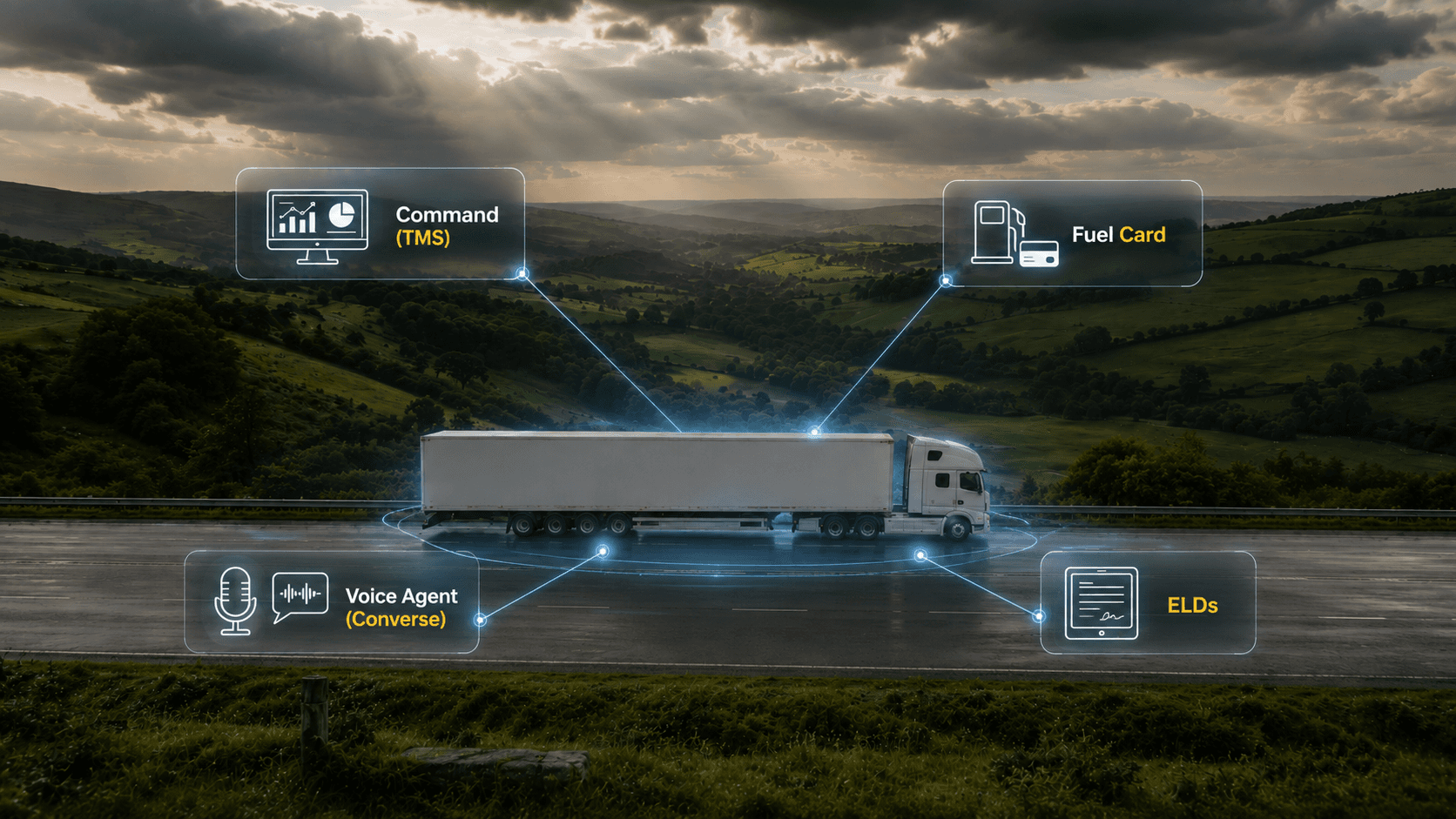
Hemut is built around this principle. As an AI-native TMS and embedded operations partner, Hemut’s voice agents are integrated directly into dispatch and freight brokerage workflows rather than added onto legacy software. During a phone call, the voice agent can capture operational details such as a driver’s ETA, location, and load status, then update that information in the TMS without manual re-entry.
The Hemut platform can then use those updates to support downstream workflows such as invoicing and carrier payments. This article connects freight fundamentals, including modes, lanes, and pricing pressures in the transportation market, with how AI voice agents work alongside existing phone systems.
How shipments actually move in North American trucking
Freight in concrete terms: pallets of consumer goods shipped from Los Angeles to Dallas via dry van, reefer loads of produce from California to Chicago, steel coils from Pittsburgh to Detroit. Freight transportation is categorized into five primary modes: Road, Rail, Ocean, Air, and Intermodal. Cost and efficiency in freight transportation depend on distance, volume, and urgency.
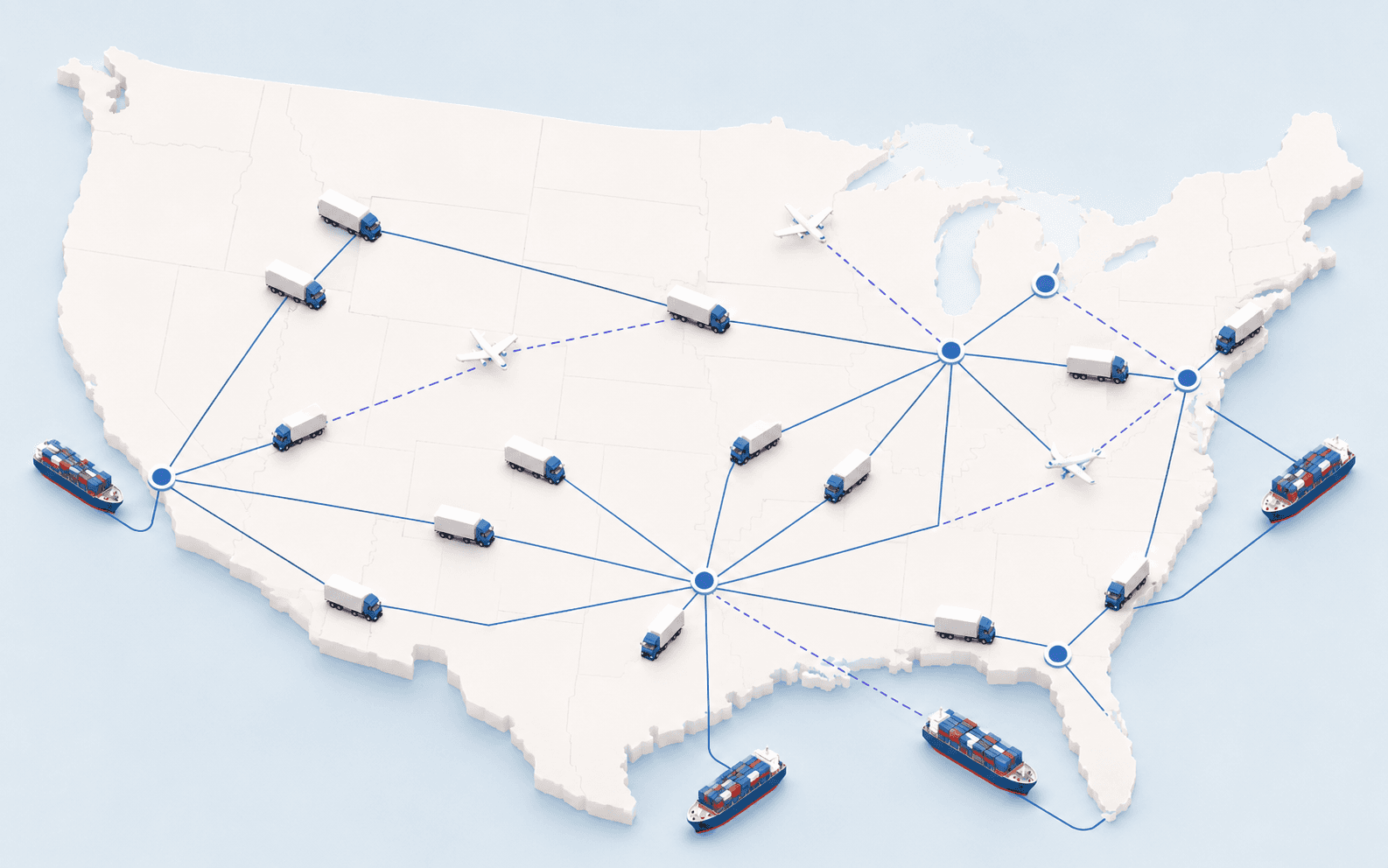
Here are the modes most relevant to North American trucking:
mode | Best For | Key Characteristics |
Full Truckload (FTL) | Large shipments requiring dedicated truck space | Single shipper fills trailer; 300–2,500 miles typical |
Less-Than-Truckload (LTL) | Small shipments that do not fill an entire truck | Consolidated freight; hub-and-spoke network; class/density pricing |
Intermodal | Long-distance cost reduction | Combines multiple transportation modes to enhance efficiency |
Cross-Border | Mexico/Canada truckload | Adds customs clearance, border appointments, regulatory paperwork |
Trucking is typically favored for local and regional shipments due to speed and flexibility. Road transport offers high flexibility for short-haul deliveries, and truck freight is typically best for urgent deliveries and domestic transportation. Rail transport is used for heavy bulk shipments and is cost-effective for long distances-rail freight is efficient for long-distance heavy cargo transport. Cost-conscious shippers often prefer sea or rail options for budget considerations. Ocean freight is the most economical option for transporting large and heavy goods. Air freight is the best option for urgent, high-value, lightweight goods, though air freight is the fastest transport mode but comes with the highest costs. Shipping costs vary based on fuel prices and market conditions.
Common lanes follow I-40, I-80, and I-10 corridors, plus north-south chains like Chicago–Atlanta and Dallas–Houston. Seasonality-produce harvest, holiday retail peaks-tightens capacity and spikes rates. The freight shipping process includes booking, documentation, and customs clearance, and freight shipping involves handling customs clearance for international shipments.
Key roles in every load: shipper (originates freight), carrier (owns equipment, moves it), freight broker (intermediates), and call center or operations agents (make the calls that keep loads moving). Legacy processes-faxed rate confirmations, manual status calls, spreadsheets-still coexist with TMS platforms in 2026.
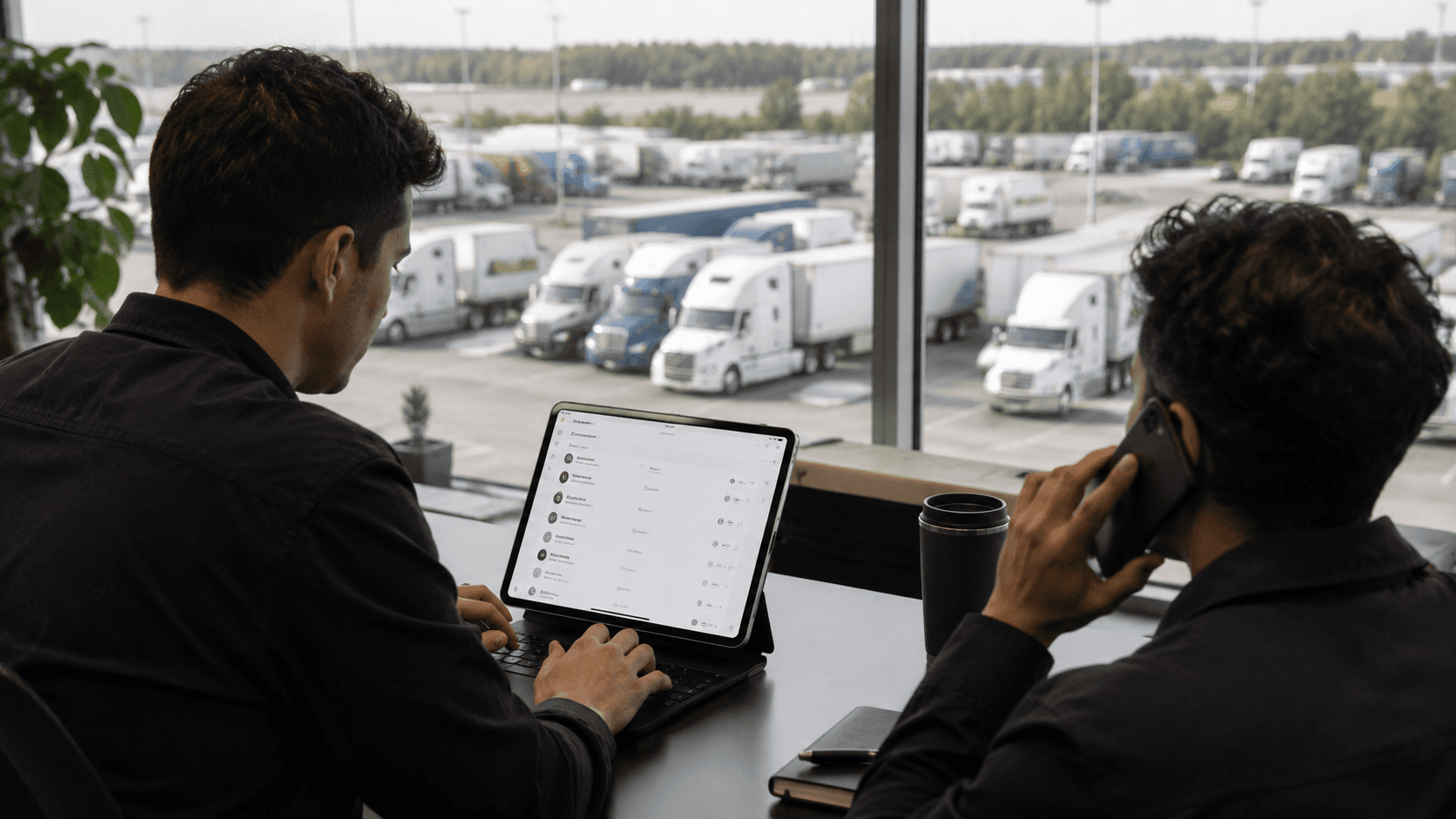
Inside a modern freight brokerage: From load tender to delivered POD
Consider a dry van load tendered Tuesday from Joliet, IL to Dallas, TX. The lifecycle looks like this:
Quote and tender: Broker prices the 900-mile lane, shipper accepts, broker tenders to carriers. Carrier selection balances factors such as price, transit time, and service quality.
Dispatch: Carrier assigns a driver; broker confirms equipment, ETA, and driver contact.
In-transit updates: Broker or dispatcher makes check calls every 2–4 hours-confirming pick-up, verifying location, noting delays. Appointment scheduling at the consignee requires confirming gate windows and dock availability.
Delivery and paperwork: Driver delivers, collects POD. Missing paperwork triggers follow-up phone calls. Accounting generates the invoice and schedules carrier payment.
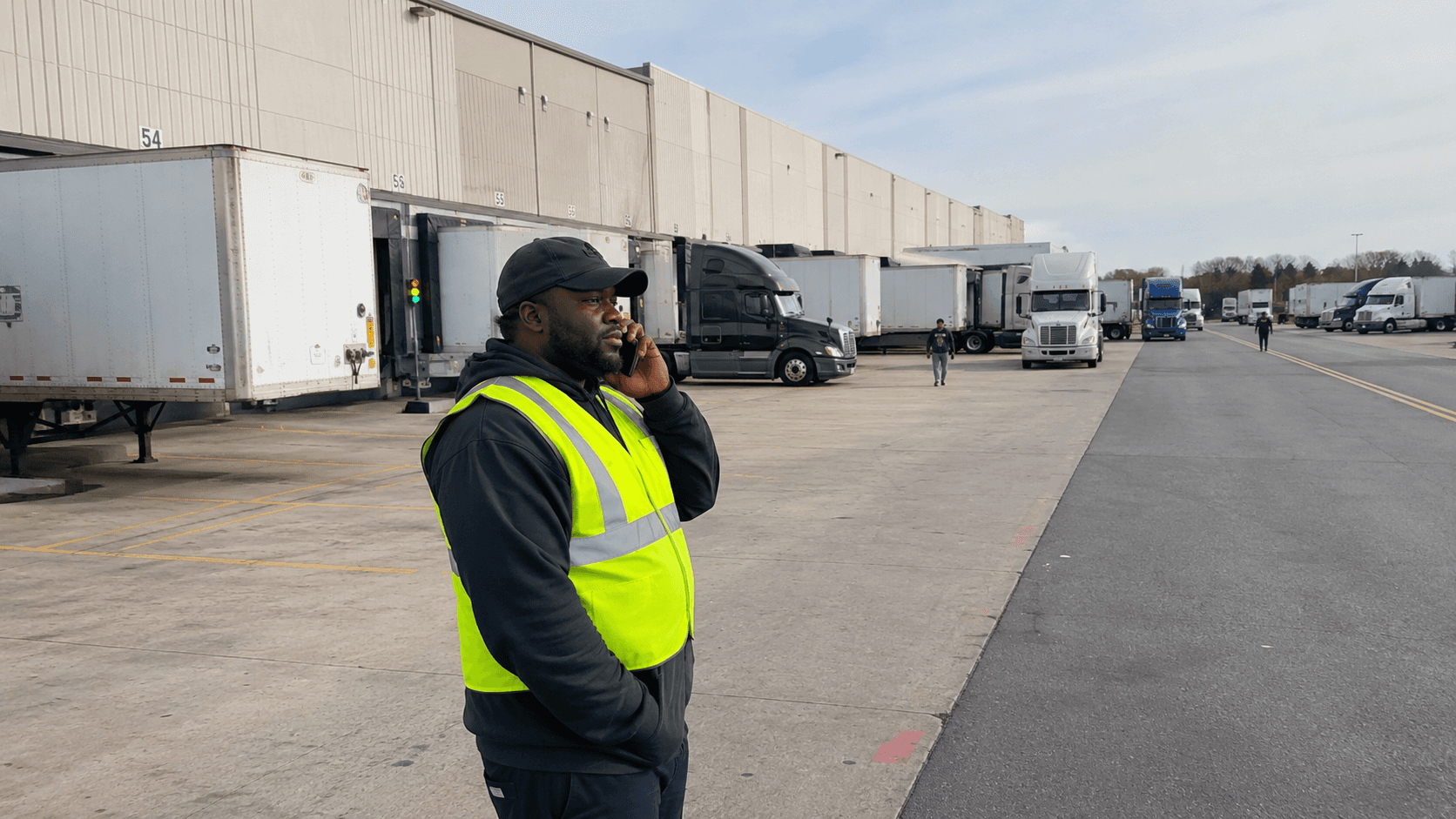
For a 20–40 person freight brokerage running 1,000 active loads, daily call volume can hit 1,000+ check calls alone. Add appointment confirmations, paperwork chases, rate follow-ups, and after-hours emergencies, and small teams are buried. Inbound and outbound calls pile up, creating shadow workflows where critical updates live in voicemails and email threads rather than the TMS.
Good candidates for automation: structured, high volume, routine calls-check calls, appointment confirmations, missing paperwork reminders. Human agents should stay on complex negotiation, escalated service failures, and relationship-driven work.
Where AI voice agents fit in freight operations today
An AI voice agent in freight is a software agent that answers or places calls, understands intent through natural language, and writes results back into the TMS-not just records a voicemail. AI voice agents handle natural conversations unlike rigid IVR systems, and they can resolve requests end-to-end, unlike IVR. Pre-built solutions save time for common workflows, though integration with existing systems is essential for effectiveness.
Here's where they deliver the most in logistics:
In-transit check calls: Outbound calls to drivers confirming location, ETA, and delays. The agent updates load status automatically.
"Where is my truck?" inbound volume: Customers call in; the agent pulls live data and responds. This directly improves customer satisfaction.
Appointment confirmation: The agent calls warehouses to book appointments or confirm dock windows.
Missing paperwork reminders: Automated outbound calls chasing POD or BOL from carriers.
After-hours incident intake: AI voice agents can operate 24/7, improving customer service availability-capturing driver breakdowns, gate delays, and customer issues when no one is at the desk.
AI voice agents can integrate with backend systems for real-time actions. In freight, AI voice agents integrate with existing phone systems through SIP trunks, third party telephony providers, or native PBX setups, routing freight lines to AI first with escalation to human center agents on defined triggers. AI voice agents are best for high-volume, repeatable workflows and can manage thousands of simultaneous conversations, handling thousands of parallel conversations simultaneously. They support multilingual conversations with consistent quality-supporting multiple languages effectively through multilingual support, which helps carriers and brokers serve global audiences who operate across borders in many languages. AI voice agents can support multiple languages effectively.
The key benefits appear when each call triggers a clear state change: an ETA update, arrival logged, or accessorial approved-all written into the TMS. No "press 1 for dispatch." Instead, natural conversations like "I'm at the consignee, waiting on a door" get translated into stop status and notes.

How AI voice agents work under the hood for freight teams
The technical stack behind voice AI in freight has different layers, each handling a distinct job:
Speech Recognition (STT): AI voice agents use Automatic Speech Recognition for real-time transcription, converting a driver's update over a noisy cab line into text. Voice quality matters-road noise, wind, and speaker-phone audio all affect accuracy.
Natural Language Understanding: Interprets the driver’s response within the context of the specific call. For example, the system can distinguish between a routine update such as “five minutes out” and an exception such as “the equipment broke down,” then continue the appropriate workflow.
Large Language Models: Determine responses based on conversation context, pulling from knowledge bases about the specific load, lane history, and carrier profile. This is where generative AI and decision making converge.
Text to speech (TTS): Text-to-Speech engines generate natural sounding speech for responses, maintaining the right brand voice and brand tone through tone control so every call sounds human like and consistent.
Orchestration layer: coordinates the system’s components and triggers workflow actions by updating relevant TMS records, such as loads, stops, and drivers. For example, when a driver provides an ETA, location, or speed update, the agent records that information on the correct load in Hemut’s TMS.
Low and consistent latency is important for keeping voice conversations smooth and natural. The agent should respond quickly enough to maintain the flow of the exchange, whether a driver is checking in at a gate or a shipper is requesting an update on a time-sensitive load. Reliable turn-taking also helps prevent interruptions and overlapping speech. By automating routine conversations, AI voice agents can reduce call-handling time, allowing dispatchers to spend less time on repetitive status calls and more time on higher-value work.
For monitoring, real time analytics track call transcripts mapped to loads, exception tags, and KPIs like containment rate and "calls that produced a status update." Platforms like retell AI and others in the ecosystem offer production ready agent frameworks, though the critical factor is how deeply AI agents integrate with your TMS-not just the telephony layer.
Data security and enterprise grade security in freight voice automation
Enterprise grade security matters because bills of lading, rates, contract terms, and customer identities are sensitive competitive data. Large shippers and 3PLs often require SOC 2 Type II attestations from every vendor touching their data, including AI calling tools. AI voice agents are available 24/7 for customer support, but that constant availability means data security controls must be equally constant.
What freight companies should expect from any voice AI agent vendor:
Encrypted call recordings in transit and at rest
Transcript redaction of PII (driver personal data, phone numbers)
Role-based access control for call center agents accessing audio and dashboards
Audited data access logs
Clear data retention policies: how long recordings are kept, deletion on request
Data residency in U.S. regions (or region-specific as required)
Hemut approaches this with SOC 2-aligned controls, least-privilege access, separate environments per customer entity, and clear retention policies. For brokerages operating as both asset-based carrier and brokerage under one umbrella, multi-entity configurations ensure data isolation. Contractual realities with large shippers in 2026 mean detailed info security questionnaires and incident response plans are table stakes. A mishandled rate confirmation or leaked contract terms can damage negotiation leverage-there's no room for wrong answers on compliance.
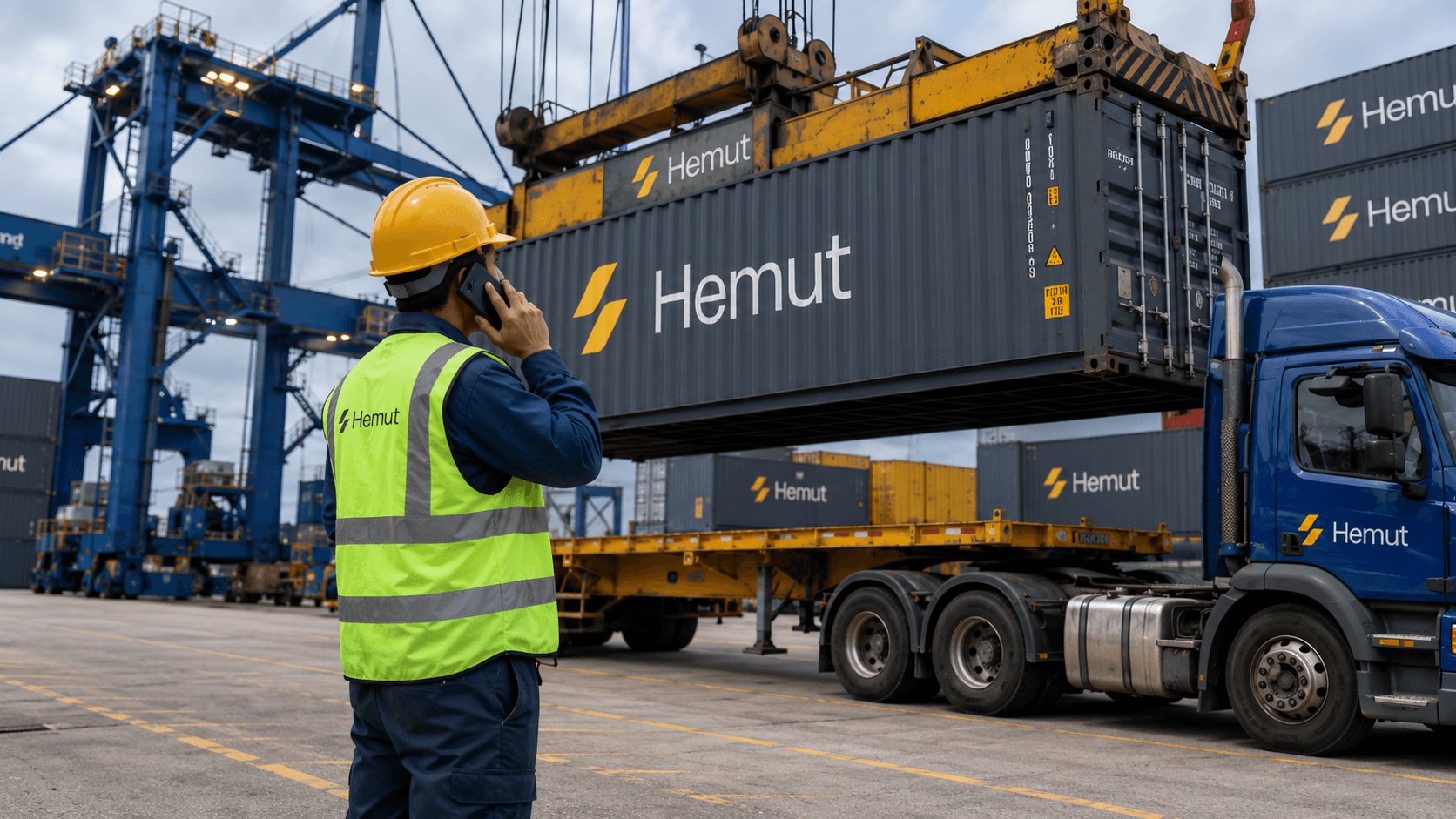
Measuring ROI: From fewer repeat calls to faster freight workflows
The core business outcome freight brokers and carriers should target: fewer repeated touches per load, faster exception visibility, and cleaner billing. Not "AI handled X minutes of talk time."
Freight-centric success metrics to define success metrics around:
Percent of check calls automated
Time from pickup to first status update
Reduction in after-hours call center load
Days-to-invoice after delivery
Reduction in "where is my load?" customer calls
In the broader transportation market, spot van rates hit $3.19/mile in June 2026 with broker gross margins recovering to 13.4%. With target margins of 12–15% per load, operational overhead directly eats into profit. A 25-person brokerage running 700 active loads/day that automates 60% of check calls can measurably shorten follow-up time and improve on-time delivery visibility, helping control costs at enterprise scale.
Cross-industry context reinforces the potential: AI voice agents can handle 80% of medical appointment calls, achieve a 14% conversion rate in lead qualification, and excel in high-volume lead qualification through consistent questioning-capabilities that translate directly to freight's structured, repetitive call patterns. They improve lead qualification with consistent questioning and can capture leads and qualify inbound leads across industries, though in freight the primary value is workflow completion rather than lead capture or qualifying leads for a sales funnel.
Hemut aligns pricing with outcomes-customers don't pay heavily before they see measurable value. Your first step: count one day of repeat calls and group them by workflow before choosing any platform.
Implementing AI voice in freight: A phased rollout plan
A phased approach keeps risk low and learning fast. Here's what works for freight teams:
Map call types by workflow: Categorize calls-check calls, appointment scheduling, rate follow-ups, paperwork chases. Measure volume, average handle time, and cost per call type. This enables informed decisions about where to start.
Pick one bounded use case: Start with check calls on in-transit loads over 300 miles, or appointment confirmations at standard warehouse gates. The software development effort is smaller when the scope is tight.
Integrate with TMS and existing systems: Ensure the TMS exposes load IDs, stop IDs, driver profiles, rate confirmations, and appointment windows via API. Connect to your existing phone systems-SIP trunks, VoIP, PBX. Fast deployment depends on clean data access.
Pilot on a subset of carriers: Run with carriers who respond well and on specific lanes. Measure outcomes for 4–6 weeks. Review 10–20 transcripts daily. Tune prompts and workflow logic-this is where more control over the agent's behavior gets built.
Expand to after-hours and more workflows: Roll out to overnight coverage, weekend inbound volume, missing paperwork outbound calls, and support workflows for customer status inquiries.
For each phase, involve dispatchers and operations leaders in shaping escalation rules. They know which calls turn emotional or complex-those stay with human agents. Start with daylight hours and friendly carriers. Expand to overnight and critical lanes only after the voice AI agent consistently handles routine calls without escalation failures.
Realistic timeframes: an initial check-call pilot can go live in 4–6 weeks. Broader rollouts across multiple branches, modes (FTL, LTL, reefer, cross-border), and in house teams may take one to two quarters. Despite the technical complexity, the ability to start small and scale matters more than trying to automate everything on day one.
How Hemut combines TMS, AI agents, and embedded operations for freight
Hemut is not a generic call center vendor. It's an AI-powered TMS and operations partner built for U.S. freight carriers and brokers who need tailored solutions, not off-the-shelf software.
Core TMS capabilities in freight terms: dispatch board for load and driver management, route planning for multi-stop truckload, brokerage workflows including tendering and rate negotiation, accounting automation for invoices and carrier payments, and RFP automation for large contract bids. The platform supports the vast network of workflows that freight operations demand-from a single payment system for carrier settlements to full-cycle billing.
Hemut's AI agents integrate natively with these workflows. A voice call confirming delivery triggers billing. An exception detected by the agent populates a queue for human review. Notes from a "where is my load?" call push to CRM for key accounts. This isn't a chatbot layered on top-it's an orchestration layer connecting calls to freight outcomes.
The embedded team model is what sets Hemut apart: operations specialists work alongside your dispatch and brokerage staff, analyzing real call patterns, tuning voice agent prompts, and redesigning processes. They help you go to production with a system shaped by your actual freight, not a demo.
Hemut supports enterprise grade configurations, multi-entity setups, and outcome-based pricing so you don't pay before seeing measurable value. The platform can serve global audiences with multiple languages and scale as your business grows.
Your next step: audit one week of repeat calls with Hemut's embedded team. Identify where phone activity can become freight workflow completion. Pick one overloaded dispatcher, list every call they fielded yesterday, and tag which ones followed a predictable script. That's your starting line.
U.S. freight carriers and brokers in 2026 are running on tight margins, short-staffed operations floors, and phones that never stop ringing-especially after hours.
Why freight teams care about AI voice and workflow automation
Freight brokers use an AI voice agent today for a specific reason: the calls that consume the most time are also the most predictable. Repeat check calls confirming ETAs, appointment scheduling with warehouses, missing POD reminders, and after-hours incident intake follow patterns that don't require a veteran broker's judgment. They just need to get done.
The real outcome worth measuring isn't minutes of talk time handled by AI agents. It's workflow completion-an updated shipment status, a confirmed stop arrival, an exception flag raised, or an ETA corrected inside the TMS. That's what moves freight forward and reduces follow-ups.
Hemut is built around this principle. As an AI-native TMS and embedded operations partner, Hemut’s voice agents are integrated directly into dispatch and freight brokerage workflows rather than added onto legacy software. During a phone call, the voice agent can capture operational details such as a driver’s ETA, location, and load status, then update that information in the TMS without manual re-entry.
The Hemut platform can then use those updates to support downstream workflows such as invoicing and carrier payments. This article connects freight fundamentals, including modes, lanes, and pricing pressures in the transportation market, with how AI voice agents work alongside existing phone systems.
How shipments actually move in North American trucking
Freight in concrete terms: pallets of consumer goods shipped from Los Angeles to Dallas via dry van, reefer loads of produce from California to Chicago, steel coils from Pittsburgh to Detroit. Freight transportation is categorized into five primary modes: Road, Rail, Ocean, Air, and Intermodal. Cost and efficiency in freight transportation depend on distance, volume, and urgency.

Here are the modes most relevant to North American trucking:
mode | Best For | Key Characteristics |
Full Truckload (FTL) | Large shipments requiring dedicated truck space | Single shipper fills trailer; 300–2,500 miles typical |
Less-Than-Truckload (LTL) | Small shipments that do not fill an entire truck | Consolidated freight; hub-and-spoke network; class/density pricing |
Intermodal | Long-distance cost reduction | Combines multiple transportation modes to enhance efficiency |
Cross-Border | Mexico/Canada truckload | Adds customs clearance, border appointments, regulatory paperwork |
Trucking is typically favored for local and regional shipments due to speed and flexibility. Road transport offers high flexibility for short-haul deliveries, and truck freight is typically best for urgent deliveries and domestic transportation. Rail transport is used for heavy bulk shipments and is cost-effective for long distances-rail freight is efficient for long-distance heavy cargo transport. Cost-conscious shippers often prefer sea or rail options for budget considerations. Ocean freight is the most economical option for transporting large and heavy goods. Air freight is the best option for urgent, high-value, lightweight goods, though air freight is the fastest transport mode but comes with the highest costs. Shipping costs vary based on fuel prices and market conditions.
Common lanes follow I-40, I-80, and I-10 corridors, plus north-south chains like Chicago–Atlanta and Dallas–Houston. Seasonality-produce harvest, holiday retail peaks-tightens capacity and spikes rates. The freight shipping process includes booking, documentation, and customs clearance, and freight shipping involves handling customs clearance for international shipments.
Key roles in every load: shipper (originates freight), carrier (owns equipment, moves it), freight broker (intermediates), and call center or operations agents (make the calls that keep loads moving). Legacy processes-faxed rate confirmations, manual status calls, spreadsheets-still coexist with TMS platforms in 2026.

Inside a modern freight brokerage: From load tender to delivered POD
Consider a dry van load tendered Tuesday from Joliet, IL to Dallas, TX. The lifecycle looks like this:
Quote and tender: Broker prices the 900-mile lane, shipper accepts, broker tenders to carriers. Carrier selection balances factors such as price, transit time, and service quality.
Dispatch: Carrier assigns a driver; broker confirms equipment, ETA, and driver contact.
In-transit updates: Broker or dispatcher makes check calls every 2–4 hours-confirming pick-up, verifying location, noting delays. Appointment scheduling at the consignee requires confirming gate windows and dock availability.
Delivery and paperwork: Driver delivers, collects POD. Missing paperwork triggers follow-up phone calls. Accounting generates the invoice and schedules carrier payment.

For a 20–40 person freight brokerage running 1,000 active loads, daily call volume can hit 1,000+ check calls alone. Add appointment confirmations, paperwork chases, rate follow-ups, and after-hours emergencies, and small teams are buried. Inbound and outbound calls pile up, creating shadow workflows where critical updates live in voicemails and email threads rather than the TMS.
Good candidates for automation: structured, high volume, routine calls-check calls, appointment confirmations, missing paperwork reminders. Human agents should stay on complex negotiation, escalated service failures, and relationship-driven work.
Where AI voice agents fit in freight operations today
An AI voice agent in freight is a software agent that answers or places calls, understands intent through natural language, and writes results back into the TMS-not just records a voicemail. AI voice agents handle natural conversations unlike rigid IVR systems, and they can resolve requests end-to-end, unlike IVR. Pre-built solutions save time for common workflows, though integration with existing systems is essential for effectiveness.
Here's where they deliver the most in logistics:
In-transit check calls: Outbound calls to drivers confirming location, ETA, and delays. The agent updates load status automatically.
"Where is my truck?" inbound volume: Customers call in; the agent pulls live data and responds. This directly improves customer satisfaction.
Appointment confirmation: The agent calls warehouses to book appointments or confirm dock windows.
Missing paperwork reminders: Automated outbound calls chasing POD or BOL from carriers.
After-hours incident intake: AI voice agents can operate 24/7, improving customer service availability-capturing driver breakdowns, gate delays, and customer issues when no one is at the desk.
AI voice agents can integrate with backend systems for real-time actions. In freight, AI voice agents integrate with existing phone systems through SIP trunks, third party telephony providers, or native PBX setups, routing freight lines to AI first with escalation to human center agents on defined triggers. AI voice agents are best for high-volume, repeatable workflows and can manage thousands of simultaneous conversations, handling thousands of parallel conversations simultaneously. They support multilingual conversations with consistent quality-supporting multiple languages effectively through multilingual support, which helps carriers and brokers serve global audiences who operate across borders in many languages. AI voice agents can support multiple languages effectively.
The key benefits appear when each call triggers a clear state change: an ETA update, arrival logged, or accessorial approved-all written into the TMS. No "press 1 for dispatch." Instead, natural conversations like "I'm at the consignee, waiting on a door" get translated into stop status and notes.

How AI voice agents work under the hood for freight teams
The technical stack behind voice AI in freight has different layers, each handling a distinct job:
Speech Recognition (STT): AI voice agents use Automatic Speech Recognition for real-time transcription, converting a driver's update over a noisy cab line into text. Voice quality matters-road noise, wind, and speaker-phone audio all affect accuracy.
Natural Language Understanding: Interprets the driver’s response within the context of the specific call. For example, the system can distinguish between a routine update such as “five minutes out” and an exception such as “the equipment broke down,” then continue the appropriate workflow.
Large Language Models: Determine responses based on conversation context, pulling from knowledge bases about the specific load, lane history, and carrier profile. This is where generative AI and decision making converge.
Text to speech (TTS): Text-to-Speech engines generate natural sounding speech for responses, maintaining the right brand voice and brand tone through tone control so every call sounds human like and consistent.
Orchestration layer: coordinates the system’s components and triggers workflow actions by updating relevant TMS records, such as loads, stops, and drivers. For example, when a driver provides an ETA, location, or speed update, the agent records that information on the correct load in Hemut’s TMS.
Low and consistent latency is important for keeping voice conversations smooth and natural. The agent should respond quickly enough to maintain the flow of the exchange, whether a driver is checking in at a gate or a shipper is requesting an update on a time-sensitive load. Reliable turn-taking also helps prevent interruptions and overlapping speech. By automating routine conversations, AI voice agents can reduce call-handling time, allowing dispatchers to spend less time on repetitive status calls and more time on higher-value work.
For monitoring, real time analytics track call transcripts mapped to loads, exception tags, and KPIs like containment rate and "calls that produced a status update." Platforms like retell AI and others in the ecosystem offer production ready agent frameworks, though the critical factor is how deeply AI agents integrate with your TMS-not just the telephony layer.
Data security and enterprise grade security in freight voice automation
Enterprise grade security matters because bills of lading, rates, contract terms, and customer identities are sensitive competitive data. Large shippers and 3PLs often require SOC 2 Type II attestations from every vendor touching their data, including AI calling tools. AI voice agents are available 24/7 for customer support, but that constant availability means data security controls must be equally constant.
What freight companies should expect from any voice AI agent vendor:
Encrypted call recordings in transit and at rest
Transcript redaction of PII (driver personal data, phone numbers)
Role-based access control for call center agents accessing audio and dashboards
Audited data access logs
Clear data retention policies: how long recordings are kept, deletion on request
Data residency in U.S. regions (or region-specific as required)
Hemut approaches this with SOC 2-aligned controls, least-privilege access, separate environments per customer entity, and clear retention policies. For brokerages operating as both asset-based carrier and brokerage under one umbrella, multi-entity configurations ensure data isolation. Contractual realities with large shippers in 2026 mean detailed info security questionnaires and incident response plans are table stakes. A mishandled rate confirmation or leaked contract terms can damage negotiation leverage-there's no room for wrong answers on compliance.

Measuring ROI: From fewer repeat calls to faster freight workflows
The core business outcome freight brokers and carriers should target: fewer repeated touches per load, faster exception visibility, and cleaner billing. Not "AI handled X minutes of talk time."
Freight-centric success metrics to define success metrics around:
Percent of check calls automated
Time from pickup to first status update
Reduction in after-hours call center load
Days-to-invoice after delivery
Reduction in "where is my load?" customer calls
In the broader transportation market, spot van rates hit $3.19/mile in June 2026 with broker gross margins recovering to 13.4%. With target margins of 12–15% per load, operational overhead directly eats into profit. A 25-person brokerage running 700 active loads/day that automates 60% of check calls can measurably shorten follow-up time and improve on-time delivery visibility, helping control costs at enterprise scale.
Cross-industry context reinforces the potential: AI voice agents can handle 80% of medical appointment calls, achieve a 14% conversion rate in lead qualification, and excel in high-volume lead qualification through consistent questioning-capabilities that translate directly to freight's structured, repetitive call patterns. They improve lead qualification with consistent questioning and can capture leads and qualify inbound leads across industries, though in freight the primary value is workflow completion rather than lead capture or qualifying leads for a sales funnel.
Hemut aligns pricing with outcomes-customers don't pay heavily before they see measurable value. Your first step: count one day of repeat calls and group them by workflow before choosing any platform.
Implementing AI voice in freight: A phased rollout plan
A phased approach keeps risk low and learning fast. Here's what works for freight teams:
Map call types by workflow: Categorize calls-check calls, appointment scheduling, rate follow-ups, paperwork chases. Measure volume, average handle time, and cost per call type. This enables informed decisions about where to start.
Pick one bounded use case: Start with check calls on in-transit loads over 300 miles, or appointment confirmations at standard warehouse gates. The software development effort is smaller when the scope is tight.
Integrate with TMS and existing systems: Ensure the TMS exposes load IDs, stop IDs, driver profiles, rate confirmations, and appointment windows via API. Connect to your existing phone systems-SIP trunks, VoIP, PBX. Fast deployment depends on clean data access.
Pilot on a subset of carriers: Run with carriers who respond well and on specific lanes. Measure outcomes for 4–6 weeks. Review 10–20 transcripts daily. Tune prompts and workflow logic-this is where more control over the agent's behavior gets built.
Expand to after-hours and more workflows: Roll out to overnight coverage, weekend inbound volume, missing paperwork outbound calls, and support workflows for customer status inquiries.

For each phase, involve dispatchers and operations leaders in shaping escalation rules. They know which calls turn emotional or complex-those stay with human agents. Start with daylight hours and friendly carriers. Expand to overnight and critical lanes only after the voice AI agent consistently handles routine calls without escalation failures.
Realistic timeframes: an initial check-call pilot can go live in 4–6 weeks. Broader rollouts across multiple branches, modes (FTL, LTL, reefer, cross-border), and in house teams may take one to two quarters. Despite the technical complexity, the ability to start small and scale matters more than trying to automate everything on day one.
How Hemut combines TMS, AI agents, and embedded operations for freight
Hemut is not a generic call center vendor. It's an AI-powered TMS and operations partner built for U.S. freight carriers and brokers who need tailored solutions, not off-the-shelf software.
Core TMS capabilities in freight terms: dispatch board for load and driver management, route planning for multi-stop truckload, brokerage workflows including tendering and rate negotiation, accounting automation for invoices and carrier payments, and RFP automation for large contract bids. The platform supports the vast network of workflows that freight operations demand-from a single payment system for carrier settlements to full-cycle billing.
Hemut's AI agents integrate natively with these workflows. A voice call confirming delivery triggers billing. An exception detected by the agent populates a queue for human review. Notes from a "where is my load?" call push to CRM for key accounts. This isn't a chatbot layered on top-it's an orchestration layer connecting calls to freight outcomes.
The embedded team model is what sets Hemut apart: operations specialists work alongside your dispatch and brokerage staff, analyzing real call patterns, tuning voice agent prompts, and redesigning processes. They help you go to production with a system shaped by your actual freight, not a demo.
Hemut supports enterprise grade configurations, multi-entity setups, and outcome-based pricing so you don't pay before seeing measurable value. The platform can serve global audiences with multiple languages and scale as your business grows.
Your next step: audit one week of repeat calls with Hemut's embedded team. Identify where phone activity can become freight workflow completion. Pick one overloaded dispatcher, list every call they fielded yesterday, and tag which ones followed a predictable script. That's your starting line.
U.S. freight carriers and brokers in 2026 are running on tight margins, short-staffed operations floors, and phones that never stop ringing-especially after hours.
Why freight teams care about AI voice and workflow automation
Freight brokers use an AI voice agent today for a specific reason: the calls that consume the most time are also the most predictable. Repeat check calls confirming ETAs, appointment scheduling with warehouses, missing POD reminders, and after-hours incident intake follow patterns that don't require a veteran broker's judgment. They just need to get done.
The real outcome worth measuring isn't minutes of talk time handled by AI agents. It's workflow completion-an updated shipment status, a confirmed stop arrival, an exception flag raised, or an ETA corrected inside the TMS. That's what moves freight forward and reduces follow-ups.
Hemut is built around this principle. As an AI-native TMS and embedded operations partner, Hemut’s voice agents are integrated directly into dispatch and freight brokerage workflows rather than added onto legacy software. During a phone call, the voice agent can capture operational details such as a driver’s ETA, location, and load status, then update that information in the TMS without manual re-entry.
The Hemut platform can then use those updates to support downstream workflows such as invoicing and carrier payments. This article connects freight fundamentals, including modes, lanes, and pricing pressures in the transportation market, with how AI voice agents work alongside existing phone systems.
How shipments actually move in North American trucking
Freight in concrete terms: pallets of consumer goods shipped from Los Angeles to Dallas via dry van, reefer loads of produce from California to Chicago, steel coils from Pittsburgh to Detroit. Freight transportation is categorized into five primary modes: Road, Rail, Ocean, Air, and Intermodal. Cost and efficiency in freight transportation depend on distance, volume, and urgency.

Here are the modes most relevant to North American trucking:
mode | Best For | Key Characteristics |
Full Truckload (FTL) | Large shipments requiring dedicated truck space | Single shipper fills trailer; 300–2,500 miles typical |
Less-Than-Truckload (LTL) | Small shipments that do not fill an entire truck | Consolidated freight; hub-and-spoke network; class/density pricing |
Intermodal | Long-distance cost reduction | Combines multiple transportation modes to enhance efficiency |
Cross-Border | Mexico/Canada truckload | Adds customs clearance, border appointments, regulatory paperwork |
Trucking is typically favored for local and regional shipments due to speed and flexibility. Road transport offers high flexibility for short-haul deliveries, and truck freight is typically best for urgent deliveries and domestic transportation. Rail transport is used for heavy bulk shipments and is cost-effective for long distances-rail freight is efficient for long-distance heavy cargo transport. Cost-conscious shippers often prefer sea or rail options for budget considerations. Ocean freight is the most economical option for transporting large and heavy goods. Air freight is the best option for urgent, high-value, lightweight goods, though air freight is the fastest transport mode but comes with the highest costs. Shipping costs vary based on fuel prices and market conditions.
Common lanes follow I-40, I-80, and I-10 corridors, plus north-south chains like Chicago–Atlanta and Dallas–Houston. Seasonality-produce harvest, holiday retail peaks-tightens capacity and spikes rates. The freight shipping process includes booking, documentation, and customs clearance, and freight shipping involves handling customs clearance for international shipments.
Key roles in every load: shipper (originates freight), carrier (owns equipment, moves it), freight broker (intermediates), and call center or operations agents (make the calls that keep loads moving). Legacy processes-faxed rate confirmations, manual status calls, spreadsheets-still coexist with TMS platforms in 2026.

Inside a modern freight brokerage: From load tender to delivered POD
Consider a dry van load tendered Tuesday from Joliet, IL to Dallas, TX. The lifecycle looks like this:
Quote and tender: Broker prices the 900-mile lane, shipper accepts, broker tenders to carriers. Carrier selection balances factors such as price, transit time, and service quality.
Dispatch: Carrier assigns a driver; broker confirms equipment, ETA, and driver contact.
In-transit updates: Broker or dispatcher makes check calls every 2–4 hours-confirming pick-up, verifying location, noting delays. Appointment scheduling at the consignee requires confirming gate windows and dock availability.
Delivery and paperwork: Driver delivers, collects POD. Missing paperwork triggers follow-up phone calls. Accounting generates the invoice and schedules carrier payment.

For a 20–40 person freight brokerage running 1,000 active loads, daily call volume can hit 1,000+ check calls alone. Add appointment confirmations, paperwork chases, rate follow-ups, and after-hours emergencies, and small teams are buried. Inbound and outbound calls pile up, creating shadow workflows where critical updates live in voicemails and email threads rather than the TMS.
Good candidates for automation: structured, high volume, routine calls-check calls, appointment confirmations, missing paperwork reminders. Human agents should stay on complex negotiation, escalated service failures, and relationship-driven work.
Where AI voice agents fit in freight operations today
An AI voice agent in freight is a software agent that answers or places calls, understands intent through natural language, and writes results back into the TMS-not just records a voicemail. AI voice agents handle natural conversations unlike rigid IVR systems, and they can resolve requests end-to-end, unlike IVR. Pre-built solutions save time for common workflows, though integration with existing systems is essential for effectiveness.
Here's where they deliver the most in logistics:
In-transit check calls: Outbound calls to drivers confirming location, ETA, and delays. The agent updates load status automatically.
"Where is my truck?" inbound volume: Customers call in; the agent pulls live data and responds. This directly improves customer satisfaction.
Appointment confirmation: The agent calls warehouses to book appointments or confirm dock windows.
Missing paperwork reminders: Automated outbound calls chasing POD or BOL from carriers.
After-hours incident intake: AI voice agents can operate 24/7, improving customer service availability-capturing driver breakdowns, gate delays, and customer issues when no one is at the desk.
AI voice agents can integrate with backend systems for real-time actions. In freight, AI voice agents integrate with existing phone systems through SIP trunks, third party telephony providers, or native PBX setups, routing freight lines to AI first with escalation to human center agents on defined triggers. AI voice agents are best for high-volume, repeatable workflows and can manage thousands of simultaneous conversations, handling thousands of parallel conversations simultaneously. They support multilingual conversations with consistent quality-supporting multiple languages effectively through multilingual support, which helps carriers and brokers serve global audiences who operate across borders in many languages. AI voice agents can support multiple languages effectively.
The key benefits appear when each call triggers a clear state change: an ETA update, arrival logged, or accessorial approved-all written into the TMS. No "press 1 for dispatch." Instead, natural conversations like "I'm at the consignee, waiting on a door" get translated into stop status and notes.

How AI voice agents work under the hood for freight teams
The technical stack behind voice AI in freight has different layers, each handling a distinct job:
Speech Recognition (STT): AI voice agents use Automatic Speech Recognition for real-time transcription, converting a driver's update over a noisy cab line into text. Voice quality matters-road noise, wind, and speaker-phone audio all affect accuracy.
Natural Language Understanding: Interprets the driver’s response within the context of the specific call. For example, the system can distinguish between a routine update such as “five minutes out” and an exception such as “the equipment broke down,” then continue the appropriate workflow.
Large Language Models: Determine responses based on conversation context, pulling from knowledge bases about the specific load, lane history, and carrier profile. This is where generative AI and decision making converge.
Text to speech (TTS): Text-to-Speech engines generate natural sounding speech for responses, maintaining the right brand voice and brand tone through tone control so every call sounds human like and consistent.
Orchestration layer: coordinates the system’s components and triggers workflow actions by updating relevant TMS records, such as loads, stops, and drivers. For example, when a driver provides an ETA, location, or speed update, the agent records that information on the correct load in Hemut’s TMS.
Low and consistent latency is important for keeping voice conversations smooth and natural. The agent should respond quickly enough to maintain the flow of the exchange, whether a driver is checking in at a gate or a shipper is requesting an update on a time-sensitive load. Reliable turn-taking also helps prevent interruptions and overlapping speech. By automating routine conversations, AI voice agents can reduce call-handling time, allowing dispatchers to spend less time on repetitive status calls and more time on higher-value work.
For monitoring, real time analytics track call transcripts mapped to loads, exception tags, and KPIs like containment rate and "calls that produced a status update." Platforms like retell AI and others in the ecosystem offer production ready agent frameworks, though the critical factor is how deeply AI agents integrate with your TMS-not just the telephony layer.
Data security and enterprise grade security in freight voice automation
Enterprise grade security matters because bills of lading, rates, contract terms, and customer identities are sensitive competitive data. Large shippers and 3PLs often require SOC 2 Type II attestations from every vendor touching their data, including AI calling tools. AI voice agents are available 24/7 for customer support, but that constant availability means data security controls must be equally constant.
What freight companies should expect from any voice AI agent vendor:
Encrypted call recordings in transit and at rest
Transcript redaction of PII (driver personal data, phone numbers)
Role-based access control for call center agents accessing audio and dashboards
Audited data access logs
Clear data retention policies: how long recordings are kept, deletion on request
Data residency in U.S. regions (or region-specific as required)
Hemut approaches this with SOC 2-aligned controls, least-privilege access, separate environments per customer entity, and clear retention policies. For brokerages operating as both asset-based carrier and brokerage under one umbrella, multi-entity configurations ensure data isolation. Contractual realities with large shippers in 2026 mean detailed info security questionnaires and incident response plans are table stakes. A mishandled rate confirmation or leaked contract terms can damage negotiation leverage-there's no room for wrong answers on compliance.

Measuring ROI: From fewer repeat calls to faster freight workflows
The core business outcome freight brokers and carriers should target: fewer repeated touches per load, faster exception visibility, and cleaner billing. Not "AI handled X minutes of talk time."
Freight-centric success metrics to define success metrics around:
Percent of check calls automated
Time from pickup to first status update
Reduction in after-hours call center load
Days-to-invoice after delivery
Reduction in "where is my load?" customer calls
In the broader transportation market, spot van rates hit $3.19/mile in June 2026 with broker gross margins recovering to 13.4%. With target margins of 12–15% per load, operational overhead directly eats into profit. A 25-person brokerage running 700 active loads/day that automates 60% of check calls can measurably shorten follow-up time and improve on-time delivery visibility, helping control costs at enterprise scale.
Cross-industry context reinforces the potential: AI voice agents can handle 80% of medical appointment calls, achieve a 14% conversion rate in lead qualification, and excel in high-volume lead qualification through consistent questioning-capabilities that translate directly to freight's structured, repetitive call patterns. They improve lead qualification with consistent questioning and can capture leads and qualify inbound leads across industries, though in freight the primary value is workflow completion rather than lead capture or qualifying leads for a sales funnel.
Hemut aligns pricing with outcomes-customers don't pay heavily before they see measurable value. Your first step: count one day of repeat calls and group them by workflow before choosing any platform.
Implementing AI voice in freight: A phased rollout plan
A phased approach keeps risk low and learning fast. Here's what works for freight teams:
Map call types by workflow: Categorize calls-check calls, appointment scheduling, rate follow-ups, paperwork chases. Measure volume, average handle time, and cost per call type. This enables informed decisions about where to start.
Pick one bounded use case: Start with check calls on in-transit loads over 300 miles, or appointment confirmations at standard warehouse gates. The software development effort is smaller when the scope is tight.
Integrate with TMS and existing systems: Ensure the TMS exposes load IDs, stop IDs, driver profiles, rate confirmations, and appointment windows via API. Connect to your existing phone systems-SIP trunks, VoIP, PBX. Fast deployment depends on clean data access.
Pilot on a subset of carriers: Run with carriers who respond well and on specific lanes. Measure outcomes for 4–6 weeks. Review 10–20 transcripts daily. Tune prompts and workflow logic-this is where more control over the agent's behavior gets built.
Expand to after-hours and more workflows: Roll out to overnight coverage, weekend inbound volume, missing paperwork outbound calls, and support workflows for customer status inquiries.

For each phase, involve dispatchers and operations leaders in shaping escalation rules. They know which calls turn emotional or complex-those stay with human agents. Start with daylight hours and friendly carriers. Expand to overnight and critical lanes only after the voice AI agent consistently handles routine calls without escalation failures.
Realistic timeframes: an initial check-call pilot can go live in 4–6 weeks. Broader rollouts across multiple branches, modes (FTL, LTL, reefer, cross-border), and in house teams may take one to two quarters. Despite the technical complexity, the ability to start small and scale matters more than trying to automate everything on day one.
How Hemut combines TMS, AI agents, and embedded operations for freight
Hemut is not a generic call center vendor. It's an AI-powered TMS and operations partner built for U.S. freight carriers and brokers who need tailored solutions, not off-the-shelf software.
Core TMS capabilities in freight terms: dispatch board for load and driver management, route planning for multi-stop truckload, brokerage workflows including tendering and rate negotiation, accounting automation for invoices and carrier payments, and RFP automation for large contract bids. The platform supports the vast network of workflows that freight operations demand-from a single payment system for carrier settlements to full-cycle billing.
Hemut's AI agents integrate natively with these workflows. A voice call confirming delivery triggers billing. An exception detected by the agent populates a queue for human review. Notes from a "where is my load?" call push to CRM for key accounts. This isn't a chatbot layered on top-it's an orchestration layer connecting calls to freight outcomes.
The embedded team model is what sets Hemut apart: operations specialists work alongside your dispatch and brokerage staff, analyzing real call patterns, tuning voice agent prompts, and redesigning processes. They help you go to production with a system shaped by your actual freight, not a demo.
Hemut supports enterprise grade configurations, multi-entity setups, and outcome-based pricing so you don't pay before seeing measurable value. The platform can serve global audiences with multiple languages and scale as your business grows.
Your next step: audit one week of repeat calls with Hemut's embedded team. Identify where phone activity can become freight workflow completion. Pick one overloaded dispatcher, list every call they fielded yesterday, and tag which ones followed a predictable script. That's your starting line.
Transform your freight operations and leap ahead of the competition.
© Hemut co All Rights Reserved 2026
Transform your freight operations and leap ahead of the competition.
© Hemut co All Rights Reserved 2026
Transform your freight operations and leap ahead of the competition.
© Hemut co All Rights Reserved 2026
