
Transportation Management Systems

AI Voice Agents in Freight: Risks, Privacy, and How to Control Them Before Launch

Launching AI voice agents in freight? Control compliance, data privacy, and operational risk before go-live with a pre-launch checklist. By Hemut.

Dong Yeop, Lee

13 Minutes

AI voice agents have moved beyond generic call centers and into the daily workflows of U.S. freight carriers and brokers. Dispatch check calls, shipper status updates, appointment confirmations, and detention warnings now run through voice AI systems that can speak, listen, and act on load data autonomously. This article answers a direct question: what are the key risks of AI voice agents in freight, and how can teams control them before launch?

The stakes are not theoretical. Unlike a chatbot answering product questions, a freight AI voice agent that gives a wrong ETA, misses a consent rule, or overwrites a rate confirmation creates real financial and legal consequences. At Hemut, we build and embed AI-native TMS and operations workflows for U.S. carriers and brokers, so we see these risks from the inside. Below, we break them into three layers: compliance risk, operational risk, and trust risk.

Why AI Voice Agents Matter for Freight Operations in 2026

Modern AI voice agents are not legacy IVR trees. They can place and receive phone calls, interpret human speech in noisy environments, and update live load boards without a dispatcher touching a keyboard. The AI voice technology stack in freight includes automatic speech recognition turning cab and yard audio into text, large language models interpreting intent like "dock 8 is full, come at 14:00 instead," orchestration layers writing back to our TMS, and text-to-speech producing natural, carrier-branded voices. AI voice agents convert audio into text using STT and ASR.

A logistics provider in Southeast Asia handling roughly 500,000 shipments per month saw a 60% reduction in tracking-related calls and 70% faster response times after deploying voice automation. In India, a 50-truck carrier used AI voice assistants to convert multilingual voice notes into structured orders, routing difficult cases to human agents. These results show what voice agents can deliver in freight, but they only materialize when teams treat the AI agent as part of broader AI systems with proper guardrails from day one.

The competitive advantage is real. Deloitte expects 74% of enterprises to deploy AI agents at least moderately by 2027. But Gartner predicts over 40% of agentic AI projects will be canceled by then, primarily due to insufficient risk controls. Enabling agents without controls leads to lost revenue, not savings.
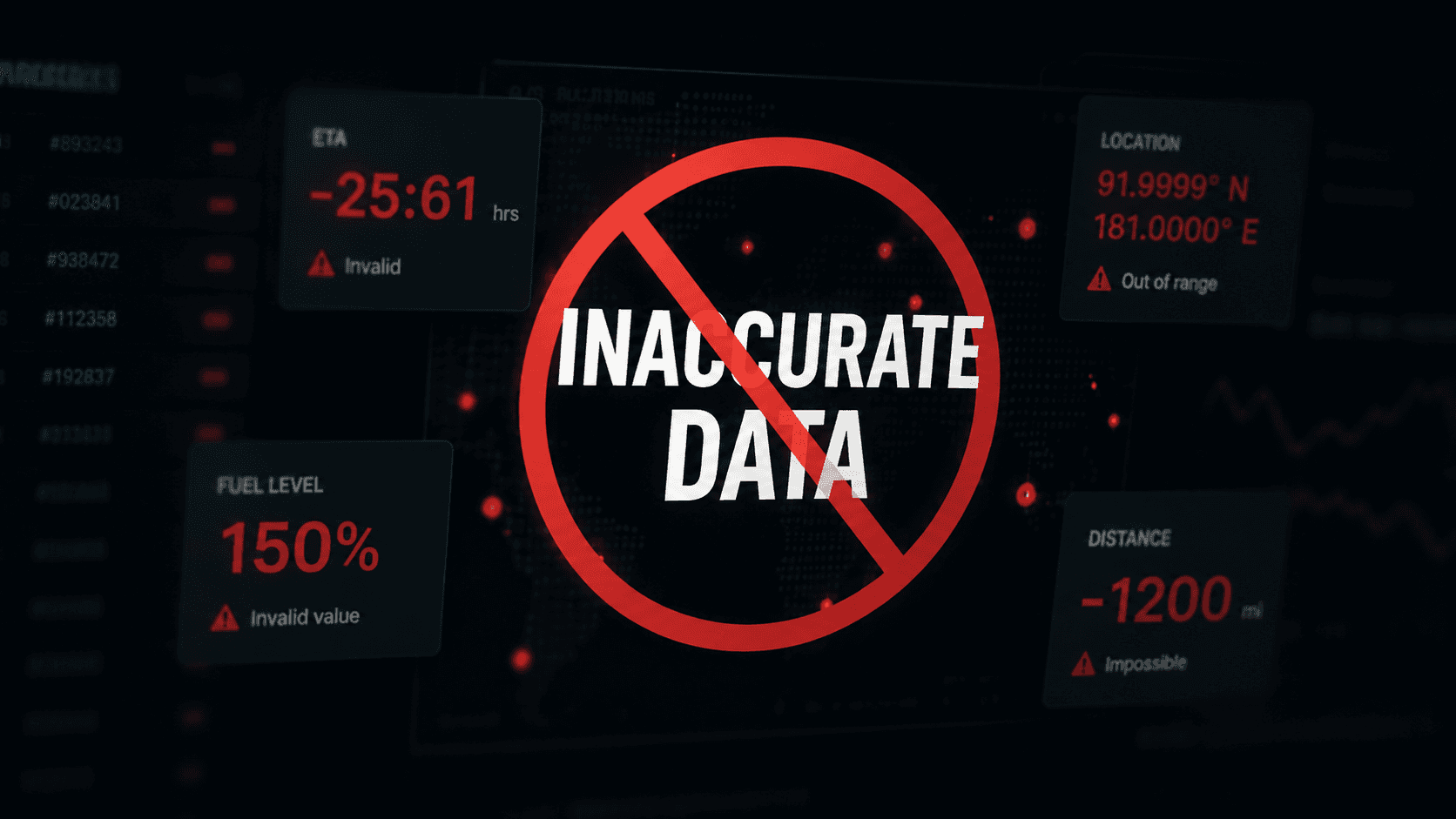
The Three Core Risk Layers of AI Voice Agents in Freight

Risk in freight voice automation is layered. NIST's AI Risk Management Framework and early EU AI Act enforcement (the EU AI Act will be implemented in 2024) show regulators increasingly expect structured controls around AI voice technology, not ad-hoc experiments. 73% of business leaders fear generative AI introduces new security vulnerabilities, and that concern is well-founded in freight.

Compliance and Data Privacy Risk

  • Voice AI systems must comply with regulations like GDPR and HIPAA. GDPR mandates explicit consent for processing biometric data, including voice biometrics. HIPAA governs the use of protected health information in the U.S. CCPA provides California residents with specific data rights. PCI DSS regulates how payment card data must be handled during voice interactions involving payment.

  • The FCC's 2024 Declaratory Ruling established that AI-generated robocalls fall under TCPA rules. Outbound AI calls must disclose that the voice is AI-generated. Voice cloning can replicate a person's voice from just three seconds of audio, and deepfake fraud attempts rose by over 1,300% in 2024, making security protocols around identity verification critical.

  • Ai voice agent privacy is a real concern: AI voice technology can capture unintended background audio, meaning voice AI can unintentionally record background conversations without consent. Voice data retention raises significant privacy concerns, especially when call recordings store sensitive customer information, personal details, or sensitive conversations beyond what the load requires.

  • 29 bills focused on AI have been introduced in 17 U.S. states since 2019, creating a patchwork of data privacy rules. Cross-state carriers making outbound calls face compliance violations if they ignore one-party versus two-party consent laws. The legal consequences of security gaps here are fines per call.

Operational Risk

  • Voice recognition systems may struggle with diverse accents and background noise in truck cabs and warehouse yards. When speech recognition fails, the AI voice agent becomes "confidently wrong," asserting incorrect ETAs or dock availability because stale data was never corrected.

  • Even correct voice interactions fail operationally if the call result lands nowhere useful. If the agent captures an appointment change but no exception queue, board status, or customer notification updates, your support team still does manual work. That weakens ROI and creates frustrated customers.

  • Over-permissive agent behavior is dangerous. An AI agent that can reschedule appointments or cancel loads without human review creates cascading service failures. Bias in AI can lead to unequal service for different groups if conversation flow logic treats callers differently based on accent patterns.

  • Relying solely on voice systems without reliable write-back to your TMS creates sensitive workflows that break under pressure.

Trust and Relationship Risk

  • Customer trust erodes when an AI voice agent misrepresents what it can do. Telling a driver "I can resolve your detention now" when it cannot creates immediate customer confidence damage. The difference between "it sounds human" and "it behaves reliably" is what separates smarter conversations from broken relationships.

  • Ethical AI use requires transparency about data handling. Customer education builds trust and ensures compliance. If shippers learn you quietly dropped bots into critical calls without disclosure, you lose business.

  • Internal trust matters too. Dispatchers held responsible for AI mistakes without clear ownership will distrust or sabotage the system. Without maintain trust internally, enterprise deployments stall.

How to Control AI Voice Risks Before Launch: A Freight-Specific Checklist

Privacy-by-design should be embedded from the start, not bolted on after the first complaint. Here are five controls freight teams must lock down before the first live call.

1. Define Call Permissions and Allowed Workflows. Start with least privilege access. Decide exactly which workflows the AI can touch at launch: status check calls, ETA collection, appointment confirmation only. No rate negotiation, no accessorial approvals. Limit which loads and customers the AI voice agent can access in the TMS. The agent can confirm "loaded / empty / arrived / departed" but cannot change rate confirmations or cancel loads. This is how you control access and prevent data breaches at the workflow level.

2. Script Disclosure, Consent, and Recording Rules. Every call must open with clear disclosure: "This call is made by an AI voice agent from [your company name]. This call may be recorded." Cover opt-out behavior: when someone says "I want a human" or "do not call me again," the agent adds that contact to suppression lists and flags the record. Avoid unsupported claims like "handles every call" or "replaces dispatch." Voice agent privacy depends on honest scripts.

3. Clean and Constrain the Data the Agent Depends On. Data minimization means sending the agent only the fields it needs: load ID, current status, planned ETA, contact info, escalation owner. Do not pass full internal notes, sensitive details, or unrelated personally identifiable information. Voice data includes timestamps, agent notes, and sentiment tags, so limit data collection to what is necessary. Run pre-launch data quality checks on a sample week of loads. Verify every targeted load has complete, accurate fields. AI voice agents integrate with CRMs to share customer details, so make sure sensitive information flows are constrained.

4. Design Escalation Paths and Stop Buttons. AI voice agents can escalate calls to human agents when needed, and this is your primary control on trust risk. Practical escalation options include transfer to dispatch, route to a brokerage floor queue, or park to an exceptions board. Multi-factor authentication for high-risk actions (like rescheduling FDA-regulated loads) adds another layer. Authentication systems should gate sensitive workflows.

5. Set Up Access Controls and Post-Call Review. Role based access limits who can access recordings, transcripts, and agent configuration. End to end encryption protects data in transit and at rest. Implement configurable data retention policies so voice recordings and customer data are not stored indefinitely. Audit logs must track every action the agent takes. Regular security audits help identify vulnerabilities before they become data breaches. Continuous monitoring of agent performance, combined with periodic sampling of call recordings by dispatch leads, catches compliance violations and mis-escalations early. Treat security as an ongoing discipline, not a launch-day checkbox. Enterprise grade security requires enterprise grade commitment.
Who Owns AI Voice Risk in a Freight Organization?

AI risk is a governance and operating-model question, not only a technical one. Here is a simple ownership model adapted from NIST AI risk guidance for freight:

  • Legal/Compliance owns disclosure language, recording policy, and jurisdictional rules for outbound calling across states and borders. They handle data protection rules and limit access to sensitive data.

  • Product/Technology/TMS Partner owns which AI systems and data the agent can access, how data minimization is implemented, and how changes are tested. They manage security measures, security risks, and emerging threats.

  • Operations Leadership (Dispatch, Track-and-Trace, Brokerage Manager) owns workflow design, escalation rules, customer satisfaction metrics, and post-call review.

  • Security/IT owns access controls, encryption, vendor risk management, and authentication systems for voice platforms. They prevent data breaches and close security gaps.

At a 150-truck carrier, this looks concrete: the VP Operations signs off on which load boards the AI can touch. The General Counsel signs off on the consent script. The Hemut implementation team configures access controls and reporting. Dispatch leads review the first 200 calls before expansion. Assigning a named owner for each layer makes risk manageable instead of abstract.

Hemut's model, combining embedded teams with a customizable AI-native TMS, is designed to support this split ownership, not replace it. We help carriers and brokers keep control while scaling automation for secure AI voice agents across their operations.
From Pilot to Scale: Turning Secure AI Voice into a Competitive Advantage

Controlling risk early is what lets freight organizations scale modern AI voice agents from a single lane to thousands of daily calls. The pattern is straightforward:

  • Start with one bounded workflow, such as outbound ETA updates on a single dedicated lane or key customer.

  • Run a 4–6 week pilot with explicit success metrics: reduced manual check calls, faster exception detection, fewer missed appointments, stable customer satisfaction.

  • Use pilot data to refine scripts, escalation rules, and data fields before adding new customers, lanes, or workflows like detention warnings or OS&D follow-ups.

Carriers and brokers who communicate openly about AI use, consent, and escalation earn more customer confidence than those who quietly drop bots into critical calls. Disciplined data minimization, access controls, and retention policies reduce both regulatory risk and internal anxiety about voice systems.

When handled correctly, secure AI voice agents become a competitive advantage. Faster, more reliable status updates compared to competitors still manually dialing. Lower cost per load for track-and-trace and appointment management without cutting corners on compliance. Clear audit trails for large shippers who increasingly ask about AI use in RFPs.

AI voice risk in freight is controllable when you treat it as an operating system problem. Compliance, data quality, and escalation rules should be designed before the first live workflow expands.

Build your pre-launch checklist today. Map consent, disclosure, recording rules, critical data fields, escalation owners, and failed-call review. If you are modernizing or replacing a legacy TMS, Hemut's embedded team can help you configure these controls as part of an AI-native freight platform built for your operations.

AI voice agents have moved beyond generic call centers and into the daily workflows of U.S. freight carriers and brokers. Dispatch check calls, shipper status updates, appointment confirmations, and detention warnings now run through voice AI systems that can speak, listen, and act on load data autonomously. This article answers a direct question: what are the key risks of AI voice agents in freight, and how can teams control them before launch?

The stakes are not theoretical. Unlike a chatbot answering product questions, a freight AI voice agent that gives a wrong ETA, misses a consent rule, or overwrites a rate confirmation creates real financial and legal consequences. At Hemut, we build and embed AI-native TMS and operations workflows for U.S. carriers and brokers, so we see these risks from the inside. Below, we break them into three layers: compliance risk, operational risk, and trust risk.

Why AI Voice Agents Matter for Freight Operations in 2026

Modern AI voice agents are not legacy IVR trees. They can place and receive phone calls, interpret human speech in noisy environments, and update live load boards without a dispatcher touching a keyboard. The AI voice technology stack in freight includes automatic speech recognition turning cab and yard audio into text, large language models interpreting intent like "dock 8 is full, come at 14:00 instead," orchestration layers writing back to our TMS, and text-to-speech producing natural, carrier-branded voices. AI voice agents convert audio into text using STT and ASR.

A logistics provider in Southeast Asia handling roughly 500,000 shipments per month saw a 60% reduction in tracking-related calls and 70% faster response times after deploying voice automation. In India, a 50-truck carrier used AI voice assistants to convert multilingual voice notes into structured orders, routing difficult cases to human agents. These results show what voice agents can deliver in freight, but they only materialize when teams treat the AI agent as part of broader AI systems with proper guardrails from day one.

The competitive advantage is real. Deloitte expects 74% of enterprises to deploy AI agents at least moderately by 2027. But Gartner predicts over 40% of agentic AI projects will be canceled by then, primarily due to insufficient risk controls. Enabling agents without controls leads to lost revenue, not savings.

The Three Core Risk Layers of AI Voice Agents in Freight

Risk in freight voice automation is layered. NIST's AI Risk Management Framework and early EU AI Act enforcement (the EU AI Act will be implemented in 2024) show regulators increasingly expect structured controls around AI voice technology, not ad-hoc experiments. 73% of business leaders fear generative AI introduces new security vulnerabilities, and that concern is well-founded in freight.

Compliance and Data Privacy Risk

  • Voice AI systems must comply with regulations like GDPR and HIPAA. GDPR mandates explicit consent for processing biometric data, including voice biometrics. HIPAA governs the use of protected health information in the U.S. CCPA provides California residents with specific data rights. PCI DSS regulates how payment card data must be handled during voice interactions involving payment.

  • The FCC's 2024 Declaratory Ruling established that AI-generated robocalls fall under TCPA rules. Outbound AI calls must disclose that the voice is AI-generated. Voice cloning can replicate a person's voice from just three seconds of audio, and deepfake fraud attempts rose by over 1,300% in 2024, making security protocols around identity verification critical.

  • Ai voice agent privacy is a real concern: AI voice technology can capture unintended background audio, meaning voice AI can unintentionally record background conversations without consent. Voice data retention raises significant privacy concerns, especially when call recordings store sensitive customer information, personal details, or sensitive conversations beyond what the load requires.

  • 29 bills focused on AI have been introduced in 17 U.S. states since 2019, creating a patchwork of data privacy rules. Cross-state carriers making outbound calls face compliance violations if they ignore one-party versus two-party consent laws. The legal consequences of security gaps here are fines per call.

Operational Risk

  • Voice recognition systems may struggle with diverse accents and background noise in truck cabs and warehouse yards. When speech recognition fails, the AI voice agent becomes "confidently wrong," asserting incorrect ETAs or dock availability because stale data was never corrected.

  • Even correct voice interactions fail operationally if the call result lands nowhere useful. If the agent captures an appointment change but no exception queue, board status, or customer notification updates, your support team still does manual work. That weakens ROI and creates frustrated customers.

  • Over-permissive agent behavior is dangerous. An AI agent that can reschedule appointments or cancel loads without human review creates cascading service failures. Bias in AI can lead to unequal service for different groups if conversation flow logic treats callers differently based on accent patterns.

  • Relying solely on voice systems without reliable write-back to your TMS creates sensitive workflows that break under pressure.

Trust and Relationship Risk

  • Customer trust erodes when an AI voice agent misrepresents what it can do. Telling a driver "I can resolve your detention now" when it cannot creates immediate customer confidence damage. The difference between "it sounds human" and "it behaves reliably" is what separates smarter conversations from broken relationships.

  • Ethical AI use requires transparency about data handling. Customer education builds trust and ensures compliance. If shippers learn you quietly dropped bots into critical calls without disclosure, you lose business.

  • Internal trust matters too. Dispatchers held responsible for AI mistakes without clear ownership will distrust or sabotage the system. Without maintain trust internally, enterprise deployments stall.

How to Control AI Voice Risks Before Launch: A Freight-Specific Checklist

Privacy-by-design should be embedded from the start, not bolted on after the first complaint. Here are five controls freight teams must lock down before the first live call.

1. Define Call Permissions and Allowed Workflows. Start with least privilege access. Decide exactly which workflows the AI can touch at launch: status check calls, ETA collection, appointment confirmation only. No rate negotiation, no accessorial approvals. Limit which loads and customers the AI voice agent can access in the TMS. The agent can confirm "loaded / empty / arrived / departed" but cannot change rate confirmations or cancel loads. This is how you control access and prevent data breaches at the workflow level.

2. Script Disclosure, Consent, and Recording Rules. Every call must open with clear disclosure: "This call is made by an AI voice agent from [your company name]. This call may be recorded." Cover opt-out behavior: when someone says "I want a human" or "do not call me again," the agent adds that contact to suppression lists and flags the record. Avoid unsupported claims like "handles every call" or "replaces dispatch." Voice agent privacy depends on honest scripts.

3. Clean and Constrain the Data the Agent Depends On. Data minimization means sending the agent only the fields it needs: load ID, current status, planned ETA, contact info, escalation owner. Do not pass full internal notes, sensitive details, or unrelated personally identifiable information. Voice data includes timestamps, agent notes, and sentiment tags, so limit data collection to what is necessary. Run pre-launch data quality checks on a sample week of loads. Verify every targeted load has complete, accurate fields. AI voice agents integrate with CRMs to share customer details, so make sure sensitive information flows are constrained.

4. Design Escalation Paths and Stop Buttons. AI voice agents can escalate calls to human agents when needed, and this is your primary control on trust risk. Practical escalation options include transfer to dispatch, route to a brokerage floor queue, or park to an exceptions board. Multi-factor authentication for high-risk actions (like rescheduling FDA-regulated loads) adds another layer. Authentication systems should gate sensitive workflows.

5. Set Up Access Controls and Post-Call Review. Role based access limits who can access recordings, transcripts, and agent configuration. End to end encryption protects data in transit and at rest. Implement configurable data retention policies so voice recordings and customer data are not stored indefinitely. Audit logs must track every action the agent takes. Regular security audits help identify vulnerabilities before they become data breaches. Continuous monitoring of agent performance, combined with periodic sampling of call recordings by dispatch leads, catches compliance violations and mis-escalations early. Treat security as an ongoing discipline, not a launch-day checkbox. Enterprise grade security requires enterprise grade commitment.

Who Owns AI Voice Risk in a Freight Organization?

AI risk is a governance and operating-model question, not only a technical one. Here is a simple ownership model adapted from NIST AI risk guidance for freight:

  • Legal/Compliance owns disclosure language, recording policy, and jurisdictional rules for outbound calling across states and borders. They handle data protection rules and limit access to sensitive data.

  • Product/Technology/TMS Partner owns which AI systems and data the agent can access, how data minimization is implemented, and how changes are tested. They manage security measures, security risks, and emerging threats.

  • Operations Leadership (Dispatch, Track-and-Trace, Brokerage Manager) owns workflow design, escalation rules, customer satisfaction metrics, and post-call review.

  • Security/IT owns access controls, encryption, vendor risk management, and authentication systems for voice platforms. They prevent data breaches and close security gaps.

At a 150-truck carrier, this looks concrete: the VP Operations signs off on which load boards the AI can touch. The General Counsel signs off on the consent script. The Hemut implementation team configures access controls and reporting. Dispatch leads review the first 200 calls before expansion. Assigning a named owner for each layer makes risk manageable instead of abstract.

Hemut's model, combining embedded teams with a customizable AI-native TMS, is designed to support this split ownership, not replace it. We help carriers and brokers keep control while scaling automation for secure AI voice agents across their operations.

From Pilot to Scale: Turning Secure AI Voice into a Competitive Advantage

Controlling risk early is what lets freight organizations scale modern AI voice agents from a single lane to thousands of daily calls. The pattern is straightforward:

  • Start with one bounded workflow, such as outbound ETA updates on a single dedicated lane or key customer.

  • Run a 4–6 week pilot with explicit success metrics: reduced manual check calls, faster exception detection, fewer missed appointments, stable customer satisfaction.

  • Use pilot data to refine scripts, escalation rules, and data fields before adding new customers, lanes, or workflows like detention warnings or OS&D follow-ups.

Carriers and brokers who communicate openly about AI use, consent, and escalation earn more customer confidence than those who quietly drop bots into critical calls. Disciplined data minimization, access controls, and retention policies reduce both regulatory risk and internal anxiety about voice systems.

When handled correctly, secure AI voice agents become a competitive advantage. Faster, more reliable status updates compared to competitors still manually dialing. Lower cost per load for track-and-trace and appointment management without cutting corners on compliance. Clear audit trails for large shippers who increasingly ask about AI use in RFPs.

AI voice risk in freight is controllable when you treat it as an operating system problem. Compliance, data quality, and escalation rules should be designed before the first live workflow expands.

Build your pre-launch checklist today. Map consent, disclosure, recording rules, critical data fields, escalation owners, and failed-call review. If you are modernizing or replacing a legacy TMS, Hemut's embedded team can help you configure these controls as part of an AI-native freight platform built for your operations.

AI voice agents have moved beyond generic call centers and into the daily workflows of U.S. freight carriers and brokers. Dispatch check calls, shipper status updates, appointment confirmations, and detention warnings now run through voice AI systems that can speak, listen, and act on load data autonomously. This article answers a direct question: what are the key risks of AI voice agents in freight, and how can teams control them before launch?

The stakes are not theoretical. Unlike a chatbot answering product questions, a freight AI voice agent that gives a wrong ETA, misses a consent rule, or overwrites a rate confirmation creates real financial and legal consequences. At Hemut, we build and embed AI-native TMS and operations workflows for U.S. carriers and brokers, so we see these risks from the inside. Below, we break them into three layers: compliance risk, operational risk, and trust risk.

Why AI Voice Agents Matter for Freight Operations in 2026

Modern AI voice agents are not legacy IVR trees. They can place and receive phone calls, interpret human speech in noisy environments, and update live load boards without a dispatcher touching a keyboard. The AI voice technology stack in freight includes automatic speech recognition turning cab and yard audio into text, large language models interpreting intent like "dock 8 is full, come at 14:00 instead," orchestration layers writing back to our TMS, and text-to-speech producing natural, carrier-branded voices. AI voice agents convert audio into text using STT and ASR.

A logistics provider in Southeast Asia handling roughly 500,000 shipments per month saw a 60% reduction in tracking-related calls and 70% faster response times after deploying voice automation. In India, a 50-truck carrier used AI voice assistants to convert multilingual voice notes into structured orders, routing difficult cases to human agents. These results show what voice agents can deliver in freight, but they only materialize when teams treat the AI agent as part of broader AI systems with proper guardrails from day one.

The competitive advantage is real. Deloitte expects 74% of enterprises to deploy AI agents at least moderately by 2027. But Gartner predicts over 40% of agentic AI projects will be canceled by then, primarily due to insufficient risk controls. Enabling agents without controls leads to lost revenue, not savings.

The Three Core Risk Layers of AI Voice Agents in Freight

Risk in freight voice automation is layered. NIST's AI Risk Management Framework and early EU AI Act enforcement (the EU AI Act will be implemented in 2024) show regulators increasingly expect structured controls around AI voice technology, not ad-hoc experiments. 73% of business leaders fear generative AI introduces new security vulnerabilities, and that concern is well-founded in freight.

Compliance and Data Privacy Risk

  • Voice AI systems must comply with regulations like GDPR and HIPAA. GDPR mandates explicit consent for processing biometric data, including voice biometrics. HIPAA governs the use of protected health information in the U.S. CCPA provides California residents with specific data rights. PCI DSS regulates how payment card data must be handled during voice interactions involving payment.

  • The FCC's 2024 Declaratory Ruling established that AI-generated robocalls fall under TCPA rules. Outbound AI calls must disclose that the voice is AI-generated. Voice cloning can replicate a person's voice from just three seconds of audio, and deepfake fraud attempts rose by over 1,300% in 2024, making security protocols around identity verification critical.

  • Ai voice agent privacy is a real concern: AI voice technology can capture unintended background audio, meaning voice AI can unintentionally record background conversations without consent. Voice data retention raises significant privacy concerns, especially when call recordings store sensitive customer information, personal details, or sensitive conversations beyond what the load requires.

  • 29 bills focused on AI have been introduced in 17 U.S. states since 2019, creating a patchwork of data privacy rules. Cross-state carriers making outbound calls face compliance violations if they ignore one-party versus two-party consent laws. The legal consequences of security gaps here are fines per call.

Operational Risk

  • Voice recognition systems may struggle with diverse accents and background noise in truck cabs and warehouse yards. When speech recognition fails, the AI voice agent becomes "confidently wrong," asserting incorrect ETAs or dock availability because stale data was never corrected.

  • Even correct voice interactions fail operationally if the call result lands nowhere useful. If the agent captures an appointment change but no exception queue, board status, or customer notification updates, your support team still does manual work. That weakens ROI and creates frustrated customers.

  • Over-permissive agent behavior is dangerous. An AI agent that can reschedule appointments or cancel loads without human review creates cascading service failures. Bias in AI can lead to unequal service for different groups if conversation flow logic treats callers differently based on accent patterns.

  • Relying solely on voice systems without reliable write-back to your TMS creates sensitive workflows that break under pressure.

Trust and Relationship Risk

  • Customer trust erodes when an AI voice agent misrepresents what it can do. Telling a driver "I can resolve your detention now" when it cannot creates immediate customer confidence damage. The difference between "it sounds human" and "it behaves reliably" is what separates smarter conversations from broken relationships.

  • Ethical AI use requires transparency about data handling. Customer education builds trust and ensures compliance. If shippers learn you quietly dropped bots into critical calls without disclosure, you lose business.

  • Internal trust matters too. Dispatchers held responsible for AI mistakes without clear ownership will distrust or sabotage the system. Without maintain trust internally, enterprise deployments stall.

How to Control AI Voice Risks Before Launch: A Freight-Specific Checklist

Privacy-by-design should be embedded from the start, not bolted on after the first complaint. Here are five controls freight teams must lock down before the first live call.

1. Define Call Permissions and Allowed Workflows. Start with least privilege access. Decide exactly which workflows the AI can touch at launch: status check calls, ETA collection, appointment confirmation only. No rate negotiation, no accessorial approvals. Limit which loads and customers the AI voice agent can access in the TMS. The agent can confirm "loaded / empty / arrived / departed" but cannot change rate confirmations or cancel loads. This is how you control access and prevent data breaches at the workflow level.

2. Script Disclosure, Consent, and Recording Rules. Every call must open with clear disclosure: "This call is made by an AI voice agent from [your company name]. This call may be recorded." Cover opt-out behavior: when someone says "I want a human" or "do not call me again," the agent adds that contact to suppression lists and flags the record. Avoid unsupported claims like "handles every call" or "replaces dispatch." Voice agent privacy depends on honest scripts.

3. Clean and Constrain the Data the Agent Depends On. Data minimization means sending the agent only the fields it needs: load ID, current status, planned ETA, contact info, escalation owner. Do not pass full internal notes, sensitive details, or unrelated personally identifiable information. Voice data includes timestamps, agent notes, and sentiment tags, so limit data collection to what is necessary. Run pre-launch data quality checks on a sample week of loads. Verify every targeted load has complete, accurate fields. AI voice agents integrate with CRMs to share customer details, so make sure sensitive information flows are constrained.

4. Design Escalation Paths and Stop Buttons. AI voice agents can escalate calls to human agents when needed, and this is your primary control on trust risk. Practical escalation options include transfer to dispatch, route to a brokerage floor queue, or park to an exceptions board. Multi-factor authentication for high-risk actions (like rescheduling FDA-regulated loads) adds another layer. Authentication systems should gate sensitive workflows.

5. Set Up Access Controls and Post-Call Review. Role based access limits who can access recordings, transcripts, and agent configuration. End to end encryption protects data in transit and at rest. Implement configurable data retention policies so voice recordings and customer data are not stored indefinitely. Audit logs must track every action the agent takes. Regular security audits help identify vulnerabilities before they become data breaches. Continuous monitoring of agent performance, combined with periodic sampling of call recordings by dispatch leads, catches compliance violations and mis-escalations early. Treat security as an ongoing discipline, not a launch-day checkbox. Enterprise grade security requires enterprise grade commitment.

Who Owns AI Voice Risk in a Freight Organization?

AI risk is a governance and operating-model question, not only a technical one. Here is a simple ownership model adapted from NIST AI risk guidance for freight:

  • Legal/Compliance owns disclosure language, recording policy, and jurisdictional rules for outbound calling across states and borders. They handle data protection rules and limit access to sensitive data.

  • Product/Technology/TMS Partner owns which AI systems and data the agent can access, how data minimization is implemented, and how changes are tested. They manage security measures, security risks, and emerging threats.

  • Operations Leadership (Dispatch, Track-and-Trace, Brokerage Manager) owns workflow design, escalation rules, customer satisfaction metrics, and post-call review.

  • Security/IT owns access controls, encryption, vendor risk management, and authentication systems for voice platforms. They prevent data breaches and close security gaps.

At a 150-truck carrier, this looks concrete: the VP Operations signs off on which load boards the AI can touch. The General Counsel signs off on the consent script. The Hemut implementation team configures access controls and reporting. Dispatch leads review the first 200 calls before expansion. Assigning a named owner for each layer makes risk manageable instead of abstract.

Hemut's model, combining embedded teams with a customizable AI-native TMS, is designed to support this split ownership, not replace it. We help carriers and brokers keep control while scaling automation for secure AI voice agents across their operations.

From Pilot to Scale: Turning Secure AI Voice into a Competitive Advantage

Controlling risk early is what lets freight organizations scale modern AI voice agents from a single lane to thousands of daily calls. The pattern is straightforward:

  • Start with one bounded workflow, such as outbound ETA updates on a single dedicated lane or key customer.

  • Run a 4–6 week pilot with explicit success metrics: reduced manual check calls, faster exception detection, fewer missed appointments, stable customer satisfaction.

  • Use pilot data to refine scripts, escalation rules, and data fields before adding new customers, lanes, or workflows like detention warnings or OS&D follow-ups.

Carriers and brokers who communicate openly about AI use, consent, and escalation earn more customer confidence than those who quietly drop bots into critical calls. Disciplined data minimization, access controls, and retention policies reduce both regulatory risk and internal anxiety about voice systems.

When handled correctly, secure AI voice agents become a competitive advantage. Faster, more reliable status updates compared to competitors still manually dialing. Lower cost per load for track-and-trace and appointment management without cutting corners on compliance. Clear audit trails for large shippers who increasingly ask about AI use in RFPs.

AI voice risk in freight is controllable when you treat it as an operating system problem. Compliance, data quality, and escalation rules should be designed before the first live workflow expands.

Build your pre-launch checklist today. Map consent, disclosure, recording rules, critical data fields, escalation owners, and failed-call review. If you are modernizing or replacing a legacy TMS, Hemut's embedded team can help you configure these controls as part of an AI-native freight platform built for your operations.

Transform your freight operations and leap ahead of the competition.

© Hemut co All Rights Reserved 2026

Transform your freight operations and leap ahead of the competition.

© Hemut co All Rights Reserved 2026

Transform your freight operations and leap ahead of the competition.

© Hemut co All Rights Reserved 2026