
Transportation Management Systems

Carrier Check Calls AI Voice Agent: Turning Phone Updates into Clean Load Visibility

Turn repetitive carrier check calls into clean, automatic load visibility in your TMS, with no missed updates and no manual follow-up. By Hemut.

Dong Yeop, Lee

14 Minutes

Every freight dispatcher knows the drill: call the driver, wait on hold, ask where the truck is, type the answer into the system, and move on to the next load. Multiply that by 50, 100, or 200 active loads per day and the math stops working. A carrier check calls AI voice agent changes the equation by handling those routine phone calls autonomously, capturing structured shipment facts, and pushing clean updates directly into your dispatch board.

Quick Answer: How an AI Voice Agent Should Handle a Carrier Check Call

An AI voice agent built for freight should confirm the load and caller, ask one specific status question first, capture exact shipment facts, and then either update the TMS or escalate to a human with full context. The goal is not more calls. It is cleaner load visibility, faster ETA decisions, and fewer manual follow ups for dispatch and brokerage teams.

Carrier check calls are essential for maintaining shipment visibility, but most operations teams spend hours each day chasing updates that could be captured in seconds. AI voice agents enhance shipment visibility through automated status updates and improve operational efficiency by allowing human dispatchers to focus on exceptions rather than routine "where's my truck?" conversations.

Every completed check call should produce one of three explicit outcomes:

  • Standard tracking update: location, ETA, next move captured and written to the load board.

  • Exception flag: late arrival, at-risk transit, OS&D, equipment issue, or detention risk logged with full detail.

  • Human handoff: when confidence is low, the situation is complex, or judgment is required, the call transfers to a trained dispatcher with the full transcript and structured summary.

At Hemut, we build AI voice agents specifically for freight carrier and broker workflows, not generic call centers. Our agents integrate directly with the TMS and dispatch boards so status updates hit the system of record in real time, with no batch processes or manual reconciliation.
What Is a Carrier Check Call AI Voice Agent?

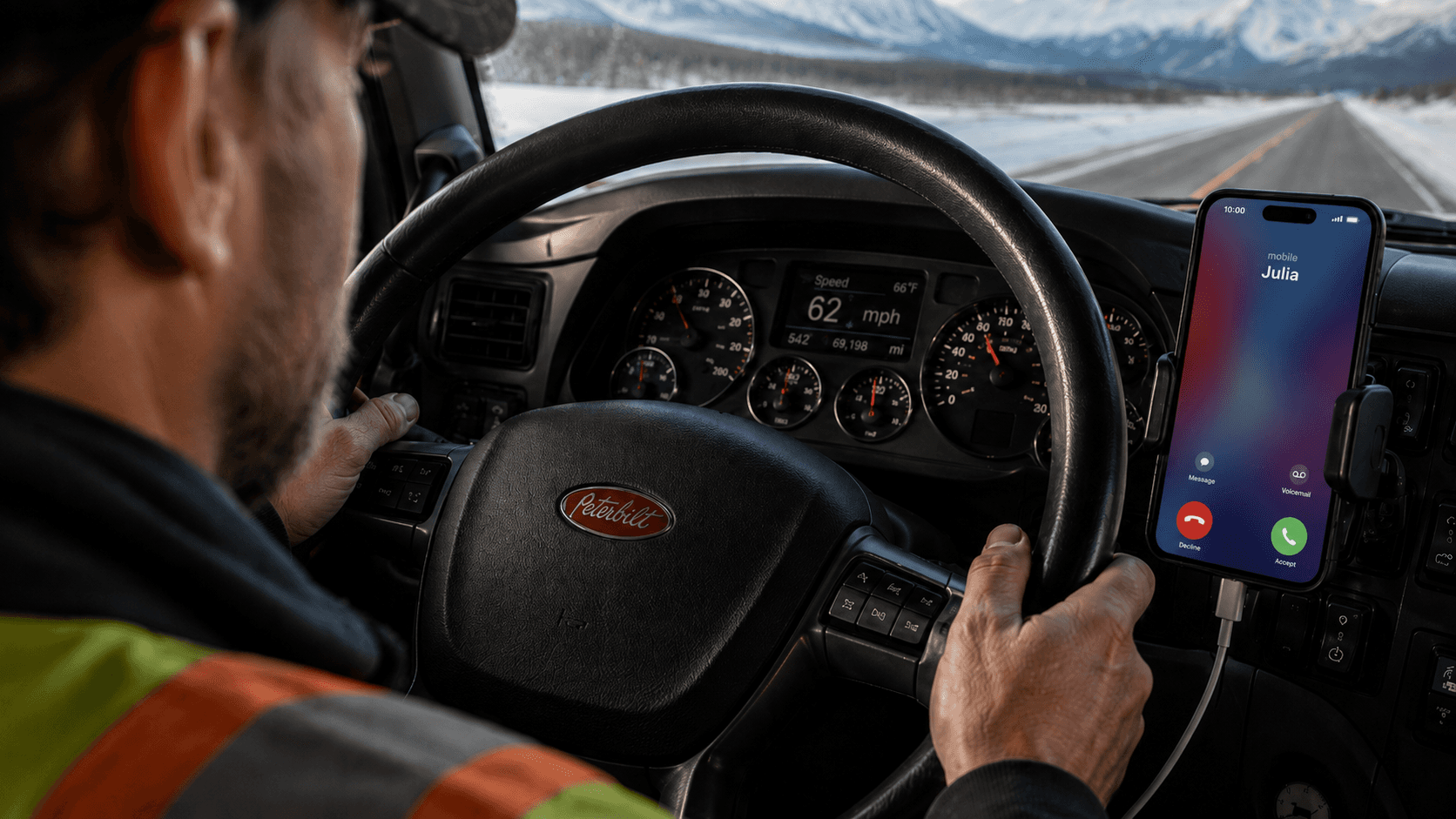
A carrier check call AI voice agent is a specialized conversational system that automates calls to and from carriers or drivers. It is configured for a particular workflow, such as confirming a driver’s location or checking a load status, so the purpose of the conversation is established before the call begins. VAD and EOT detection manage turn-taking, speech-to-text converts the caller’s words into text, a Large Language Model determines how the agent should respond, and text-to-speech converts that response back into natural-sounding audio. This allows the agent to manage the full phone conversation in real time.

  • Carrier check call: a routine in-transit status call between brokers, carriers, and drivers covering departure, en-route updates, arrival, delivery confirmation, and exceptions.

  • AI voice agent: combines cached context, an LLM-based AI agent, STT, and TTS to handle live phone calls with drivers and carrier dispatch teams, capturing structured data at every step.

  • Not IVR or robocalls: unlike traditional IVR systems that force menu selection, a voice AI agent understands natural language, handles interruptions, asks follow-up questions, and updates backend systems automatically. Modern AI voice agents perform well in structured, repetitive interactions like check calls, which is exactly where freight operations need the most relief.

Hemut focuses these voice agents on freight operations: load tracking, exception capture, appointment status, and driver needs such as reschedules, breakdowns, and temperature issues. This is domain-specific software, not a repurposed contact center tool.

The Core Workflow: From One Missing Fact to Board Update or Handoff

Every carrier check call typically starts with a single missing fact that blocks planning: where the truck is, whether it arrived, whether loading or unloading started, or whether a delay is forming. Without that fact, dispatch cannot project ETA or cost properly.

Here is the step-by-step workflow for the AI voice agent:

  • Verify identity: confirm whether the caller is a driver or dispatcher, capture company name and callback number.

  • Confirm load: load ID, pickup and delivery city and state, and scheduled appointment window.

  • Ask the one key question first: "Where are you now?" or "Have you arrived at the receiver?" depending on the load's planned timeline.

  • Capture follow-up details only if needed: delay reason, new ETA, dock number, detention risk, or equipment issues.

  • End with a clear next step: automatic tracking update, exception flag, or warm human transfer.

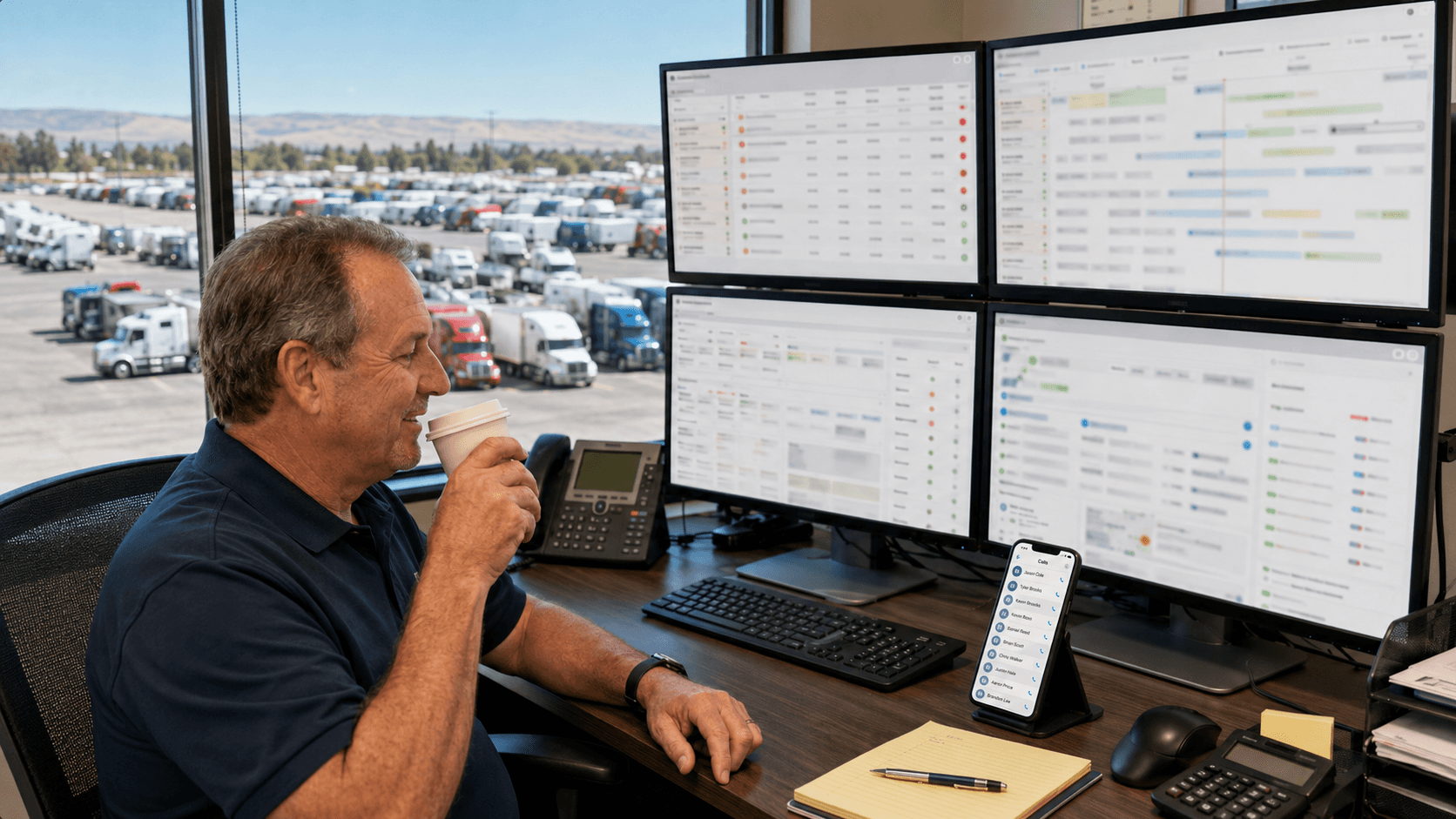
The final output must always be useful to dispatch. AI voice agents improve data accuracy by minimizing data entry delays because the system writes structured status objects directly into the TMS. A TMS helps businesses optimize the movement of goods, and when check call data flows into it automatically, dispatch acts on facts rather than replaying call recordings.
What Shipment Fact Should the AI Voice Agent Collect First?

The first question should resolve whichever missing fact is blocking the load plan. In practice, that usually means: "Where are you now?" or "Have you arrived at the shipper yet?" depending on the load's planned timeline.

The first answer should fill specific, structured fields:

  • Current location: city, state, and if possible mile marker or facility name.

  • Arrival or departure status at pickup or delivery.

  • Current ETA to the next stop, in local time with date.

  • Appointment status: on time, early, late, missed, or no appointment.

  • Loaded or empty status.

These fields map directly to typical TMS columns: "Last Check Call" timestamp, "Last Location," "ETA," "Status," and "Exception Code." Transportation management systems provide visibility into daily operations, and when these columns update automatically after each call, dispatchers stop spending time hunting for answers. Cloud-based TMS solutions are affordable for smaller businesses too, which means even lean brokerages can benefit from this workflow.

At Hemut, we tune our conversational AI to ask the minimal number of questions required to update those fields. Drivers spend less time on the phone. Dispatch gets cleaner data.

Smart Follow-Up Questions: Making Check Calls Actually Useful

Follow-up questions should be conditional, not a fixed questionnaire. The branching logic depends entirely on the first answer:

  • On time and en route: confirm ETA and next planned update time, then end quickly.

  • Late or at risk: ask for reason (traffic, breakdown, HOS, shipper delay, weather), new ETA, and whether help is needed such as a reschedule, lumper authorization, or alternate routing.

  • Waiting at shipper or receiver: capture check-in time, dock status, detention risk, and any OS&D concerns.

  • Breakdown or equipment issue: ask for location, equipment type (reefer, dry van, flatbed), severity, and whether roadside service or tow is already engaged.

AI can optimize freight operations through real-time data analysis, and machine learning enhances load optimization by predicting transit times. These capabilities make the follow-up logic smarter over time as the system learns which lanes and shippers tend to produce specific delay patterns.

The critical constraint is precision. Load IDs, SCACs, city names, appointment windows, temperature setpoints for reefers, and reference numbers cannot be approximate. Hemut's AI voice agents are configured with strict entity capture rules and validation against existing systems and load data in the TMS, reducing incorrect status updates that create more work later.
When to Update Tracking and When to Escalate to a Human

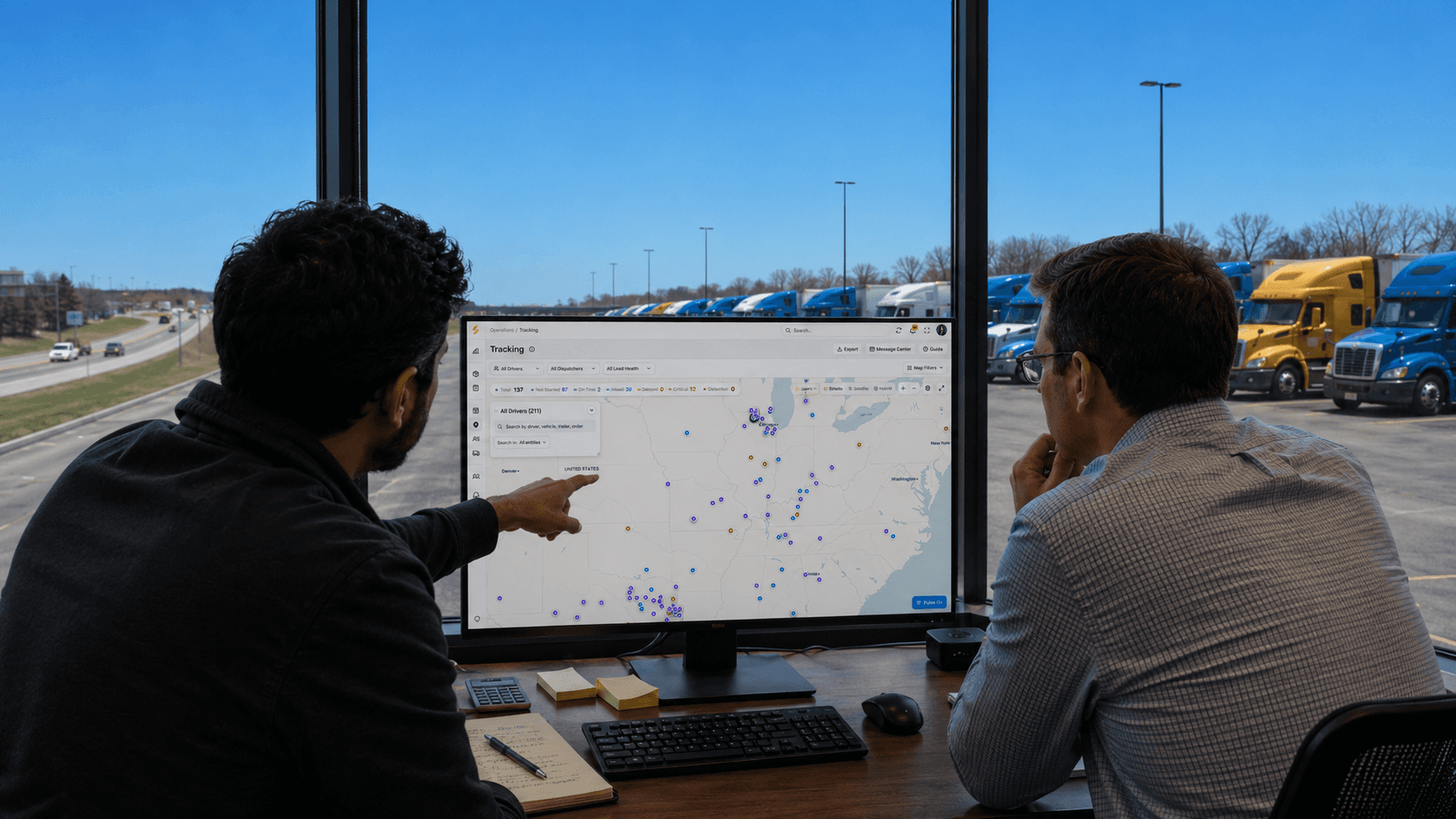
The voice AI agent must know the difference between a routine call and one that needs human intervention.

Routine calls get automatic tracking updates:

  • On-time transit, standard arrivals and departures, minor delays within customer tolerance.

  • High confidence in load ID, location, and caller identity.

  • No safety or compliance concerns expressed.

Exceptional calls require immediate human handoff:

  • Temperature deviations on food or pharma loads, OS&D claims, hazmat incidents.

  • Disputes over detention, lumpers, or rate changes.

  • Any mention of accidents, law enforcement stops, or injury.

AI voice agents can escalate calls to human operators for complex issues while handling routine dispatch tasks autonomously. In practice, dispatch software can automate up to 50% of call center volume, and AI voice agents can handle up to 50% of call center volume, which frees human agents to focus on the exceptions that actually need judgment.

Hemut encodes these escalation rules directly into the AI agent and routing logic, aligning with NIST AI Risk Management Framework principles: foreseeable failure modes go to trained humans with full call transcripts and structured summaries.

Enterprise-Grade Security and Compliance for High-Volume Freight Calls

Freight operations involve sensitive information: shipper contracts, rates, customer SLAs, and driver PII. When handling high volume carrier check calls, enterprise grade security is not optional.

What that should mean in practice:

  • Encrypted voice streams and transcripts in transit and at rest for robust data protection.

  • Role-based access control for dispatchers, accounting, and leadership.

  • Configurable retention policies for call audio and text logs, matching customer and regulatory requirements.

  • Audit logging of every call, transcript, and access event.

Relevant standards include SOC 2 for vendor assurance, GDPR for EU freight or European carriers, and U.S. state privacy laws like CCPA. Some large shippers impose data residency constraints that your system must accommodate.

Hemut runs AI voice agents in secure cloud environments with tenant isolation and strict separation between customer accounts. With reliable infrastructure, 99.99% uptime is achievable with reliable dispatch software solutions, and 99.99% uptime ensures reliability for AI voice agents handling calls reliably around the clock. Clean, structured call summaries attached to loads reduce disputes and chargeback risk because they provide objective records of ETAs, arrival times, and delay reasons.

Multilingual Support and Driver Experience on the Road

U.S. freight relies on a diverse driver population. Large numbers of drivers speak Spanish, Punjabi, Russian, and many languages beyond English. A carrier check call AI voice agent that only works in English misses a significant share of the workforce.

Key multilingual capabilities the agent should have:

  • Automatic language detection based on driver speech, with support for multiple languages.

  • Configurable language preferences saved per driver or carrier in the TMS.

  • Clear, simple phrasing optimized for noisy cab environments and varying accents, using voice models tuned for road conditions.

Driver experience details that matter:

  • The agent delivers natural phone conversations to the driver and dispatcher ensuring easy transfer of information. Hemut features very low latency models so drivers never talk over the agent.

  • Short, focused questions that respect HOS limits and driver time.

  • Ability to interrupt, correct, and ask clarifying questions back to the agent, enabling natural conversations rather than rigid scripts.

The scale of this challenge is real. Across the logistics industry, platforms like Synthflow AI have handled over 65 million customer calls and saved over 4 million hours in manual calls, demonstrating that voice AI can operate at enterprise scale. At Hemut, we design scripts with driver advisory panels where possible, focusing on minimizing call length while maximizing data quality. Multilingual support is not a feature add-on; it is a core requirement for any serious voice agent platform serving the freight industry.

Fast Deployment: From First Script to Live Check Calls

Operations leaders want results fast, but deployment must be controlled. Here is a practical rollout sequence:

  • Week 1: Choose one narrow use case, such as outbound location and ETA check calls on live loads with a specific shipper. Define success metrics including completion rate, exception capture quality, and reduction in manual calls.

  • Week 2: Configure the initial script covering load confirmation, location, ETA, status, issue, next update time, and escalation rule. Integrate with the TMS for a single team or terminal using pre built templates where available.

  • Weeks 3–4: Run a controlled pilot at limited volume. Review transcripts daily, compare AI-collected data to GPS and ELD data, and refine prompts and entities. Test against other platforms if needed.

  • Month 2: Expand to more lanes, drivers, and time windows including nights and weekends once accuracy and escalation rules are validated.

AI integration can improve dispatch software efficiency by 35%, and AI voice agents can improve call response rates by over 35%. In practice, AI voice agents improved answered calls by 35% compared to manual-only operations, which directly reduces costs and improves customer satisfaction. Fast deployment does not mean set and forget. It means establishing a feedback loop to continuously improve call quality.

Hemut's embedded-operations model uses forward deployed engineers who sit alongside dispatch to tune call flows, exception codes, and integration details until the AI agents behave like seasoned in house staff. This is how we save money for our customers while building a business plan that scales.

Operational Metrics: How to Measure Success of AI Carrier Check Calls

Metrics must be freight-specific, not generic contact center KPIs. Real-time analytics enhance dispatch software performance tracking when tied to actual loads and lanes.

Core metrics:

  • Percentage of loads with on-time check calls vs. missing updates.

  • Containment rate: share of routine check calls handled fully by the AI agent without human intervention.

  • Data completeness: percentage of calls where key fields (location, ETA, status, delay reason) are correctly populated.

Business impact metrics:

  • Reduction in dispatcher call time per load per day, which reduces costs across the operation.

  • Fewer customer "where is my truck?" follow ups, directly addressing customer needs and customer issues.

  • Accuracy rate compared to GPS, ELD signals, and facility timestamps.

AI voice agents reduce operational costs by automating repetitive tasks. They can handle thousands of concurrent conversations and operate 24/7 without extra hiring, which matters for brokers managing loads across time zones and for e commerce shippers expecting faster delivery times. The performance gains compound: fewer missed updates mean fewer escalations, which means lower total cost per load.

Hemut surfaces these metrics in dashboards tied to real loads, lanes, and shippers. We recommend reviewing a sample of transcripts weekly with operations and customer teams to ensure tone, clarity, and escalation behavior match brand expectations. This is where advanced systems prove their value through real time analytics and deep analytics, not just call volume.

The question is not whether AI can handle check calls. It is whether your current process can keep up without it.

Getting Started with Hemut AI Voice Agents for Carrier Check Calls

Hemut is an AI-native TMS and operations partner built for freight carriers and brokers. We are not a generic contact center provider. Our AI agents embed directly into dispatch, tracking, and accounting workflows, allowing companies to rely on one system for business operations across the supply chain.

Start with a simple project:

  • Pick one customer or lane where check calls are frequent and repetitive, especially where you rely on manual outbound calls today.

  • Define the core fields for each call: location, arrival or loaded status, ETA, issue, need for callback, and next update time.

  • Agree on escalation rules: which customer issues must reach human agents immediately, which can be logged as exceptions for later review.

Hemut can design, deploy, and operate the carrier check call AI voice agent alongside your team, with outcome-based pricing tied to measurable improvements in visibility and labor savings. Unlike lead qualification tools built for sales, our focus is on the freight conversations that keep loads moving and keep your customers informed.

Schedule a working session with Hemut to map one check-call script end-to-end - covering location, ETA, status, issue, next update time, and escalation rule - and see how an enterprise ready voice agent can plug into your existing phone systems and TMS within weeks. The future of carrier check calls is not more people making more calls. It is cleaner data, faster decisions, and freight that moves on time.

Every freight dispatcher knows the drill: call the driver, wait on hold, ask where the truck is, type the answer into the system, and move on to the next load. Multiply that by 50, 100, or 200 active loads per day and the math stops working. A carrier check calls AI voice agent changes the equation by handling those routine phone calls autonomously, capturing structured shipment facts, and pushing clean updates directly into your dispatch board.

Quick Answer: How an AI Voice Agent Should Handle a Carrier Check Call

An AI voice agent built for freight should confirm the load and caller, ask one specific status question first, capture exact shipment facts, and then either update the TMS or escalate to a human with full context. The goal is not more calls. It is cleaner load visibility, faster ETA decisions, and fewer manual follow ups for dispatch and brokerage teams.

Carrier check calls are essential for maintaining shipment visibility, but most operations teams spend hours each day chasing updates that could be captured in seconds. AI voice agents enhance shipment visibility through automated status updates and improve operational efficiency by allowing human dispatchers to focus on exceptions rather than routine "where's my truck?" conversations.

Every completed check call should produce one of three explicit outcomes:

  • Standard tracking update: location, ETA, next move captured and written to the load board.

  • Exception flag: late arrival, at-risk transit, OS&D, equipment issue, or detention risk logged with full detail.

  • Human handoff: when confidence is low, the situation is complex, or judgment is required, the call transfers to a trained dispatcher with the full transcript and structured summary.

At Hemut, we build AI voice agents specifically for freight carrier and broker workflows, not generic call centers. Our agents integrate directly with the TMS and dispatch boards so status updates hit the system of record in real time, with no batch processes or manual reconciliation.

What Is a Carrier Check Call AI Voice Agent?

A carrier check call AI voice agent is a specialized conversational system that automates calls to and from carriers or drivers. It is configured for a particular workflow, such as confirming a driver’s location or checking a load status, so the purpose of the conversation is established before the call begins. VAD and EOT detection manage turn-taking, speech-to-text converts the caller’s words into text, a Large Language Model determines how the agent should respond, and text-to-speech converts that response back into natural-sounding audio. This allows the agent to manage the full phone conversation in real time.

  • Carrier check call: a routine in-transit status call between brokers, carriers, and drivers covering departure, en-route updates, arrival, delivery confirmation, and exceptions.

  • AI voice agent: combines cached context, an LLM-based AI agent, STT, and TTS to handle live phone calls with drivers and carrier dispatch teams, capturing structured data at every step.

  • Not IVR or robocalls: unlike traditional IVR systems that force menu selection, a voice AI agent understands natural language, handles interruptions, asks follow-up questions, and updates backend systems automatically. Modern AI voice agents perform well in structured, repetitive interactions like check calls, which is exactly where freight operations need the most relief.

Hemut focuses these voice agents on freight operations: load tracking, exception capture, appointment status, and driver needs such as reschedules, breakdowns, and temperature issues. This is domain-specific software, not a repurposed contact center tool.

The Core Workflow: From One Missing Fact to Board Update or Handoff

Every carrier check call typically starts with a single missing fact that blocks planning: where the truck is, whether it arrived, whether loading or unloading started, or whether a delay is forming. Without that fact, dispatch cannot project ETA or cost properly.

Here is the step-by-step workflow for the AI voice agent:

  • Verify identity: confirm whether the caller is a driver or dispatcher, capture company name and callback number.

  • Confirm load: load ID, pickup and delivery city and state, and scheduled appointment window.

  • Ask the one key question first: "Where are you now?" or "Have you arrived at the receiver?" depending on the load's planned timeline.

  • Capture follow-up details only if needed: delay reason, new ETA, dock number, detention risk, or equipment issues.

  • End with a clear next step: automatic tracking update, exception flag, or warm human transfer.

The final output must always be useful to dispatch. AI voice agents improve data accuracy by minimizing data entry delays because the system writes structured status objects directly into the TMS. A TMS helps businesses optimize the movement of goods, and when check call data flows into it automatically, dispatch acts on facts rather than replaying call recordings.

What Shipment Fact Should the AI Voice Agent Collect First?

The first question should resolve whichever missing fact is blocking the load plan. In practice, that usually means: "Where are you now?" or "Have you arrived at the shipper yet?" depending on the load's planned timeline.

The first answer should fill specific, structured fields:

  • Current location: city, state, and if possible mile marker or facility name.

  • Arrival or departure status at pickup or delivery.

  • Current ETA to the next stop, in local time with date.

  • Appointment status: on time, early, late, missed, or no appointment.

  • Loaded or empty status.

These fields map directly to typical TMS columns: "Last Check Call" timestamp, "Last Location," "ETA," "Status," and "Exception Code." Transportation management systems provide visibility into daily operations, and when these columns update automatically after each call, dispatchers stop spending time hunting for answers. Cloud-based TMS solutions are affordable for smaller businesses too, which means even lean brokerages can benefit from this workflow.

At Hemut, we tune our conversational AI to ask the minimal number of questions required to update those fields. Drivers spend less time on the phone. Dispatch gets cleaner data.

Smart Follow-Up Questions: Making Check Calls Actually Useful

Follow-up questions should be conditional, not a fixed questionnaire. The branching logic depends entirely on the first answer:

  • On time and en route: confirm ETA and next planned update time, then end quickly.

  • Late or at risk: ask for reason (traffic, breakdown, HOS, shipper delay, weather), new ETA, and whether help is needed such as a reschedule, lumper authorization, or alternate routing.

  • Waiting at shipper or receiver: capture check-in time, dock status, detention risk, and any OS&D concerns.

  • Breakdown or equipment issue: ask for location, equipment type (reefer, dry van, flatbed), severity, and whether roadside service or tow is already engaged.

AI can optimize freight operations through real-time data analysis, and machine learning enhances load optimization by predicting transit times. These capabilities make the follow-up logic smarter over time as the system learns which lanes and shippers tend to produce specific delay patterns.

The critical constraint is precision. Load IDs, SCACs, city names, appointment windows, temperature setpoints for reefers, and reference numbers cannot be approximate. Hemut's AI voice agents are configured with strict entity capture rules and validation against existing systems and load data in the TMS, reducing incorrect status updates that create more work later.

When to Update Tracking and When to Escalate to a Human

The voice AI agent must know the difference between a routine call and one that needs human intervention.

Routine calls get automatic tracking updates:

  • On-time transit, standard arrivals and departures, minor delays within customer tolerance.

  • High confidence in load ID, location, and caller identity.

  • No safety or compliance concerns expressed.

Exceptional calls require immediate human handoff:

  • Temperature deviations on food or pharma loads, OS&D claims, hazmat incidents.

  • Disputes over detention, lumpers, or rate changes.

  • Any mention of accidents, law enforcement stops, or injury.

AI voice agents can escalate calls to human operators for complex issues while handling routine dispatch tasks autonomously. In practice, dispatch software can automate up to 50% of call center volume, and AI voice agents can handle up to 50% of call center volume, which frees human agents to focus on the exceptions that actually need judgment.

Hemut encodes these escalation rules directly into the AI agent and routing logic, aligning with NIST AI Risk Management Framework principles: foreseeable failure modes go to trained humans with full call transcripts and structured summaries.

Enterprise-Grade Security and Compliance for High-Volume Freight Calls

Freight operations involve sensitive information: shipper contracts, rates, customer SLAs, and driver PII. When handling high volume carrier check calls, enterprise grade security is not optional.

What that should mean in practice:

  • Encrypted voice streams and transcripts in transit and at rest for robust data protection.

  • Role-based access control for dispatchers, accounting, and leadership.

  • Configurable retention policies for call audio and text logs, matching customer and regulatory requirements.

  • Audit logging of every call, transcript, and access event.

Relevant standards include SOC 2 for vendor assurance, GDPR for EU freight or European carriers, and U.S. state privacy laws like CCPA. Some large shippers impose data residency constraints that your system must accommodate.

Hemut runs AI voice agents in secure cloud environments with tenant isolation and strict separation between customer accounts. With reliable infrastructure, 99.99% uptime is achievable with reliable dispatch software solutions, and 99.99% uptime ensures reliability for AI voice agents handling calls reliably around the clock. Clean, structured call summaries attached to loads reduce disputes and chargeback risk because they provide objective records of ETAs, arrival times, and delay reasons.

Multilingual Support and Driver Experience on the Road

U.S. freight relies on a diverse driver population. Large numbers of drivers speak Spanish, Punjabi, Russian, and many languages beyond English. A carrier check call AI voice agent that only works in English misses a significant share of the workforce.

Key multilingual capabilities the agent should have:

  • Automatic language detection based on driver speech, with support for multiple languages.

  • Configurable language preferences saved per driver or carrier in the TMS.

  • Clear, simple phrasing optimized for noisy cab environments and varying accents, using voice models tuned for road conditions.

Driver experience details that matter:

  • The agent delivers natural phone conversations to the driver and dispatcher ensuring easy transfer of information. Hemut features very low latency models so drivers never talk over the agent.

  • Short, focused questions that respect HOS limits and driver time.

  • Ability to interrupt, correct, and ask clarifying questions back to the agent, enabling natural conversations rather than rigid scripts.

The scale of this challenge is real. Across the logistics industry, platforms like Synthflow AI have handled over 65 million customer calls and saved over 4 million hours in manual calls, demonstrating that voice AI can operate at enterprise scale. At Hemut, we design scripts with driver advisory panels where possible, focusing on minimizing call length while maximizing data quality. Multilingual support is not a feature add-on; it is a core requirement for any serious voice agent platform serving the freight industry.

Fast Deployment: From First Script to Live Check Calls

Operations leaders want results fast, but deployment must be controlled. Here is a practical rollout sequence:

  • Week 1: Choose one narrow use case, such as outbound location and ETA check calls on live loads with a specific shipper. Define success metrics including completion rate, exception capture quality, and reduction in manual calls.

  • Week 2: Configure the initial script covering load confirmation, location, ETA, status, issue, next update time, and escalation rule. Integrate with the TMS for a single team or terminal using pre built templates where available.

  • Weeks 3–4: Run a controlled pilot at limited volume. Review transcripts daily, compare AI-collected data to GPS and ELD data, and refine prompts and entities. Test against other platforms if needed.

  • Month 2: Expand to more lanes, drivers, and time windows including nights and weekends once accuracy and escalation rules are validated.

AI integration can improve dispatch software efficiency by 35%, and AI voice agents can improve call response rates by over 35%. In practice, AI voice agents improved answered calls by 35% compared to manual-only operations, which directly reduces costs and improves customer satisfaction. Fast deployment does not mean set and forget. It means establishing a feedback loop to continuously improve call quality.

Hemut's embedded-operations model uses forward deployed engineers who sit alongside dispatch to tune call flows, exception codes, and integration details until the AI agents behave like seasoned in house staff. This is how we save money for our customers while building a business plan that scales.

Operational Metrics: How to Measure Success of AI Carrier Check Calls

Metrics must be freight-specific, not generic contact center KPIs. Real-time analytics enhance dispatch software performance tracking when tied to actual loads and lanes.

Core metrics:

  • Percentage of loads with on-time check calls vs. missing updates.

  • Containment rate: share of routine check calls handled fully by the AI agent without human intervention.

  • Data completeness: percentage of calls where key fields (location, ETA, status, delay reason) are correctly populated.

Business impact metrics:

  • Reduction in dispatcher call time per load per day, which reduces costs across the operation.

  • Fewer customer "where is my truck?" follow ups, directly addressing customer needs and customer issues.

  • Accuracy rate compared to GPS, ELD signals, and facility timestamps.

AI voice agents reduce operational costs by automating repetitive tasks. They can handle thousands of concurrent conversations and operate 24/7 without extra hiring, which matters for brokers managing loads across time zones and for e commerce shippers expecting faster delivery times. The performance gains compound: fewer missed updates mean fewer escalations, which means lower total cost per load.

Hemut surfaces these metrics in dashboards tied to real loads, lanes, and shippers. We recommend reviewing a sample of transcripts weekly with operations and customer teams to ensure tone, clarity, and escalation behavior match brand expectations. This is where advanced systems prove their value through real time analytics and deep analytics, not just call volume.

The question is not whether AI can handle check calls. It is whether your current process can keep up without it.

Getting Started with Hemut AI Voice Agents for Carrier Check Calls

Hemut is an AI-native TMS and operations partner built for freight carriers and brokers. We are not a generic contact center provider. Our AI agents embed directly into dispatch, tracking, and accounting workflows, allowing companies to rely on one system for business operations across the supply chain.

Start with a simple project:

  • Pick one customer or lane where check calls are frequent and repetitive, especially where you rely on manual outbound calls today.

  • Define the core fields for each call: location, arrival or loaded status, ETA, issue, need for callback, and next update time.

  • Agree on escalation rules: which customer issues must reach human agents immediately, which can be logged as exceptions for later review.

Hemut can design, deploy, and operate the carrier check call AI voice agent alongside your team, with outcome-based pricing tied to measurable improvements in visibility and labor savings. Unlike lead qualification tools built for sales, our focus is on the freight conversations that keep loads moving and keep your customers informed.

Schedule a working session with Hemut to map one check-call script end-to-end - covering location, ETA, status, issue, next update time, and escalation rule - and see how an enterprise ready voice agent can plug into your existing phone systems and TMS within weeks. The future of carrier check calls is not more people making more calls. It is cleaner data, faster decisions, and freight that moves on time.

Every freight dispatcher knows the drill: call the driver, wait on hold, ask where the truck is, type the answer into the system, and move on to the next load. Multiply that by 50, 100, or 200 active loads per day and the math stops working. A carrier check calls AI voice agent changes the equation by handling those routine phone calls autonomously, capturing structured shipment facts, and pushing clean updates directly into your dispatch board.

Quick Answer: How an AI Voice Agent Should Handle a Carrier Check Call

An AI voice agent built for freight should confirm the load and caller, ask one specific status question first, capture exact shipment facts, and then either update the TMS or escalate to a human with full context. The goal is not more calls. It is cleaner load visibility, faster ETA decisions, and fewer manual follow ups for dispatch and brokerage teams.

Carrier check calls are essential for maintaining shipment visibility, but most operations teams spend hours each day chasing updates that could be captured in seconds. AI voice agents enhance shipment visibility through automated status updates and improve operational efficiency by allowing human dispatchers to focus on exceptions rather than routine "where's my truck?" conversations.

Every completed check call should produce one of three explicit outcomes:

  • Standard tracking update: location, ETA, next move captured and written to the load board.

  • Exception flag: late arrival, at-risk transit, OS&D, equipment issue, or detention risk logged with full detail.

  • Human handoff: when confidence is low, the situation is complex, or judgment is required, the call transfers to a trained dispatcher with the full transcript and structured summary.

At Hemut, we build AI voice agents specifically for freight carrier and broker workflows, not generic call centers. Our agents integrate directly with the TMS and dispatch boards so status updates hit the system of record in real time, with no batch processes or manual reconciliation.

What Is a Carrier Check Call AI Voice Agent?

A carrier check call AI voice agent is a specialized conversational system that automates calls to and from carriers or drivers. It is configured for a particular workflow, such as confirming a driver’s location or checking a load status, so the purpose of the conversation is established before the call begins. VAD and EOT detection manage turn-taking, speech-to-text converts the caller’s words into text, a Large Language Model determines how the agent should respond, and text-to-speech converts that response back into natural-sounding audio. This allows the agent to manage the full phone conversation in real time.

  • Carrier check call: a routine in-transit status call between brokers, carriers, and drivers covering departure, en-route updates, arrival, delivery confirmation, and exceptions.

  • AI voice agent: combines cached context, an LLM-based AI agent, STT, and TTS to handle live phone calls with drivers and carrier dispatch teams, capturing structured data at every step.

  • Not IVR or robocalls: unlike traditional IVR systems that force menu selection, a voice AI agent understands natural language, handles interruptions, asks follow-up questions, and updates backend systems automatically. Modern AI voice agents perform well in structured, repetitive interactions like check calls, which is exactly where freight operations need the most relief.

Hemut focuses these voice agents on freight operations: load tracking, exception capture, appointment status, and driver needs such as reschedules, breakdowns, and temperature issues. This is domain-specific software, not a repurposed contact center tool.

The Core Workflow: From One Missing Fact to Board Update or Handoff

Every carrier check call typically starts with a single missing fact that blocks planning: where the truck is, whether it arrived, whether loading or unloading started, or whether a delay is forming. Without that fact, dispatch cannot project ETA or cost properly.

Here is the step-by-step workflow for the AI voice agent:

  • Verify identity: confirm whether the caller is a driver or dispatcher, capture company name and callback number.

  • Confirm load: load ID, pickup and delivery city and state, and scheduled appointment window.

  • Ask the one key question first: "Where are you now?" or "Have you arrived at the receiver?" depending on the load's planned timeline.

  • Capture follow-up details only if needed: delay reason, new ETA, dock number, detention risk, or equipment issues.

  • End with a clear next step: automatic tracking update, exception flag, or warm human transfer.

The final output must always be useful to dispatch. AI voice agents improve data accuracy by minimizing data entry delays because the system writes structured status objects directly into the TMS. A TMS helps businesses optimize the movement of goods, and when check call data flows into it automatically, dispatch acts on facts rather than replaying call recordings.

What Shipment Fact Should the AI Voice Agent Collect First?

The first question should resolve whichever missing fact is blocking the load plan. In practice, that usually means: "Where are you now?" or "Have you arrived at the shipper yet?" depending on the load's planned timeline.

The first answer should fill specific, structured fields:

  • Current location: city, state, and if possible mile marker or facility name.

  • Arrival or departure status at pickup or delivery.

  • Current ETA to the next stop, in local time with date.

  • Appointment status: on time, early, late, missed, or no appointment.

  • Loaded or empty status.

These fields map directly to typical TMS columns: "Last Check Call" timestamp, "Last Location," "ETA," "Status," and "Exception Code." Transportation management systems provide visibility into daily operations, and when these columns update automatically after each call, dispatchers stop spending time hunting for answers. Cloud-based TMS solutions are affordable for smaller businesses too, which means even lean brokerages can benefit from this workflow.

At Hemut, we tune our conversational AI to ask the minimal number of questions required to update those fields. Drivers spend less time on the phone. Dispatch gets cleaner data.

Smart Follow-Up Questions: Making Check Calls Actually Useful

Follow-up questions should be conditional, not a fixed questionnaire. The branching logic depends entirely on the first answer:

  • On time and en route: confirm ETA and next planned update time, then end quickly.

  • Late or at risk: ask for reason (traffic, breakdown, HOS, shipper delay, weather), new ETA, and whether help is needed such as a reschedule, lumper authorization, or alternate routing.

  • Waiting at shipper or receiver: capture check-in time, dock status, detention risk, and any OS&D concerns.

  • Breakdown or equipment issue: ask for location, equipment type (reefer, dry van, flatbed), severity, and whether roadside service or tow is already engaged.

AI can optimize freight operations through real-time data analysis, and machine learning enhances load optimization by predicting transit times. These capabilities make the follow-up logic smarter over time as the system learns which lanes and shippers tend to produce specific delay patterns.

The critical constraint is precision. Load IDs, SCACs, city names, appointment windows, temperature setpoints for reefers, and reference numbers cannot be approximate. Hemut's AI voice agents are configured with strict entity capture rules and validation against existing systems and load data in the TMS, reducing incorrect status updates that create more work later.

When to Update Tracking and When to Escalate to a Human

The voice AI agent must know the difference between a routine call and one that needs human intervention.

Routine calls get automatic tracking updates:

  • On-time transit, standard arrivals and departures, minor delays within customer tolerance.

  • High confidence in load ID, location, and caller identity.

  • No safety or compliance concerns expressed.

Exceptional calls require immediate human handoff:

  • Temperature deviations on food or pharma loads, OS&D claims, hazmat incidents.

  • Disputes over detention, lumpers, or rate changes.

  • Any mention of accidents, law enforcement stops, or injury.

AI voice agents can escalate calls to human operators for complex issues while handling routine dispatch tasks autonomously. In practice, dispatch software can automate up to 50% of call center volume, and AI voice agents can handle up to 50% of call center volume, which frees human agents to focus on the exceptions that actually need judgment.

Hemut encodes these escalation rules directly into the AI agent and routing logic, aligning with NIST AI Risk Management Framework principles: foreseeable failure modes go to trained humans with full call transcripts and structured summaries.

Enterprise-Grade Security and Compliance for High-Volume Freight Calls

Freight operations involve sensitive information: shipper contracts, rates, customer SLAs, and driver PII. When handling high volume carrier check calls, enterprise grade security is not optional.

What that should mean in practice:

  • Encrypted voice streams and transcripts in transit and at rest for robust data protection.

  • Role-based access control for dispatchers, accounting, and leadership.

  • Configurable retention policies for call audio and text logs, matching customer and regulatory requirements.

  • Audit logging of every call, transcript, and access event.

Relevant standards include SOC 2 for vendor assurance, GDPR for EU freight or European carriers, and U.S. state privacy laws like CCPA. Some large shippers impose data residency constraints that your system must accommodate.

Hemut runs AI voice agents in secure cloud environments with tenant isolation and strict separation between customer accounts. With reliable infrastructure, 99.99% uptime is achievable with reliable dispatch software solutions, and 99.99% uptime ensures reliability for AI voice agents handling calls reliably around the clock. Clean, structured call summaries attached to loads reduce disputes and chargeback risk because they provide objective records of ETAs, arrival times, and delay reasons.

Multilingual Support and Driver Experience on the Road

U.S. freight relies on a diverse driver population. Large numbers of drivers speak Spanish, Punjabi, Russian, and many languages beyond English. A carrier check call AI voice agent that only works in English misses a significant share of the workforce.

Key multilingual capabilities the agent should have:

  • Automatic language detection based on driver speech, with support for multiple languages.

  • Configurable language preferences saved per driver or carrier in the TMS.

  • Clear, simple phrasing optimized for noisy cab environments and varying accents, using voice models tuned for road conditions.

Driver experience details that matter:

  • The agent delivers natural phone conversations to the driver and dispatcher ensuring easy transfer of information. Hemut features very low latency models so drivers never talk over the agent.

  • Short, focused questions that respect HOS limits and driver time.

  • Ability to interrupt, correct, and ask clarifying questions back to the agent, enabling natural conversations rather than rigid scripts.

The scale of this challenge is real. Across the logistics industry, platforms like Synthflow AI have handled over 65 million customer calls and saved over 4 million hours in manual calls, demonstrating that voice AI can operate at enterprise scale. At Hemut, we design scripts with driver advisory panels where possible, focusing on minimizing call length while maximizing data quality. Multilingual support is not a feature add-on; it is a core requirement for any serious voice agent platform serving the freight industry.

Fast Deployment: From First Script to Live Check Calls

Operations leaders want results fast, but deployment must be controlled. Here is a practical rollout sequence:

  • Week 1: Choose one narrow use case, such as outbound location and ETA check calls on live loads with a specific shipper. Define success metrics including completion rate, exception capture quality, and reduction in manual calls.

  • Week 2: Configure the initial script covering load confirmation, location, ETA, status, issue, next update time, and escalation rule. Integrate with the TMS for a single team or terminal using pre built templates where available.

  • Weeks 3–4: Run a controlled pilot at limited volume. Review transcripts daily, compare AI-collected data to GPS and ELD data, and refine prompts and entities. Test against other platforms if needed.

  • Month 2: Expand to more lanes, drivers, and time windows including nights and weekends once accuracy and escalation rules are validated.

AI integration can improve dispatch software efficiency by 35%, and AI voice agents can improve call response rates by over 35%. In practice, AI voice agents improved answered calls by 35% compared to manual-only operations, which directly reduces costs and improves customer satisfaction. Fast deployment does not mean set and forget. It means establishing a feedback loop to continuously improve call quality.

Hemut's embedded-operations model uses forward deployed engineers who sit alongside dispatch to tune call flows, exception codes, and integration details until the AI agents behave like seasoned in house staff. This is how we save money for our customers while building a business plan that scales.

Operational Metrics: How to Measure Success of AI Carrier Check Calls

Metrics must be freight-specific, not generic contact center KPIs. Real-time analytics enhance dispatch software performance tracking when tied to actual loads and lanes.

Core metrics:

  • Percentage of loads with on-time check calls vs. missing updates.

  • Containment rate: share of routine check calls handled fully by the AI agent without human intervention.

  • Data completeness: percentage of calls where key fields (location, ETA, status, delay reason) are correctly populated.

Business impact metrics:

  • Reduction in dispatcher call time per load per day, which reduces costs across the operation.

  • Fewer customer "where is my truck?" follow ups, directly addressing customer needs and customer issues.

  • Accuracy rate compared to GPS, ELD signals, and facility timestamps.

AI voice agents reduce operational costs by automating repetitive tasks. They can handle thousands of concurrent conversations and operate 24/7 without extra hiring, which matters for brokers managing loads across time zones and for e commerce shippers expecting faster delivery times. The performance gains compound: fewer missed updates mean fewer escalations, which means lower total cost per load.

Hemut surfaces these metrics in dashboards tied to real loads, lanes, and shippers. We recommend reviewing a sample of transcripts weekly with operations and customer teams to ensure tone, clarity, and escalation behavior match brand expectations. This is where advanced systems prove their value through real time analytics and deep analytics, not just call volume.

The question is not whether AI can handle check calls. It is whether your current process can keep up without it.

Getting Started with Hemut AI Voice Agents for Carrier Check Calls

Hemut is an AI-native TMS and operations partner built for freight carriers and brokers. We are not a generic contact center provider. Our AI agents embed directly into dispatch, tracking, and accounting workflows, allowing companies to rely on one system for business operations across the supply chain.

Start with a simple project:

  • Pick one customer or lane where check calls are frequent and repetitive, especially where you rely on manual outbound calls today.

  • Define the core fields for each call: location, arrival or loaded status, ETA, issue, need for callback, and next update time.

  • Agree on escalation rules: which customer issues must reach human agents immediately, which can be logged as exceptions for later review.

Hemut can design, deploy, and operate the carrier check call AI voice agent alongside your team, with outcome-based pricing tied to measurable improvements in visibility and labor savings. Unlike lead qualification tools built for sales, our focus is on the freight conversations that keep loads moving and keep your customers informed.

Schedule a working session with Hemut to map one check-call script end-to-end - covering location, ETA, status, issue, next update time, and escalation rule - and see how an enterprise ready voice agent can plug into your existing phone systems and TMS within weeks. The future of carrier check calls is not more people making more calls. It is cleaner data, faster decisions, and freight that moves on time.

Transform your freight operations and leap ahead of the competition.

© Hemut co All Rights Reserved 2026

Transform your freight operations and leap ahead of the competition.

© Hemut co All Rights Reserved 2026

Transform your freight operations and leap ahead of the competition.

© Hemut co All Rights Reserved 2026